



House Proposes Closing Suramadu Bridge during Strong Winds
- 30 Agt 2026 21:43 WIB
- Voice of Indonesia
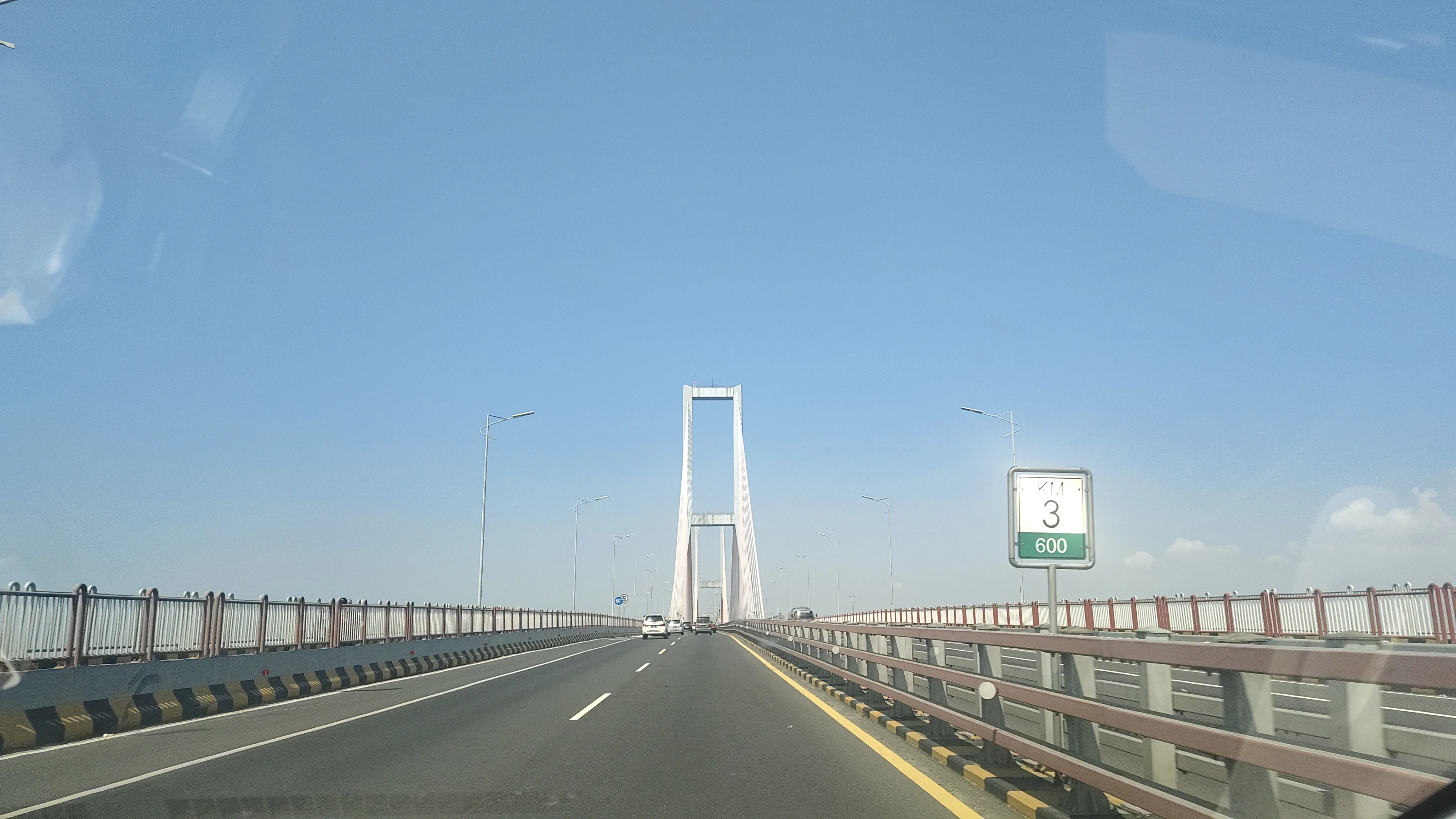
RRI.CO.ID, Surabaya – Member of Indonesia's House of Representatives (DPR), Sudjatmiko has called for cooperation between the Meteorology, Climatology, and Geophysical Agency (BMKG) and local governments to anticipate the dangers of extreme weather to motorists on East Java's Suramadu Bridge. He proposed temporarily halting traffic when wind speeds reach levels that could endanger public safety.
"In the past, ships would stop operating during extreme weather, whereas now cars and motorcycles continue to travel across the Suramadu Bridge," Sudjatmiko said during a visit by the DPR to Surabaya, East Java, on Friday, August 28, 2026.
The Suramadu Bridge is a cable-stayed bridge in East Java that crosses the Madura Strait and, as the name suggests, connects Surabaya – the country’s second-largest city after Jakarta – on Java Island with Bangkalan Regency on Madura Island. Inaugurated in 2009, the bridge is the country's longest, spanning approximately 5.4 kilometers.
Sudjatmiko, a member of the National Awakening Party (PKB), said the lack of traffic controllers since the Suramadu Bridge ceased operating as a toll road in 2018 has increased the risk of accidents, particularly during strong winds. He suggested BMKG weather data be integrated with a visual warning system operated by local authorities in the bridge area.
"BMKG must work with local governments to stop traffic during extreme weather. This is extremely dangerous. If wind speeds exceed 80 kilometers per hour, cars could be blown off course. There needs to be cooperation, or some kind of Virtual Message System should be installed," he said, as quoted from the DPR website on Saturday, August 29, 2026.
Besides addressing daily weather conditions, Sudjatmiko also highlighted the importance of accurate long-term weather forecasts, particularly regarding the cycles of the El Niño phenomenon. He said precise historical data is important as a reference for the government to develop mitigation policies and anticipate drought impacts.
"General forecasts regarding El Niño must be based on data compiled periodically, for example, over five-year, 25-year, and even 100-year periods. This is necessary so the government can anticipate the consequences of prolonged El Niño events," he added.
Overall, Sudjatmiko praised the reliability of BMKG’s technology and applications, whose quality, he said, has received international recognition from the World Meteorological Organization (WMO). He expressed hope that these advanced instruments could continue to be optimized to protect public safety on a broader scale.
News Recomendation
Loading latest news.....