



Dayak Wehea Near End of 14-Year Wait for Customary Rights
- 10 Agt 2026 19:19 WIB
- Voice of Indonesia
Key Points
- The Dayak Wehea community in six villages in Muara Wahau, East Kutai, has waited 14 years for formal recognition as a Customary Law Community.
- The Wehea people regard the forest as their mother and the land as the source of life, making forest protection central to their cultural identity and livelihood.
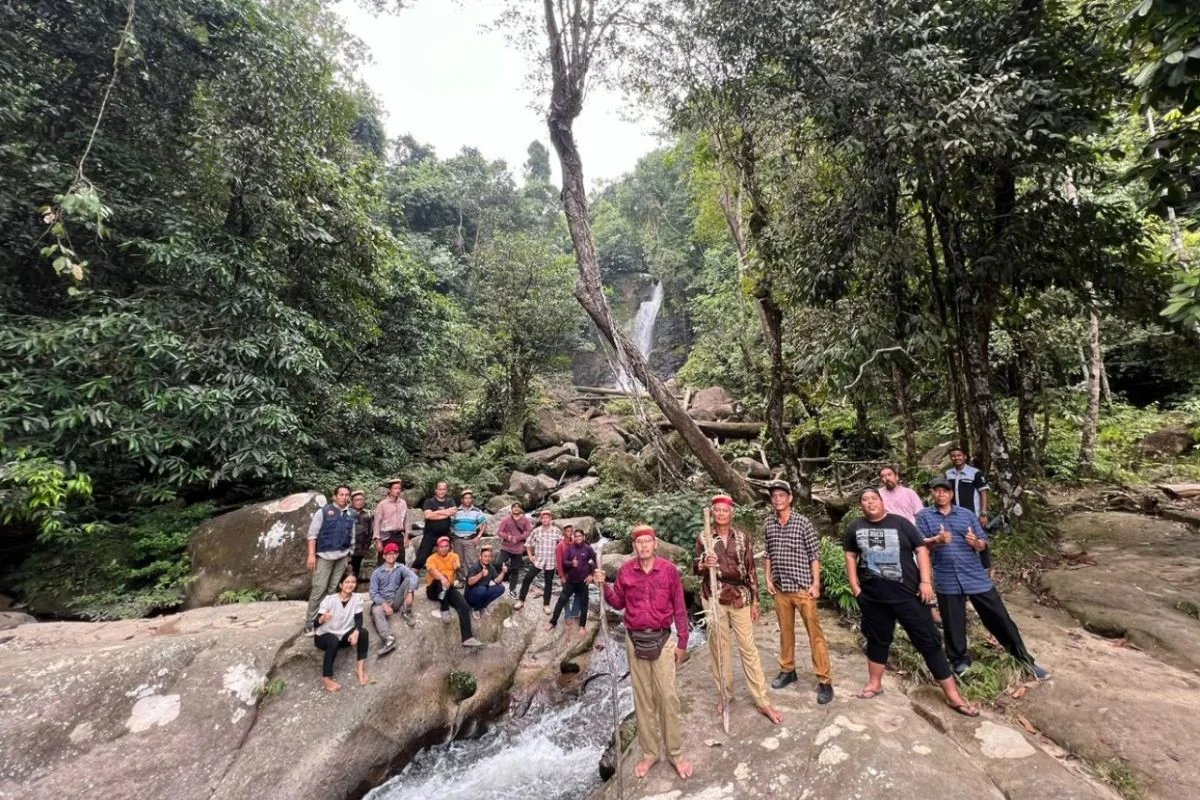
RRI.CO.ID, Samarinda – The Dayak Wehea people’s belief that the forest is their mother and the land the cradle of life has sustained them through a 14‑year wait for legal recognition as a Customary Law Community.
For residents across six villages in Muara Wahau Subdistrict, East Kutai Regency, East Kalimantan, the recognition is not merely administrative -- it is a struggle to protect ancestral heritage and preserve the natural balance that sustains their way of life.
Fourteen years have passed since the community was first proposed for recognition. After navigating a long and complex process, that hope is now gradually turning into tangible certainty.
“For us, the forest is our mother, the mountains are our grandparents, the land is life, and water is breast milk,” said Wehea Grand Customary Chief Lejie Be on Monday, August 10, 2026.
This belief is not a metaphor but a commitment upheld across generations. For decades, the community has remained dedicated to caring for the vast green forest, understanding that it contains springs, medicinal plants, and the ecological balance that sustains their lives.
Their dedication has received partial formal recognition. On August 12, 2015, the Ministry of Environment and Forestry officially recognized their customary forest through an inscription bearing the name Tlan Long Suh Wehea.
However, formal recognition of the community itself as a Customary Law Community has yet to be granted.
The community has completed various stages of the process, including fulfilling requirements in 2021 and undergoing technical verification in 2024. The process has now entered the document‑refinement stage ahead of official recognition.
On Wednesday, August 5, 2026, the East Kalimantan Provincial Administration, through its Community Empowerment and Village Governance Agency, held a special advocacy session at the Muara Wahau Subdistrict office.
The initiative demonstrated the regional administration’s commitment to ensuring the Wehea people’s struggle does not continue indefinitely without legal certainty.
East Kalimantan Community Empowerment and Village Governance Agency Head Siti Sugiyanti said the advocacy aims to accelerate the completion of administrative recommendations required for official recognition.
The current focus is assisting the community in refining documents in accordance with regulations, including those concerning customary territorial boundaries bordering villages or other customary areas, as well as other supporting data.
The previous verification process assessed five main aspects: the community’s history, its customary territory and boundaries, the customary laws in force, its customary institutions, and its ancestral assets or customary objects that remain in existence and continue to be used.
During the meeting, the six Wehea communities -- Bea Nehas, Nehas Liah Bing, Deabeq, Diaq Lay, Long Wehea, and Jak Luway -- reached a mutual agreement to collectively establish their customary territory boundaries by referring to their respective administrative village boundaries.
The East Kutai regent’s decree will recognize each community according to the area in which it resides. The agreement marked an important milestone, demonstrating unity and maturity among the Indigenous communities as they move forward together.
The authority to issue the recognition lies with the East Kutai Regency Administration, which is awaiting the committee’s official report before the regent issues the decree.
Head of the Governance Division of the East Kutai Regency Secretariat, Joni Abdi Setia, confirmed this. Muara Wahau Subdistrict Head Marlianto expressed hope that the community’s long wait would finally yield results this year.
“We hope the decree will be issued soon so that the community can have legal certainty over its land and ancestral heritage,” he said, as quoted by Antara.
The Wehea story is one of many involving Indigenous communities across East Kalimantan. According to 2026 inventory data, 517 Indigenous communities are spread across seven regencies and two cities.
Of that total, 249 communities still have forest cover and are undergoing the recognition process. Ten communities have received official recognition, 22 have completed technical verification, six possess customary forests, and another 57 are still working toward full recognition.
In East Kutai Regency alone, 51 Indigenous communities have been identified across 49 locations. Nineteen are currently undergoing the recognition process, while the six Wehea communities completed technical verification in 2024.
The recognition process has faced challenges, including limited public information on asserting rights, a shortage of personnel capable of preparing ethnographic documents, complex territorial boundary resolutions, and concerns about potential impacts on investment and social tensions.
The East Kalimantan Provincial Administration remains committed to facilitating Indigenous recognition through six principal roles: formulating protection policies, integrating local wisdom into development, strengthening customary institutions, monitoring policies, facilitating joint verification, and assisting the committee until the process is completed.
Since 2021, various concrete measures have supported the Wehea people, including explaining recognition stages, conducting consultations with the central government, training residents to prepare customary documents, assisting with territorial map refinement, and strengthening customary institutions and paralegals.
Support has also continued through community‑empowerment programs, including food‑security training, provision of plant seedlings and stingless‑bee colonies, forest‑patrol equipment, and support for preserving the deeply respected Lomplai tradition.
Returning to the dense Wehea Forest, Lejie Be reaffirmed the community’s position. “We get angry when anyone encroaches on the forest. If someone is caught entering without permission, whether to hunt or cut down trees, we will impose a customary fine.”
The Wehea people have always protected the forest and do not disturb the animals within it as long as the animals do not threaten the community. This principle of living in harmony with nature demonstrates that upholding customary traditions and protecting the environment are inseparable.
Now, as provincial and regency administrations accelerate the process, the prayers carried by the wind through the treetops are gradually finding their way toward fulfillment.
Recognition of the Wehea Customary Law Community is not merely a matter of documents or an official decree. It represents acknowledgment of the local wisdom that has maintained ecological balance for centuries.
It also affirms the inherent right to live enjoyed by every person born and raised there, and provides a guarantee that future generations will still be able to see green forests, clear water, and a living culture.
Fourteen years is no short period. Yet beneath the dense canopy of the Wehea trees, under the watchful skies of eastern Kalimantan, the long wait now appears to be nearing its end.
Formal recognition will not mark the end of the Wehea people’s struggle but the beginning of a new chapter -- one that strengthens stewardship of their ancestral heritage, supports fair development, and protects the forest, the mother of life for all. ***
News Recomendation
Loading latest news.....