



Offline App Enables Turtle Monitoring in NTT’s Outermost, Disadvantaged Areas
- 31 Jul 2026 21:04 WIB
- Voice of Indonesia
Key Points
- Indonesian Marine Affairs and Fisheries Ministry and ITB have introduced the offline-based KoboCollect application to support turtle monitoring in the country's 3T regions.
- The application allows residents of Eilogo Village, East Nusa Tenggara, to collect turtle monitoring data without an internet connection and synchronize it once connectivity is available.
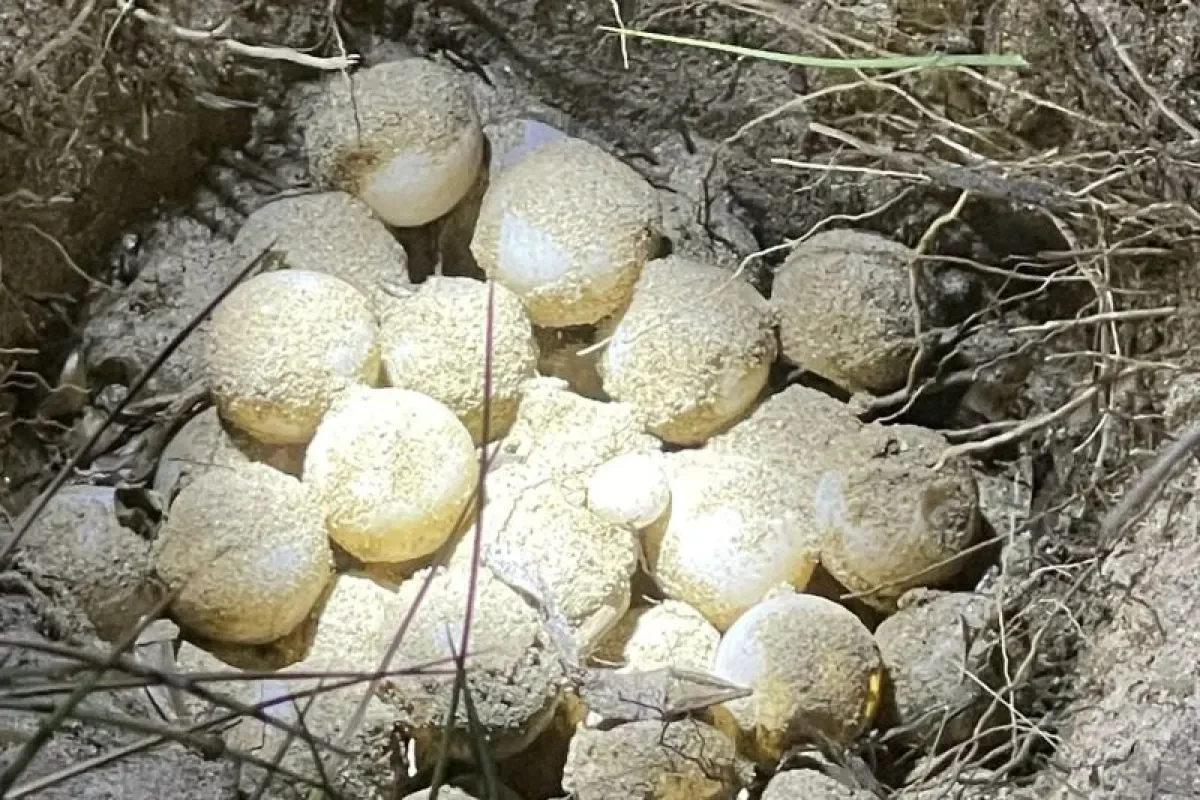
RRI.CO.ID, Jakarta - Limited internet access in Indonesia’s frontier, outermost, and disadvantaged regions, known as 3T areas, is no longer an obstacle to protecting endangered species.
Through the semi-digital, offline-based KoboCollect application, the Marine Affairs and Fisheries Ministry and the Bandung Institute of Technology (ITB) are enabling residents of Eilogo Village, East Nusa Tenggara (NTT), to record turtle monitoring data more easily.
This app allows data collection to continue seamlessly, even without a telecommunications signal.
Head of the ministry's Strategic Policy Center, Syamdidi, said the program aims to strengthen the role of coastal communities in protecting turtles and their habitats. The effort is being carried out through a simple, participatory approach that is tailored to local conditions.
“A simple, participatory approach that suits local conditions is important so that the monitoring system can be used sustainably by the community,” said Syamdidi in a statement in Jakarta on Friday, July 21, 2026, as quoted by Antara.
According to him, 3T areas such as Eilogo Village still face limitations in telecommunications infrastructure as well as varying levels of digital literacy. For that reason, the program uses the KoboCollect application, which can be used to input data even without an internet connection.
Syamdidi explained that the application was adapted from a data collection instrument developed by the Nusantara Nature Conservation Foundation (YKAN). Soil temperature and pH parameters were added to the tool to enrich the observational data.
Through the application, residents can fill out monitoring forms while also documenting field conditions using mobile phones. Data recorded offline can then be synchronized once the device reconnects to the internet.
Syamdidi said the use of the application is expected to make reporting on turtle habitat conditions more practical, structured, and flexible. At the same time, it is also intended to optimize the use of devices already owned by the community.
The community service program is led by Mutiara Rachmat Putri, a professor from the Environmental and Applied Oceanography Expertise Group at ITB’s Faculty of Earth Sciences and Technology (FITB).
The ministry is also involved in outreach activities to educate the community about ocean literacy and turtle conservation. The 2026 program implementation includes preparation, outreach, training, mentoring, and ongoing monitoring.
The program’s main target is the Pantai Hidup Rukun Community Watch Group in Eilogo Village, which is tasked with observing and preserving turtle nesting areas.
In addition to strengthening the capacity of conservation groups, the program also targets young people through ocean literacy activities for high school students.
The activities are expected to increase public awareness of turtle conservation and the health of coastal ecosystems, while also strengthening community participation in marine conservation efforts.
The program involves collaboration between YKAN and several community monitoring groups in Sabu Raijua Regency. It also includes researchers from the National Innovation and Research Agency (BRIN) and academics from Nusa Cendana University. ***
News Recomendation
Loading latest news.....