



NTB and NTT Ready to Meet All of Bali's Energy Needs Through A Mega Super-Grid
- 16 Jul 2026 12:20 WIB
- Voice of Indonesia
Key Points
- Bali aims to become a 100-percent green tourism destination by relying on a mega super-grid that would supply clean electricity from NTB and NTT.
- The proposed Bali-NTB-NTT interconnection is expected to strengthen renewable energy use, improve grid reliability, and support national energy resilience.
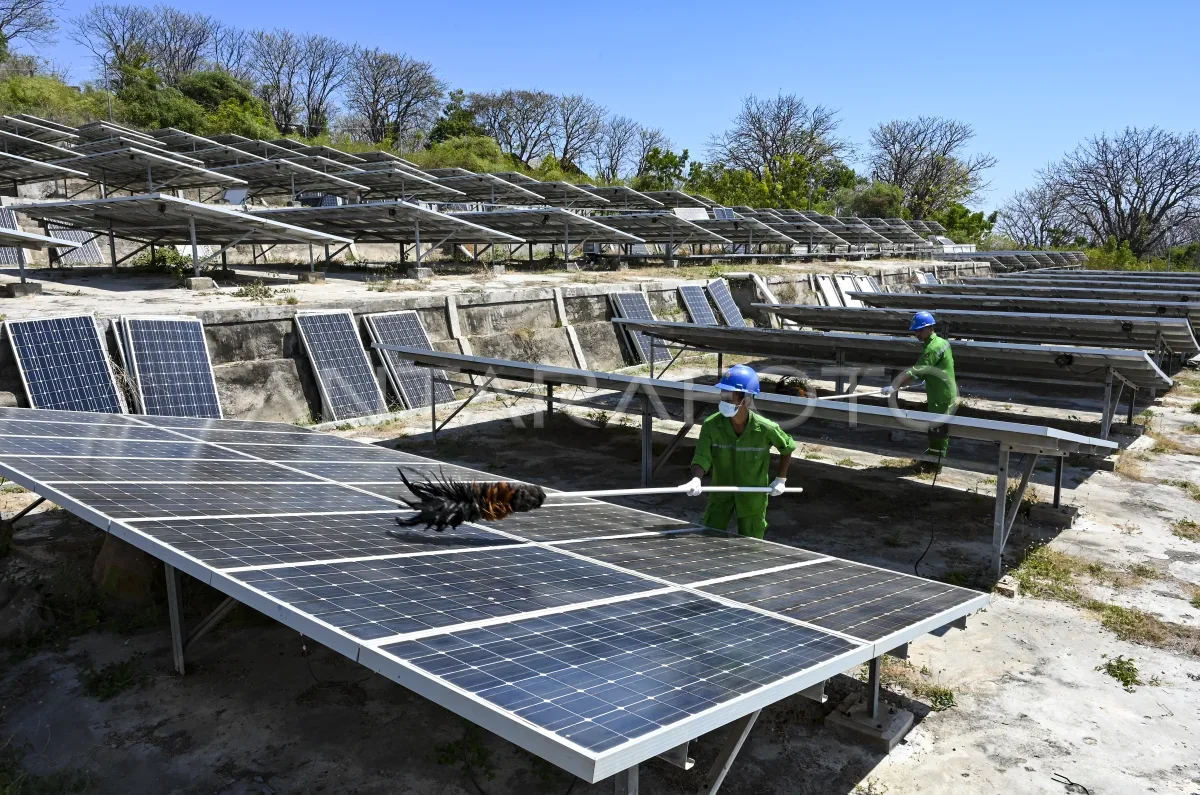
RRI.CO.ID, Mataram - The development of a mega super‑grid is central to an ambitious plan to transform Bali into a 100‑percent green tourist destination. Through this interconnection, clean electricity from West Nusa Tenggara (NTB) and East Nusa Tenggara (NTT) would be routed directly to meet all of Bali’s energy needs without building new local power plants.
“Imagine Bali as a truly 100‑percent green destination. Bali would no longer need to build its own power plants because its energy needs can be supplied from NTB and NTT. The solar potential in both provinces is enormous,” said NTB Governor, Muhammad Iqbal, at the Indonesia Solar Summit (ISS) held in Bali, in a written statement received in Mataram on Wednesday, 15 July 2026.
The forum gathered administration officials, industry players, investors, academics and international partners to discuss accelerating solar energy development toward the national 100‑gigawatt (GW) target.
Governor Iqbal said the regional cooperation among Bali, NTB and NTT (KRBNN) has strong potential to become a model for clean‑energy regional development in Indonesia.
He noted NTB already has a solid foundation for that vision. The province currently has 77 reservoirs, including 15 large dams that could be developed as sites for floating solar photovoltaic installations.
Governor Iqbal explained that if roughly 20 percent of a reservoir’s surface area is used for solar panels, NTB could potentially generate more than 500 megawatts (MW). Combined with NTT’s resources, the two provinces are projected to be able to supply about 5–7 GW of electricity within the next five years.
To realize the plan, the NTB Provincial Administration is promoting construction of a super‑grid connecting the power systems of Bali, NTB and NTT. The interconnection is expected to create a more reliable regional grid, increase the share of renewables, and strengthen national energy resilience.
Governor Iqbal also stressed that accelerating the energy transition requires strong investment support. To that end, NTB is preparing NTB Capital, an initiative intended to boost investor confidence by speeding up permitting and resolving social issues around investment sites.
“NTB Capital will be an assurance for investors. We help accelerate licensing processes and facilitate resolution of social issues that may arise around investment locations,” he said, as quoted by Antara.
Beyond financing, the governor urged refinement of several national regulations to speed renewable energy deployment. One proposal is to grant Special Economic Zones (KEK) authority to build independent off‑grid power systems through allocation of business zones (Wilus).
He argued such policies would accelerate solar development in high‑radiation areas like Mandalika, which could host around 100 MW of generation capacity.
Governor Iqbal also proposed allowing regions more flexibility to market renewable electricity. He suggested that regions should be permitted to sell clean power directly to consumers or to international markets without disrupting the national grid.
“When the administration creates space for renewable development, regions should also be given leeway to leverage their energy potential for broader markets,” he said.
That view received support from NTT Governor, Emanuel Melkiades Laka Lena, who affirmed NTT’s readiness to become an investment hub for renewable energy. He said NTT has an estimated renewable potential of about 396 GW, supported by high solar irradiation and long dry seasons, making it highly prospective for solar development.
“The NTT Provincial Administration is ready to facilitate permits, secure spatial planning, provide land, and build a conducive investment ecosystem for investors,” he said. ***
News Recomendation
Loading latest news.....