



Cirebon Plans Educational Tourism for Sitiwinangun Pottery Village
- 01 Jul 2026 15:14 WIB
- Voice of Indonesia
Key Points
- Cirebon plans to develop Sitiwinangun Pottery Village into an educational tourism destination.
- The initiative aims to preserve the 15th-century pottery tradition while supporting local artisans and the rural economy.
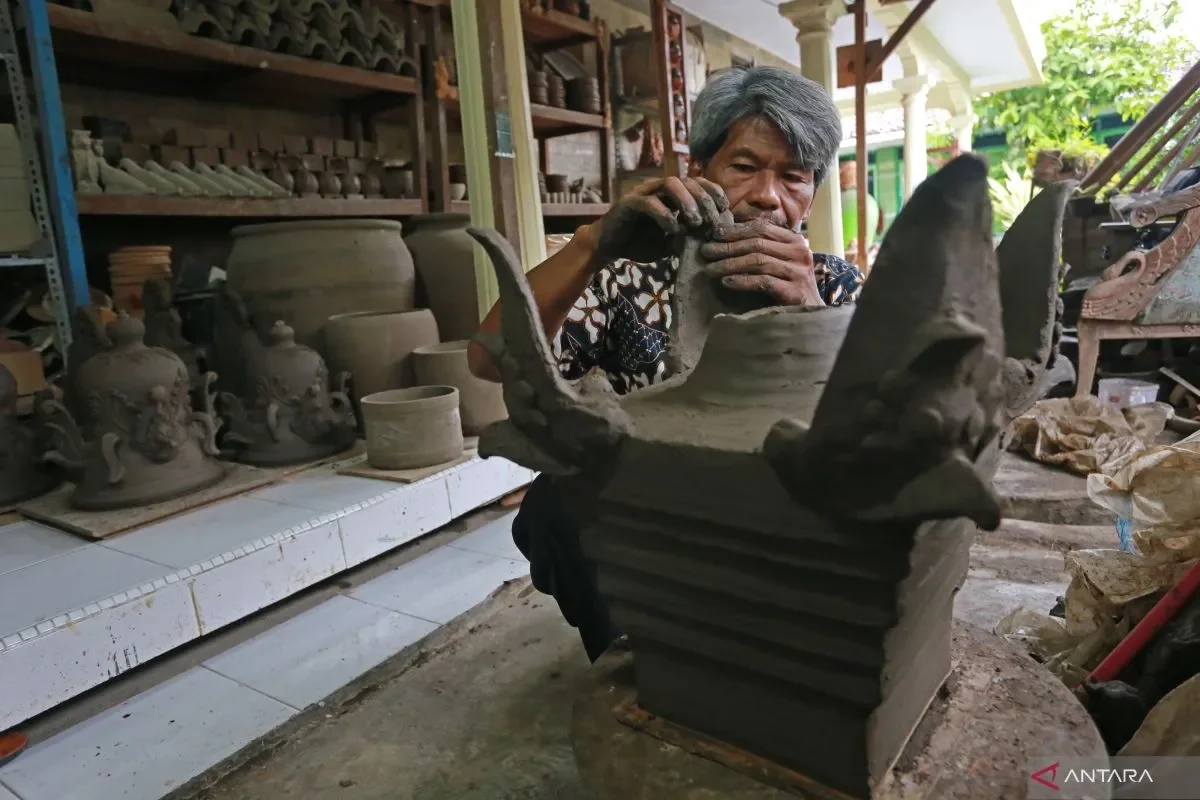
RRI.CO.ID, Cirebon - The Cirebon Culture and Tourism Agency (Disbudpar) in West Java has unveiled a strategic blueprint to transform the historical clay pottery (gerabah) industry of Sitiwinangun Village, into a dedicated craft-based educational tourism destination, attempting to shield the ancient trade from generational decline while injecting new capital into the rural economy.
Located within the Jamblang Subdistrict of Cirebon Regency, the pottery tradition serves as an irreplaceable cultural repository. However, regional authorities warn that without transforming the manufacturing sites into interactive, consumer-facing learning spaces, the delicate, manual wheel-throwing skills could face structural extinction in the modern machine era.
"Sitiwinangun pottery has great potential to develop into a superior educational tourism destination and craft-based tourism village," Secretary of the Cirebon Regency Disbudpar, Juju Juhariah, said during a cultural symposium in Cirebon on Tuesday, June 30, 2026, as quoted by Antara.
Juju emphasized that the survival of this delicate regional heritage cannot rely solely on localized administration funding. Instead, the administration is moving to build a broad-based, multi-sector alliance uniting municipal regulators, university researchers, commercial tourism operators, media networks, and local artisan guilds to structurally modernize the village's business model.
To establish this collaborative network, Disbudpar formally organized the Seminar Gerabah Sitiwinangun. The forum brought together creative stakeholders to formulate targeted policy recommendations and build external marketing channels.
Beyond its historical weight, Juju pointed out that the pottery industry retains deep spiritual philosophy and remains the primary economic backbone for hundreds of rural households in the sub-district.
"We hope that today's forum will yield policy recommendations and collaborative networks that will revitalize Sitiwinangun Pottery, making it even better known and providing broader benefits to the community," she noted.
Historical archives trace the origins of the Sitiwinangun pottery guilds back to the 15th century, a golden era when the rapid spread of Islam across West Java brought specialized ceramic master-craftsmen to the region. Originally named Padukuhan Kebagusan, the area was later renamed Sitiwinangun by Syekh Dinureja, a revered Islamic scholar who systematically taught advanced clay-molding techniques to the agrarian populace.
To this day, the artisans of Sitiwinangun reject mechanized press-molds, choosing instead to preserve their ancestral manual wheel-turning techniques. The rigorous production method requires exceptional hand-eye coordination, patience, and precise structural timing to ensure the thick river-clay holds its shape without cracking during firing.
The village is highly celebrated for its durable, smooth-finished products, ranging from large earthenware water storage vessels (gentong) to traditional drinking vessels (kendi) and teapots, all instantly recognizable by their elegant, intricately etched ulur bunga (flowing floral vine) motifs. ***
News Recomendation
Loading latest news.....