



Sumedang Fights Stunting by Boosting Teenage Girls' Health
- 22 Mei 2026 21:40 WIB
- Voice of Indonesia
Key Points
- The Sumedang Regency Administration is pivoting from managing toddler cases to an upstream prevention strategy that prioritizes the health of teenage girls as a long-term investment.
- Teenage girls are a priority demographic being supported through nutritional literacy, anemia screening, blood-replenishing supplements, and healthy lifestyle campaigns.
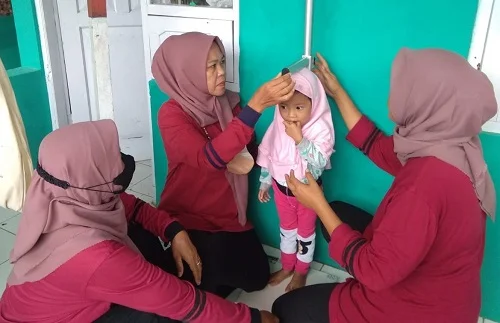
RRI.CO.ID, Sumedang - The Sumedang Regency Administration in West Java is shifting its primary focus to upstream prevention, combining targeted healthcare for teenage girls with real-time digital tracking to completely dismantle the cycle of childhood stunting.
This preventive strategy treats the health of future mothers as a critical long-term investment. Through this approach, the regency aims to aggressively push its current 6.6 percent stunting rate down to below the 5 percent threshold.
Rather than merely managing existing cases among toddlers, municipal authorities are treating the issue as a fundamental national security and development priority. In an official statement released in Sumedang on Friday, May 22, 2026, Sumedang Deputy Regent, M. Fajar Aldila, emphasized that physical and cognitive development hurdles must be intercepted years before a child is even conceived.
"Stunting is not just a matter of malnutrition, but a matter of the nation's future. Children who are stunted risk experiencing growth barriers, decreased learning abilities, and low productivity in the future," said Fajar, as quoted by Antara.
He framed the health initiative as an essential foundation for the country's future human resources. Under this proactive framework, teenage girls have been designated as a priority demographic.
The regency is deploying massive educational campaigns centered on nutritional literacy, aggressive anemia screening, the systematic distribution of blood-replenishing supplements, and the promotion of clean, healthy lifestyles to ensure young women achieve optimal health before entering adulthood.
In tandem with nutritional interventions, the local administration is executing a strict socio-medical campaign against early-age marriages. Authorities warned that underage pregnancies heavily compromise maternal health and drastically heighten the statistical probability of developmental stunting in newborns.
"Early marriage not only impacts social aspects, but also increases the health risks for mothers and children, including the risk of stunting," explained Fajar, noting that teenage biology is often unequipped for the physical demands of a healthy pregnancy.
Achieving these ambitious benchmarks will require an exhaustive, multi-sector collaborative framework. Local officials stressed that the acceleration of stunting reduction relies heavily on the active participation of families, community leaders, educators, and regional agencies working together to mentor the younger generation.
Furthermore, the local administration is actively pushing the Free Nutritious Meal Program as a structural pillar for long-term human resource development.
To back these social programs with operational efficiency, Sumedang is leveraging high-precision data infrastructure. This tracking system allows health workers to monitor vulnerable groups, spanning from registered prospective brides to expectant mothers, with pin-point accuracy, eliminating gaps in regional welfare delivery. "Accurate data will determine the precision of the interventions we make," concluded Fajar.
He affirmed that data-driven governance is key to locking in their latest progress, which recently saw stunting figures drop from 6.9 percent to 6.6 percent based on real-time weighing metrics. ***
News Recomendation
Loading latest news.....