



Jakarta Records World’s Worst Air Quality as City Braces for Harsh Dry Season
- 04 Mei 2026 16:24 WIB
- Voice of Indonesia
Key Points
- On April 3, 2026, Jakarta was ranked as the city with the worst air quality globally according to IQAir, reaching an unhealthy AQI of 182.
- The Jakarta Provincial Administration is launching an emergency response plan to combat pollution ahead of the dry season, predicted to run from May to August.
- Key government actions include upgrading air quality monitoring systems, enforcing mandatory vehicle emission testing, and evaluating the Air Pollution Control Strategy (SPPU).
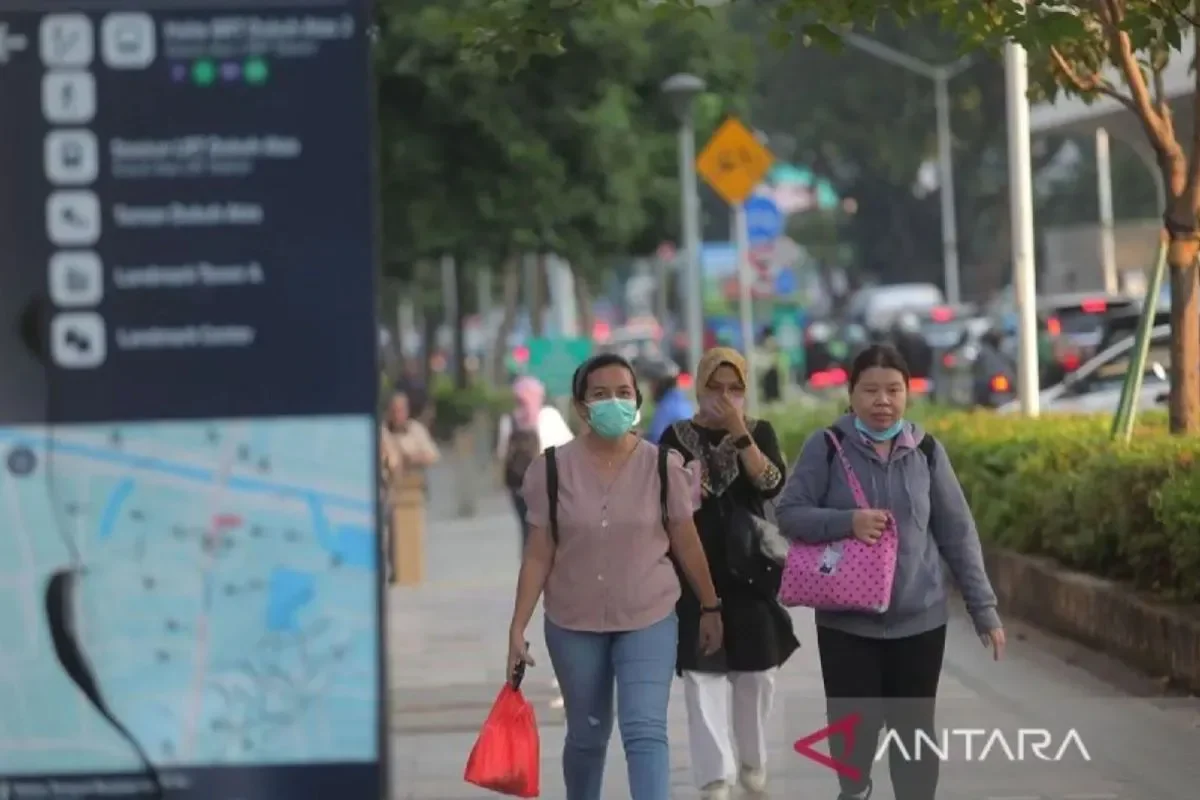
RRI.CO.ID, Jakarta - Jakarta topped the global list for the worst air quality on Sunday morning, May 3, 2026, as the city prepares for a significant spike in pollution levels ahead of the upcoming dry season.
Real-time data from IQAir at 6:00 a.m. Jakarta time placed the capital’s air quality in the unhealthy category, a stark warning for residents to prioritize health precautions, including the use of masks during outdoor activities.
The city’s air quality index (AQI) hit a concerning score of 182, driven primarily by fine particulate matter (PM2.5) concentrations reaching 100 micrograms per cubic meter. This measurement surpassed other major global hotspots, with Dhaka, Bangladesh, ranking second at 153, followed by Lahore, Pakistan (135), and Baghdad, Iraq (134).
In response to the deteriorating conditions, the Jakarta Provincial Administration has announced an emergency response plan to mitigate pollution as the dry season approaches, which is forecasted to last from early May through August.
As reported by Antara, the strategy includes a comprehensive upgrade of air quality monitoring systems and a nationwide push for mandatory vehicle emission testing. Authorities are also currently evaluating the Air Pollution Control Strategy (SPPU), analyzing everything from PM2.5 trends and sector-specific emission loads to the long-term impact on public health.
The administration emphasized that local efforts alone are insufficient to combat the smog. Administration officials conveyed that air pollution control cannot be carried out by a single region in a partial manner.
Consequently, integrated action among regional administration agencies and cross-border collaboration with satellite cities surrounding Jakarta is deemed essential to achieving any lasting environmental improvement. ***
News Recomendation
Loading latest news.....