



Relief Efforts Ongoing for Over 1,100 Displaced by East Flores Quake
- 11 Apr 2026 22:09 WIB
- Voice of Indonesia
Key Points
- A 4.7-magnitude earthquake struck East Flores, East Nusa Tenggara, on April 8, 2026, damaging 238 houses and displacing more than 1,100 residents.
- BNPB and local agencies have set up emergency tents and health posts as aftershocks continue to affect Adonara and East Solor.
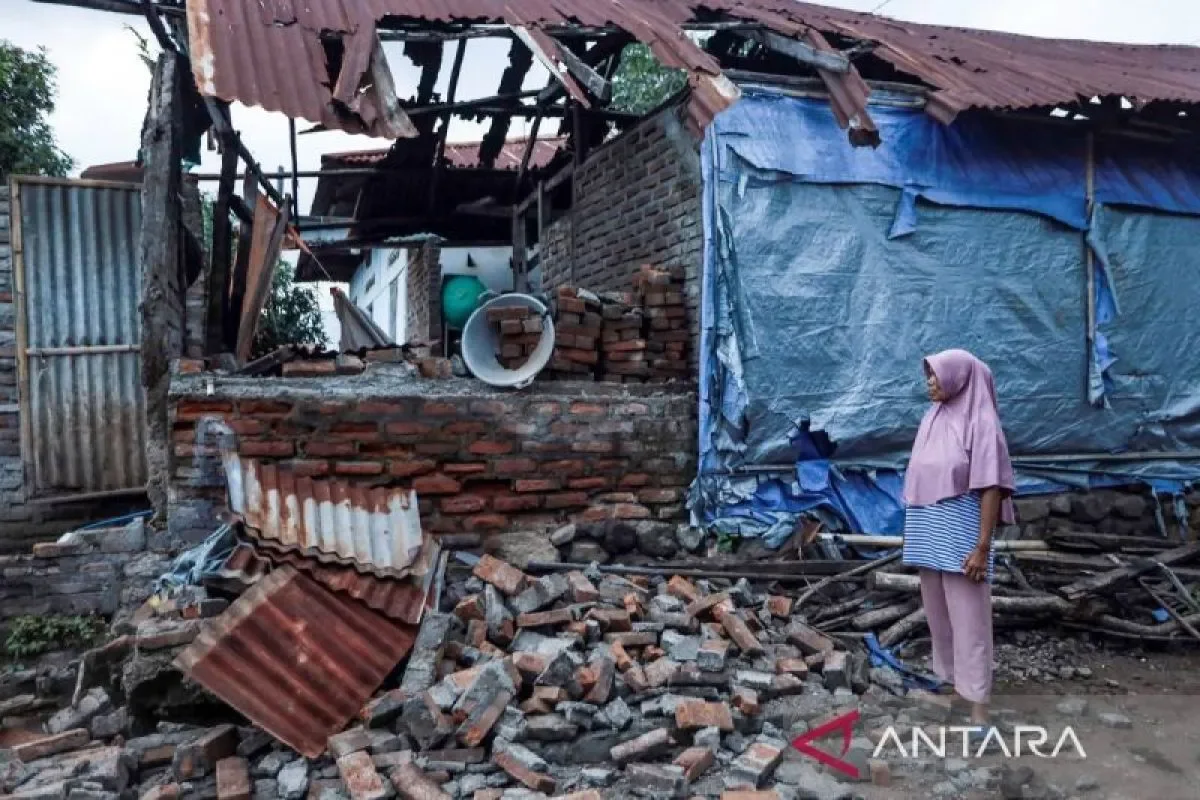
RRi.CO.ID, Jakarta - A 4.7-magnitude earthquake struck East Flores, East Nusa Tenggara, early Wednesday, April 8, 2026, about 21 kilometers southeast of Larantuka.
The epicenter was on land at a depth of five kilometers, and residents felt strong tremors lasting two to four seconds. The Meteorology, Climatology, and Geophysics Agency (BMKG) recorded 48 aftershocks, which continue to be felt along the coast of Adonara Island.
The National Disaster Mitigation Agency (BNPB) reported that 1,131 people displaced by the quake are currently being assisted by a joint team of local officials.
BNPB confirmed the latest data as of 10:55 a.m., showing that 238 houses were damaged, ranging from minor to severe, along with three houses of worship, four educational facilities, and two public facilities.
“Terong, Lamahala Jaya, Dawata, Karing Lamalouk, Waiwerang, and Ipi Ebang villages in Adonara Subdistrict, as well as Motonwutun and Watobuku villages in East Solor Subdistrict, were affected. Ten residents suffered minor injuries, while 285 families or 1,313 people have self-evacuated. Updates will be provided periodically,” said Abdul Muhari, Head of BNPB’s Disaster Data, Information, and Communication Center, in Jakarta on Saturday, April 11, 2026, as quoted by Antara.
Abdul noted that follow-up efforts are ongoing, involving officers from the Regional Disaster Mitigation Agency (BPBD), the Indonesian Military (TNI), the National Police (Polri), and technical service teams from East Flores Regency and East Nusa Tenggara Province.
“The BPBD has set up refugee and family tents in several accessible locations, ensuring they are safe from potential aftershocks and other hazards,” he said.
The 6x12-meter tents are also being used as health service posts and as temporary emergency shelters. However, BNPB reported that no centralized refugee camp has been established. Many residents prefer to set up tents near their homes or stay with relatives, while some sleep outside at night for safety as aftershocks continue.
“Refugee and family tents are urgently needed because previous stock was used during the emergency response to the Lewotobi Laki-Laki volcano eruption. The NTT Provincial BPBD and BNPB are distributing tents, supplies, and other equipment,” Abdul added. ***
News Recomendation
Loading latest news.....