



Bogor Line Surge Drives Sukabumi Rail Electrification Push
- 10 Apr 2026 15:36 WIB
- Voice of Indonesia
Key Points
- The Bogor Line has officially become the busiest commuter artery in Greater Jakarta.
- Passenger numbers rose from 102 million in 2022 to 155 million in 2025, with over 38 million users recorded in Q1 2026 alone.
- Urgency for Sukabumi Electrification is the rapid growth on the Bogor Paledang–Sukabumi segment (KA Pangrango), which surpassed 1.1 million passengers in 2025, has made extending electrification a strategic priority for KAI.
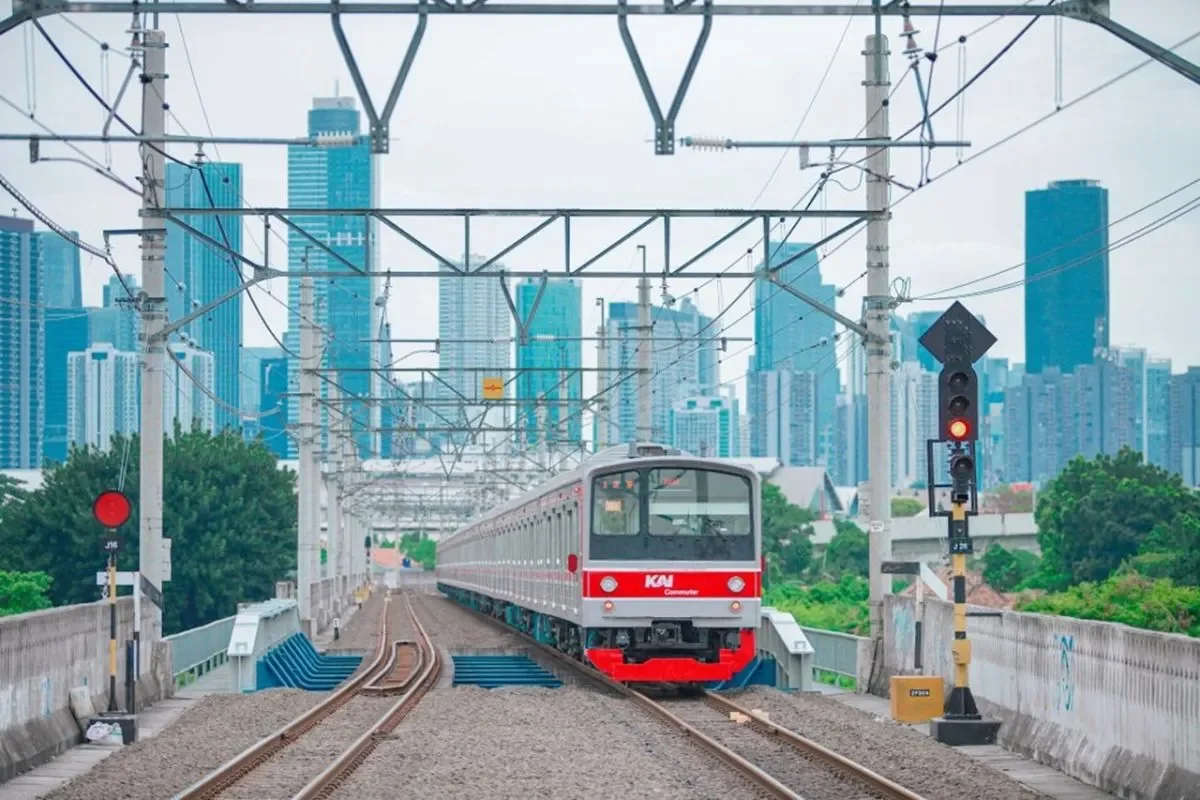
RRI.CO.ID, Jakarta - The surging demand for rail travel along the Bogor Line is sparking a strategic push for electrification toward Sukabumi, signaling a shift in how Greater Jakarta’s satellite regions anchor regional economic growth.
State-owned Railways Company PT Kereta Api Indonesia (KAI) reports that the Bogor corridor has solidified its position as the busiest artery in the Greater Jakarta commuter network, reflecting a decentralization of urban activity.
Data reveals a relentless upward trajectory in passenger numbers. The Bogor Line recorded 102,054,022 users in 2022, jumping to 133,040,885 in 2023, and reaching 155,009,997 by 2025.
This momentum has shown no signs of slowing in 2026, with 38,203,481 passengers already documented in the first quarter alone. This consistency demonstrates that the line has become the backbone of public mobility, mirroring travel patterns that are no longer confined to a single urban center but are increasingly widespread.
KAI Vice President of Corporate Communication, Anne Purba, emphasized that this evolution is a critical indicator for future service enhancements. “Mobility continues to evolve as activities become more dispersed. Transportation services must move in tandem with these changes to meet broader community needs,” said Anne, on Friday, April 10, 2026, as quoted by Antara.
Currently, the Jakarta Kota–Bogor, West Java, segment spans 54.674 km of double-track electrified rail, a result of collaboration between KAI and the Ministry of Transportation’s Directorate General of Railways. These upgrades have ensured the line remains reliable for high-volume transit while offering efficient travel times and reinforced capacity.
The growth narrative is now extending toward the Bogor Paledang–Sukabumi, West Java, segment, currently served by the KA Pangrango. Passenger figures for this route climbed from 786,001 in 2023 to over 1.1 million in 2025, with the first three months of 2026 already seeing 281,659 travelers.
This spike suggests that Sukabumi is becoming more integrated with central hubs, fueled by the expansion of residential clusters, tourism, and local economic activity.
“The trend along the Bogor-Sukabumi corridor shows that there is still significant room for growth. This is part of our future service development direction, including strengthening services through electrification,” added Anne.
Extending electrification to Sukabumi is expected to revolutionize the route by increasing trip frequency and passenger capacity. Beyond transit, stronger connectivity is anticipated to stimulate new economic centers and distribute growth more equitably across the region.
This infrastructure push also aligns with broader national goals. By making transit more accessible, residents have more freedom to choose housing in outlying areas, which helps alleviate urban congestion and encourages the development of organized residential zones.
This vision supports President Prabowo Subianto’s recent directives on accelerating national housing programs. “Transportation and residential areas are interconnected in shaping social patterns. With wider connectivity, growth can be more evenly distributed, opening space for areas that are more orderly, comfortable, and livable,” conclude Anne.
Moving forward, KAI remains committed to collaborating with the government to ensure rail services keep pace with the dynamic shifts in public mobility and regional development. ***
News Recomendation
Loading latest news.....