



Maggot Farming Empowers Marginal Communities in South Sulawesi's Makassar City
- 29 Mar 2026 08:23 WIB
- Voice of Indonesia
Key Points
- Residents at Rusunawa Mariso are converting organic household waste into high-protein animal feed and organic fertilizer using Black Soldier Fly larvae to reduce urban trash volumes.
- The initiative provides steady income for the community through weekly harvests while encouraging local women to participate in sustainable waste sorting and entrepreneurship.
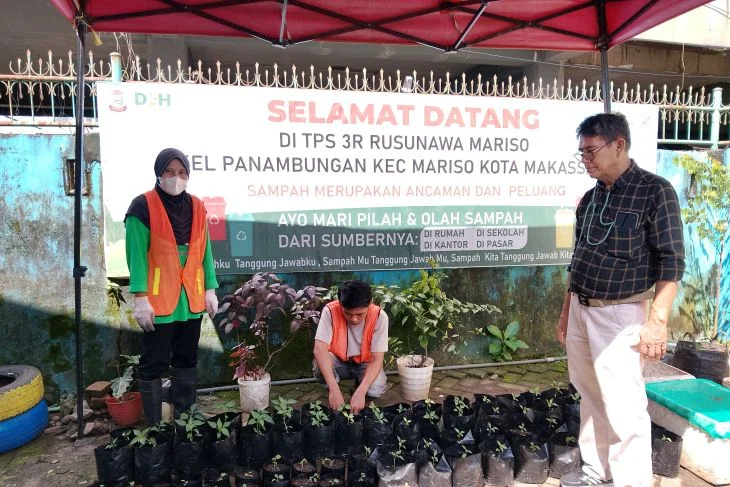
RRI.CO.ID, Makassar - In Mariso Suddistrict, Makassar City, South Sulawesi, a creative approach to waste management is opening new economic opportunities for residents of the Mariso rental flats (Rusunawa): transforming household waste into valuable products while generating sustainable income through maggots farming.
“What used to be a challenge in managing waste has now become an opportunity,” community facilitator and head TPS 3r Rusunawa Mariso self-help group, Muhammad Saleh, said on Saturday, March 28, 2026, as quoted by Antara.
Organic waste such as leftover food, vegetables, and fruit is used as feed for maggots -- larvae of the Black Soldier Fly (BSF)-- which can consume two to five times their body weight daily.
The process produces not only maggots -- highly sought after as protein-rich animal feed -- but also kasgot, an organic fertilizer derived from maggot residue.
This dual benefit reduces waste volume while creating marketable products. “Maggot farming offers both environmental and economic solutions,” Muhammad Saleh explained.
Maggots are increasingly in demand as feed for fish, poultry, and birds, driven by growth in aquaculture and livestock sectors. Their high protein content makes them a sustainable alternative to traditional feed. Meanwhile, kasgot provides farmers with affordable organic fertilizer, ensuring that the system generates minimal waste.
From an economic perspective, maggot farming requires relatively low capital but offers steady returns. Communities can harvest around 100 kilograms of maggots weekly, creating a reliable source of income.
South Sulawesi provincial councilor Yeni Rahman praised the initiative, noting that the Rusunawa Mariso project is the first of its kind in Makassar and could serve as a model for other regions. She emphasized that beyond its economic value, maggot farming helps address Makassar’s waste problem, which reaches 800 to 1,000 tons annually.
Yeni also highlighted the importance of involving local residents, particularly women, in waste sorting. This not only supports maggot production but also creates additional income opportunities through the sale of maggots and kasgot.
Beyond its environmental and economic benefits, the program encourages community participation and creativity. Saleh suggested that packaging could include cultural elements, such as short rhymes or pantun, to make products more distinctive and appealing to consumers.
By combining environmental sustainability with economic empowerment, maggot farming at Rusunawa Mariso is showing how grassroots innovation can turn everyday challenges into long-term solutions. ***
News Recomendation
Loading latest news.....