



NTB Positions Creative Economy as New Engine for Sustainable Growth
- 11 Mar 2026 13:07 WIB
- Voice of Indonesia
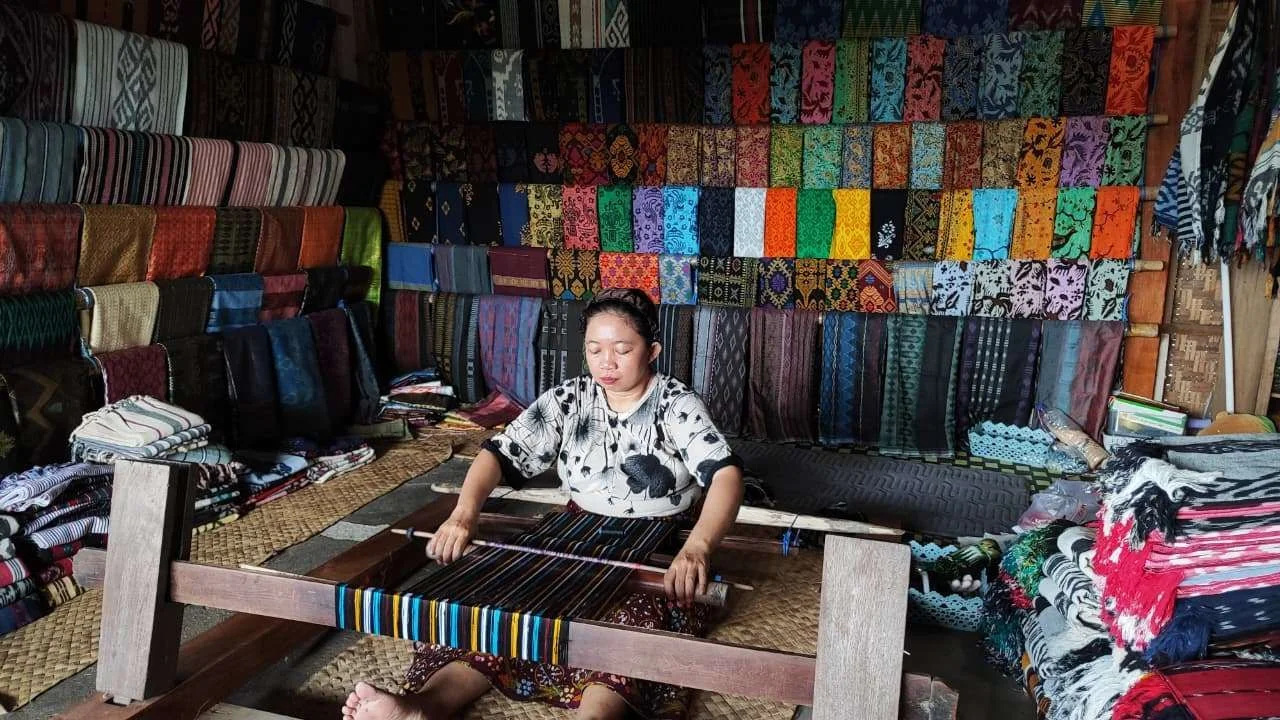
RRI.CO.ID, Mataram - Creativity in West Nusa Tenggara (NTB) is no longer confined to cultural performances or traditional crafts.
From weaving looms in rural homes to laptops in urban co-working spaces, ideas are steadily transforming into economic power. What was once seen as a complement to tourism is now emerging as a new engine of growth for the province.
In recent years, the government has positioned the Bali–Nusa Tenggara corridor as an international superhub for tourism and the creative economy, part of Indonesia’s long-term vision toward 2045.
Within this framework, NTB is being shaped not only as a region rich in culture and community innovation, but also as a testing ground for national creative economy policies, particularly through the use of People’s Business Credit (KUR) schemes for creative entrepreneurs.
The question now is whether NTB can truly anchor its future economy on creativity.
At the heart of the creative economy lies human imagination. Nationally, the sector spans at least 17 subsectors, from culinary arts and crafts to fashion, film, music, digital applications, and game development.
In NTB, this potential is visible in cultural-based enterprises. Traditional weaving in Lombok and Sumbawa, for instance, is more than heritage. It sustains thousands of families.
Local administrations are also investing in skill development.
In West Sumbawa, a 20-day training program on weaving motifs was held to improve product quality and strengthen market competitiveness. Such initiatives not only refine techniques but also encourage new designs with higher commercial value.
Festivals and exhibitions further showcase NTB’s creative spirit. Events like Karya Kreatif NTB and the Lombok Sumbawa Tenun Festival have turned cultural promotion into economic platforms for small businesses.
Beyond weaving, these festivals feature craft bazaars, art performances, and culinary markets, demonstrating the sector’s wide-ranging impact from production to consumption.
Villages are also finding innovative ways to blend culture with commerce. The establishment of community museums in parts of Lombok illustrates how preserving history can be combined with new economic activities.
These museums are evolving into spaces where young people transform cultural narratives into tourism experiences with tangible economic benefits.
From weaving to museums, from cultural festivals to digital products, NTB’s creative economy is rooted in local identity. Yet challenges remain. Access to financing is one of the biggest hurdles, as creative products often rely on ideas, designs, or intellectual property that are difficult to use as collateral in conventional banking systems.
This is why the government’s decision to pilot KUR financing for creative businesses in NTB is considered strategic. If successful, it could allow small-scale entrepreneurs to secure loans worth hundreds of millions of rupiah to expand their ventures.
Still, financing alone is not enough. The Central Bureau of Statistics (BPS) has identified three major obstacles to Indonesia’s creative economy: limited access to funding, low human resource capacity, and inadequate digital infrastructure.
In NTB, many creative actors excel in production but lack skills in business management, digital marketing, and brand development. In today’s digital economy, strong storytelling, visual presentation, and marketing strategies are as crucial as product quality.
Digital infrastructure is another decisive factor. Fast internet, access to global markets, and reliable digital platforms are essential for local creativity to reach beyond regional boundaries. Without them, NTB’s creative potential risks being confined to local consumption.
Building a sustainable creative economy requires more than partial policies. It calls for a complete ecosystem. Talent development through education and training, financing supported by effective curation, market access via festivals and digital platforms, and creative spaces for collaboration are all pillars of such an ecosystem.
In NTB, Mandalika offers significant potential to become a hub for digital-based creative industries, complementing its role as a tourism and sports destination.
The future of NTB’s economy will not be determined solely by natural resources or large infrastructure projects. It will also depend on the region’s ability to nurture the creativity of its people.
The creative economy demonstrates that economic strength can grow not only from mines or factories, but also from simple ideas shaped by imagination and hard work.
The challenge ahead is to ensure that NTB’s creativity does not remain a talent in waiting but evolves into a sustainable economic force for the province and the nation. ***
News Recomendation
Loading latest news.....