



Jayandaru Monument, Sidoarjo’s Symbolic Bond With Water and Heritage
- 06 Mar 2026 15:54 WIB
- Voice of Indonesia
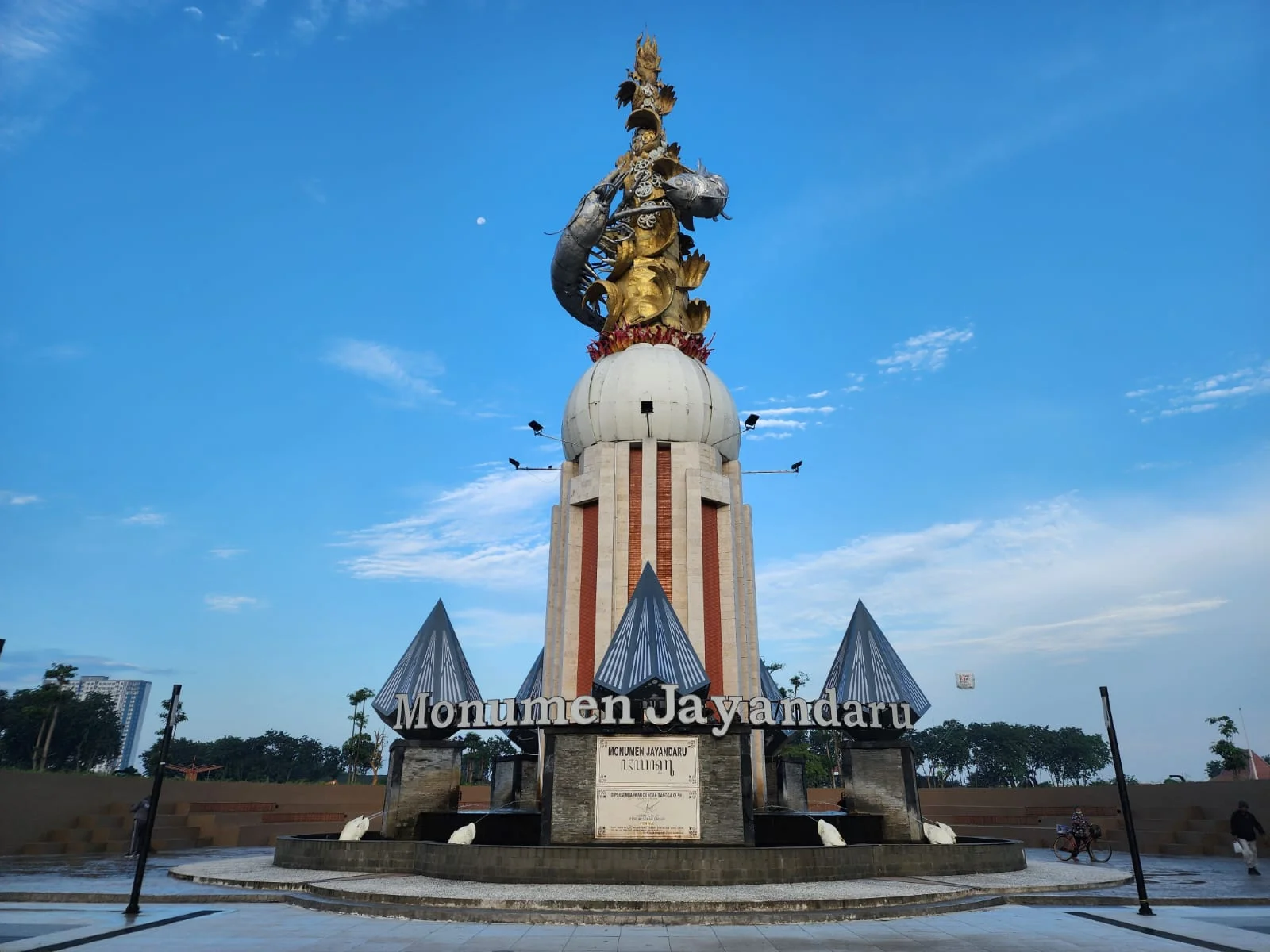
RRI.CO.ID, Sidoarjo – The Jayandaru Monument, standing prominently in the heart of Sidoarjo, East Java, is far more than an urban landmark. It serves as a profound cultural anchor, chronicling the long-standing relationship between the local community, its waters, and the traditional pond-farming way of life.
Local historian, M. Mashuri explains that Jayandaru emerged from a historical consciousness regarding the region’s unique character. Since its inception, Sidoarjo has flourished as a delta region historically dominated by marshlands and waterways.
According to Mashuri, this geography forged a society deeply dependent on the aquatic ecosystem. "From the era of ancient kingdoms to the colonial period, the lives of Sidoarjo’s people have always revolved around water. Consequently, the region's symbolism cannot be detached from its aquatic environment," said Mashuri on Thursday, March 5, 2026.
The name "Jayandaru" is derived from two old Javanese elements: jaya, signifying glory or prosperity, and ndaru, interpreted as a blessing or the light of life. Together, they represent water as the primary source of livelihood for the people of Sidoarjo, from antiquity to the present day.
The monument features two primary icons, which are the shrimp and the milkfish (bandeng). These commodities were chosen because they have been the region’s leading fishery products for centuries, long before the rise of modern industry.
The late East Javanese cultural critic Radhar Panca Dahana previously noted that these symbols carry deep philosophical weight. He described them as metaphors for the resilience of coastal communities.
"Shrimp and milkfish are metaphors for coastal resilience. Both thrive between saltwater and freshwater, yet they continue to grow and flourish," remarked Radhar, as quoted by infopublik.id.
Mashuri further noted that the tradition of aquaculture in the Brantas River delta dates back to the Kahuripan and Majapahit kingdoms. During those eras, aquatic harvests were vital to the royal logistics systems that fed the populace, a tradition that persisted through the Islamic sultanates and the colonial period into modern Indonesia.
Philosophically, the Jayandaru Monument reflects a worldview where nature is a partner rather than an adversary to be conquered. "Jayandaru demonstrates that Sidoarjo’s prosperity did not spring from subduing nature, but from the community's ability to live in harmony with the water," explained Mashuri.
This symbolic meaning gained even greater resonance following the 2006 Lapindo mudflow disaster, which drastically altered Sidoarjo’s landscape. Amidst such massive ecological shifts, Jayandaru stands as a reminder that Sidoarjo is a region fundamentally shaped by the bond between humanity and water.
Ultimately, the Jayandaru Monument is more than a city ornament. It is a historical marker of a marathon journey involving water, pond traditions, and the enduring vitality of the Sidoarjo people who continue to thrive today. ***
News Recomendation
Loading latest news.....