



Semarang Prison Greenhouse Program Equips Inmates with Self-Reliance Skills
- 26 Jan 2026 13:27 WIB
- Voice of Indonesia
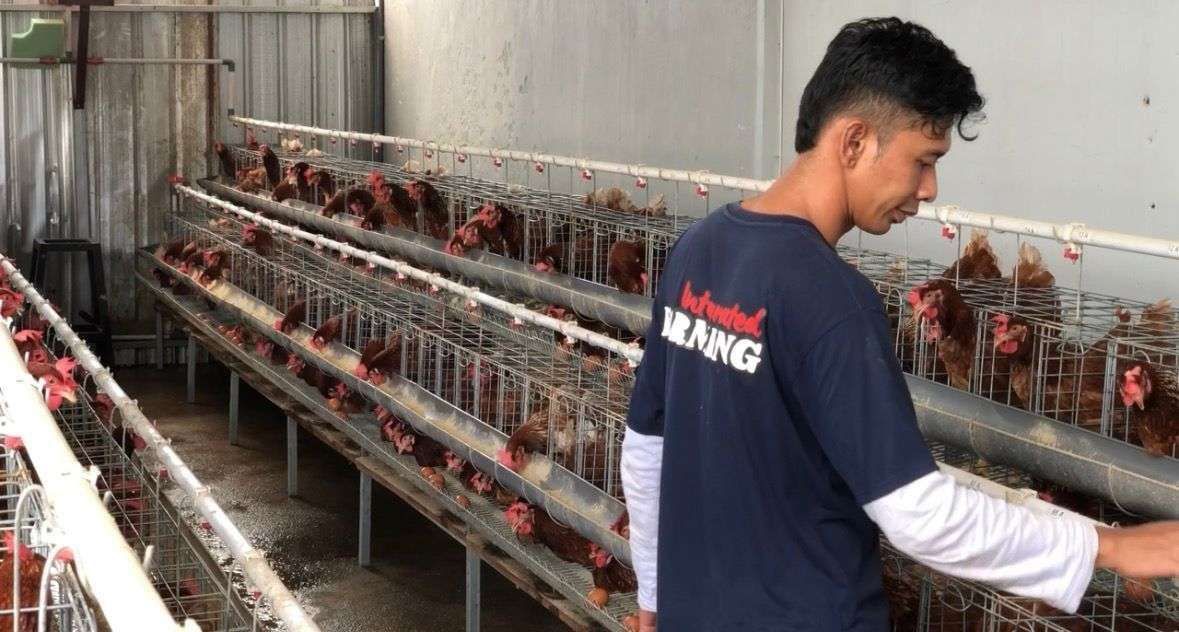
RRI.CO.ID, Semarang - The Greenhouse Program at Semarang Class I Prison has become an important provision for inmates, preparing them to live independently once they return to society.
One inmate, Reza Akbar Zuta, said the training in agriculture and livestock farming has given him practical skills he can immediately apply. “From these activities, we can use the knowledge outside, whether in farming, raising catfish, or managing laying hens,” Reza said on Monday, January 26, 2026.
He explained that poultry farming can be started with minimal capital at home. “Raising laying hens can begin with just six or seven birds as a small household business,” he added.
Reza hopes the skills gained through the program will help change public perceptions of inmates. “Our hope is that when we return to society, we can be useful and serve as proof that inmates receive proper guidance,” he said.
Prison Head Ahmad Tohari emphasized that the Greenhouse Program is part of efforts to strengthen food security while fostering inmate independence. The initiative covers agriculture, livestock, and aquaculture, all managed directly by inmates under staff supervision.
Currently, the prison maintains around 213 laying hens using the Kampung Unggul Balitbangtan (KUB) system. The greenhouse also cultivates a variety of horticultural crops. “In addition to poultry farming, we grow tomatoes, caisim, chili, and melons in the greenhouse,” Ahmad explained.
Nearly 700 chili plants are being cultivated, while melons are grown at the far end of the greenhouse. “Thankfully, operations are running smoothly again, and the activities can be observed directly,” he said.
Around seven inmates are involved in greenhouse management, while another five to six work in outdoor farming areas. All activities are part of the prison’s independence training program.
“The goal is that once released, inmates will have agricultural and livestock skills they can use to build livelihoods and support their families,” Ahmad noted.
Beyond farming and poultry, inmates are also trained in catfish cultivation using biofloc technology ((intensive fish farming technology that utilizes heterotrophic microorganisms to convert organic waste into protein clumps that can be eaten again by the fish), through the prison’s farm program. For now, all production is used to meet the prison kitchen’s internal needs.
“With about 1,500 inmates, our production is still insufficient. Sometimes even staff purchase the products. External sales have not yet begun because internal demand remains unmet,” Ahmad said. (Misni Parjiati/Sri Wahyuni)
News Recomendation
Loading latest news.....