



Environment Ministry Sends Experts to Assess Cisarua Landslide
- 26 Jan 2026 12:19 WIB
- Voice of Indonesia
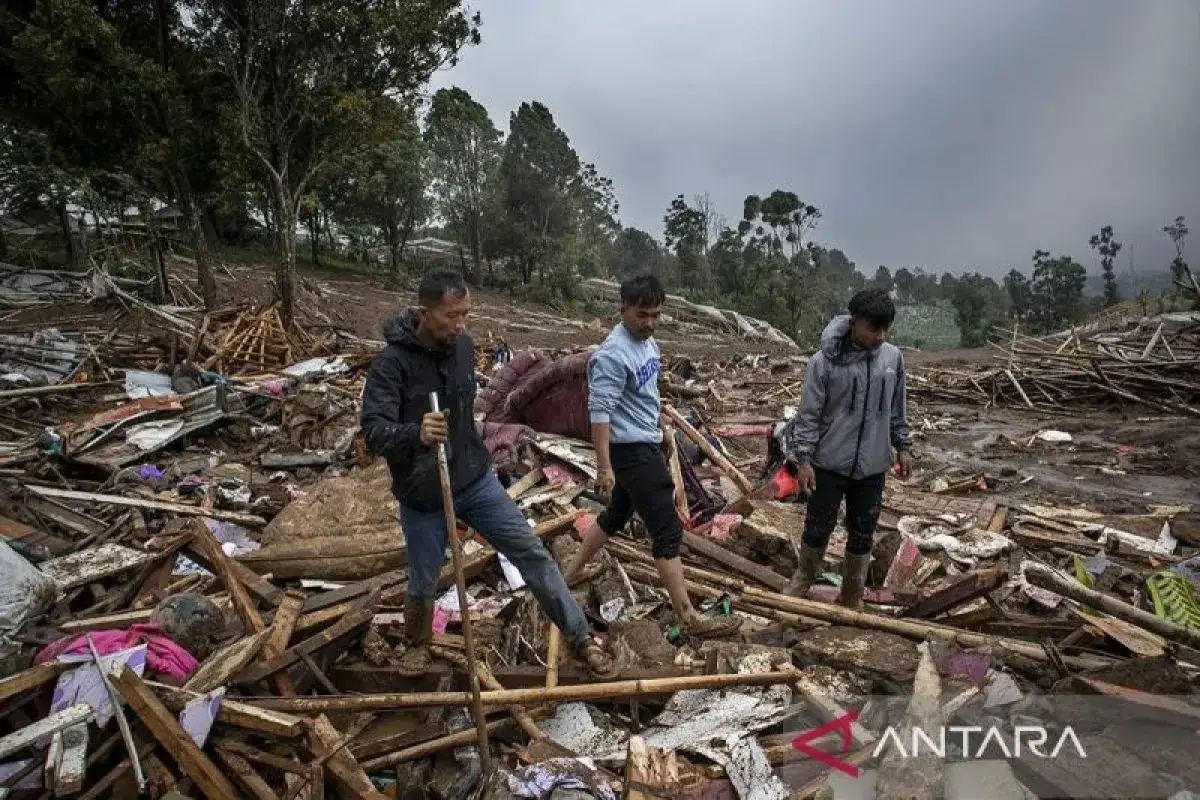
RRI.CO.ID, Jakarta - The Ministry of Environment will deploy a team of specialists to Cisarua Subdistrict, West Bandung Regency, West Java, to conduct a comprehensive assessment of environmental conditions following last week’s landslide. The study will be carried out scientifically to provide structured, data-based recommendations for disaster response.
Environment Minister Hanif Faisol Nurofiq said the experts are needed to evaluate landscape changes and the broader environmental impact. “We are sending a team of specialists, as we did in Sumatra, because environmental issues require scientific expertise. We cannot rely on guesswork to determine further response measures,” Hanif said in a statement on Sunday, January 25, 2026.
He explained that the assessment will not only examine the physical effects of the landslide but also ecological factors such as soil conditions, vegetation, and the potential for subsequent disasters. The findings, he added, will help ensure that future mitigation efforts are more targeted.
Hanif also highlighted the rapid urbanization and changing land use patterns around the disaster site, which he believes have contributed to environmental vulnerability.
He pointed to shifts in agricultural practices as a factor. “This is a consequence of massive urbanization in cities, which has led to dietary changes that are not part of our traditional customs. Crops such as potatoes, cabbage, and peppers are typically grown in subtropical regions,” he said.
According to Hanif, these crops generally thrive at altitudes of 800 to 2,000 meters above sea level, while Indonesia’s local landscapes differ significantly.
The expansion of farmland into previously underutilized mountainous areas, he noted, has further strained the environment. “Our region’s character is not like that. In the past, it was not as extensive, but now agriculture has spread into the mountains, opening new farmland,” he said.
To ensure the study is effective, the team of specialists will work with the regency administration under the coordination of the local regent. Academics and research institutions will also be involved in the landscape assessment, which is expected to take one to two weeks.
“We will conduct a very detailed analysis of this landscape. After that, we will take further steps,” Hanif said.
The landslide in Cisarua, West Bandung, was a major disaster triggered by heavy rains on January 24, 2026, and it left dozens dead and many more missing.
The incident occurred in Pasirlangu Village, Cisarua Subdistrict, in the early hours of Saturday morning, January 24, 2026, when torrential rainfall triggered the collapse of unstable slopes. The landslide buried at least 30 homes and swept through residential areas, forcing hundreds of people to evacuate.
According to the National Disaster Mitigation Agency (BNPB), the disaster initially claimed eight lives, but the death toll quickly rose to 17 as search and rescue operations continued. By January 26, joint rescue teams had recovered 25 bodies, while around 65 people were still unaccounted for.
Rescue efforts have been hampered by persistent rain and unstable ground conditions, raising fears of further landslides. Teams from the National Search and Rescue Agency (Basarnas), the police, and the military have been working together to locate survivors and recover victims, but operations have often been suspended due to safety concerns.
The landslide affected at least 113 residents from 34 families, with survivors being relocated to temporary shelters. (Misni Parjiati/Lasti Martina)
News Recomendation
Loading latest news.....