


"Everything is Organized": Jakarta's KRL Commuterline Passengers Speak
- 31 Des 2025 14:23 WIB
- Voice of Indonesia
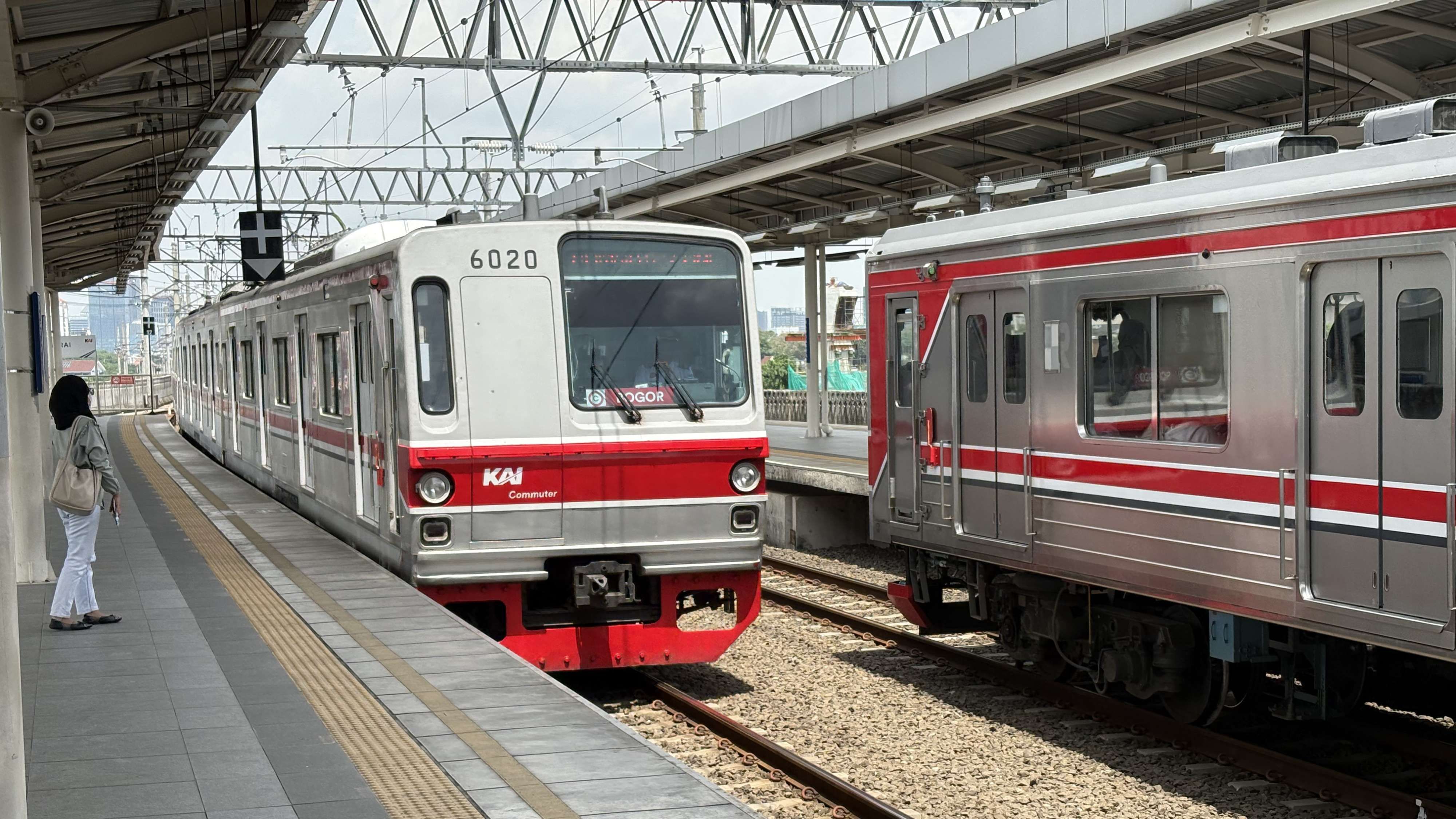
KBRN, Jakarta: KRL Commuterline, the commuter train system in the Jakarta metropolitan area, has become the mainstay for many of its residents. Speaking to RRI Voice of Indonesia, they shared their views on the largest commuter rail system in Southeast Asia.
KRL Commuterline is a seven-line rail system spanning approximately 332.2 kilometers, making it the largest in Southeast Asia. As of 2024, more than 1.3 million passengers depend on this system.
Fauzaan, a resident of Depok, West Java, is one of the regular passengers of the Jabodetabek KRL. Depok is located directly in south of Jakarta, making it a densely populated suburban city.
He travels daily from Depok to Jakarta to his office. With a distance of around 20 kilometers, commuting by private vehicle on congested roads is already quite a challenge.
"Because if you take the KRL, well, there’s no traffic. Besides that, it shortens the travel time, and it’s also cool," he said to the RRI Voice of Indonesia on Sunday (12/28/2025).
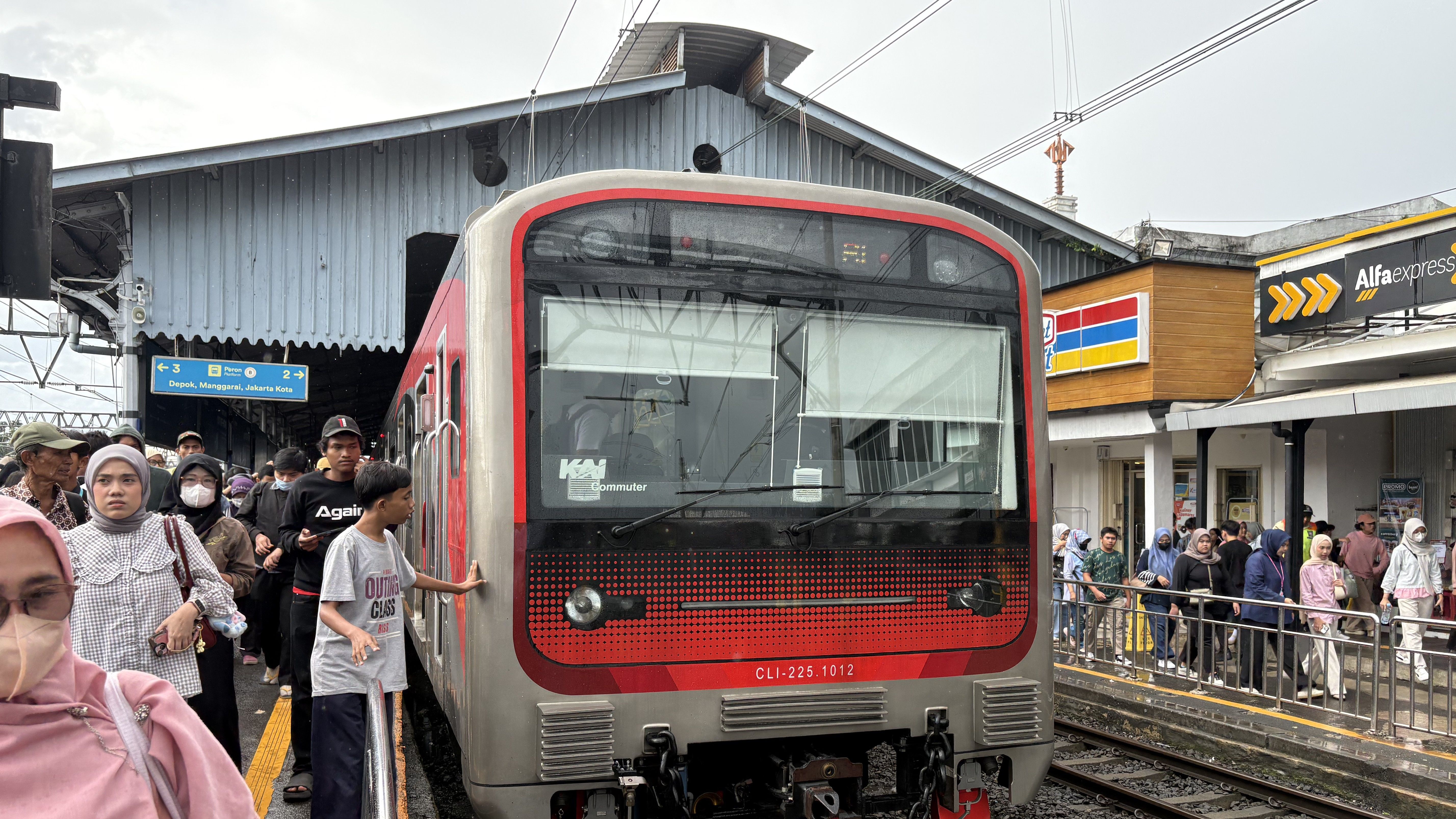
A new Indonesian-built CLI-225 electric multiple unit in Bogor Station, Bogor, West Java, on Tuesday (30/12/2025). (Photo: RRI VOI/Rama Shidqi Pratama)
There are several things Fauzaan likes about KRL Commuterline. One of them is the flow of passengers, which was previously not well-managed.
"But now everything on the KRL is organized. Starting from payment, boarding the train, until getting off, everything is systematized and orderly," he said.
Although the electric commuter train system has existed in Jakarta since the Dutch colonial era, its rejuvenation only began in the early 2010s. Previously known for its disorderliness and passengers sitting on the roofs of trains, KRL Commuterline now appears more organized, with more disciplined passengers.
Another thing he appreciates is the easier and more varied payment system. Currently, KRL Commuterline accepts various types of ticket payments, such as local electronic money cards and QR code—two options he emphasized.
"Hopefully, in the future, the integration between transportation systems can be more organized, so they can be well-connected and orderly," Fauzaan said.

Fauzaan (left) and Bayu (right), some of the KRL Commuterline passengers. (Photo:RRIVOI/Rama Shidqi Pratama)
Another response came from Bayu, a resident of the Special Region of Yogyakarta who has migrated to Jakarta. However, unlike Fauzaan, Bayu only rides KRL Commuterline occasionally.
"As for my experience riding the KRL, I’ve used it several times,” Bayu said, who is visually impaired.
Bayu further conveyed that he has ridden it several times, as a very similar system already exists in his hometown. Called the Yogyakarta Line, it is a single-line electric rail system stretching 52 kilometers that connects two cities in central Java: Yogyakarta in the Special Region of Yogyakarta and Surakarta in Central Java.
Bayu admitted that he sometimes relies on KRL Commuterline due to its frequent train intervals and many route options. However, he highlighted the station officers, whom he said have been friendly toward persons with disabilities like himself.
“So when I arrive at the station, the officers are already responsive, and they ask where I’m going. They help tap the card and guide me to the train. They usually coordinate with the destination station, so someone will also help me exit once I arrive,” he said.
He also pointed out the integration of KRL Commuterline with other modes of transportation. Several transportation hubs have now been established, such as in Dukuh Atas, Central Jakarta, and Cawang, South Jakarta.
“The train can be said to have good integration as well. At that time, I once took the LRT (light rail transit) and then transferred to the KRL. From the LRT station, I was escorted to the KRL station,” he said.
News Recomendation
Loading latest news.....