


Rare Indonesian "Saninten" Tree Found in Manjai Valley Conservation Area
- 07 Nov 2025 19:46 WIB
- Voice of Indonesia
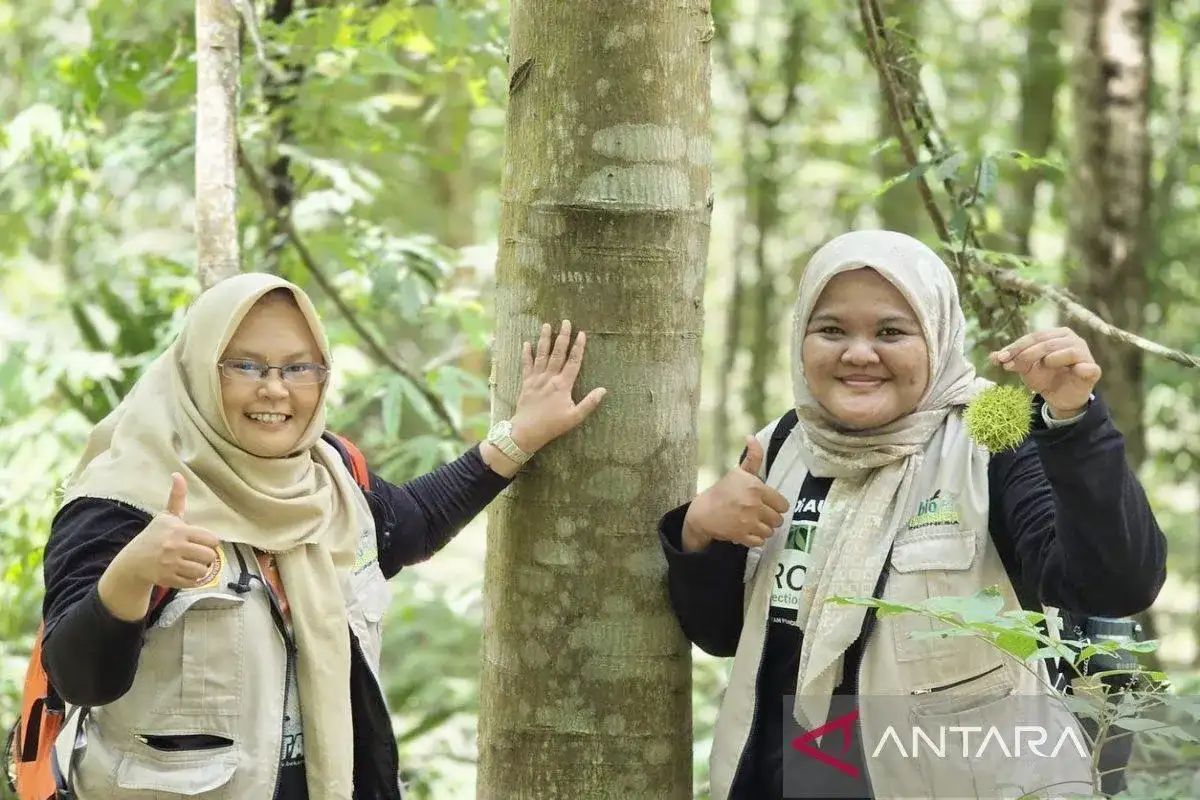
KBRN, Banjarmasin: A biodiversity observation team from the Biology Education Department at Lambung Mangkurat University (ULM) has successfully discovered the rare "saninten" tree (Castanopsis argentea), also known locally as the forest rambutan, in the tropical rainforest biodiversity park at Manjai Valley, Banjar Regency, South Kalimantan.
"Saninten is a native Indonesian tree whose existence is nearly extinct, and in some regions, it can even be declared locally extinct," said Luthfiana Nurtamara, head of ULM's Biodiversity Observation Team, on Friday, 7 October 2025, in Banjarmasin, as quoted by antaranews.com.
She highlighted that the International Union for Conservation of Nature (IUCN) has listed saninten as an Endangered Species. Luthfiana affirmed the team's commitment to preserving this tree species in its natural habitat.
Biologist Conservationist Amalia Rezeki, founder of the tropical rainforest biodiversity park at Manjai Valley, welcomed the finding enthusiastically. "This is glad tidings for us, especially since the tree is classified as rare and protected."
Amalia noted that the Conservation Strategy and Action Plan document identifies 12 priority tree species for conservation efforts, including saninten. According to Ministerial Regulation P.106/MENLHK/SETJEN KUM.1/6/2018, Castanopsis argentea is the only castanopsis genus species protected on a national scale in Indonesia.
Saninten’s biology is unique. It fruits only once every two years, and when it fruits annually, one year may yield empty fruits, making natural seedlings scarce in the wild.
Amalia outlined conservation plans following this discovery, emphasizing maintenance, care, and propagation efforts to sustain and enhance the species' survival.
She described the tree as reaching heights of 35-40 meters, with a cylindrical black trunk and elongated pointed leaves measuring 7-12 cm long and 2-3.5 cm wide.
The tree’s primary habitat is forested hilly and mountainous regions at altitudes from 150 to 1,750 meters above sea level, such as Manjai Valley’s elevation ranging from 100 to 340 meters.
This discovery and ongoing conservation efforts contribute significantly to preserving Indonesian endemic flora threatened with extinction, bolstering ecological research and protection in South Kalimantan. ***
News Recomendation
Loading latest news.....