


/la5xcopgtcyhoqz.jpeg)
KBRN, Bantul: On Sunday, August 3, 2025, Samas Beach in Bantul Regency, Yogyakarta, became a beacon of hope for marine conservation. In a carefully coordinated effort, 50 critically endangered Olive Ridley sea turtle hatchlings (Lepidochelys olivacea) were released into the sea, marking a vital step in their journey toward survival.
The release was led by reiSPIRASI, a community-driven initiative committed to protecting sea turtles and safeguarding essential nesting beaches. Their work reflects a deep dedication to restoring balance in coastal ecosystems.
At the same time, volunteers also planted evergreen casuarina trees along the shoreline, reinforcing the fragile habitat and contributing to long-term ecological resilience.
This event, themed Sore: Tukik Dari Masa Depan (Afternoon: Hatchlings from the Future), brought together 50 participants of all ages, from children to adults, at the Samas Turtle Conservation site in Dodogan Hamlet, Srigading Village, Sanden Subdistrict, Bantul Regency.
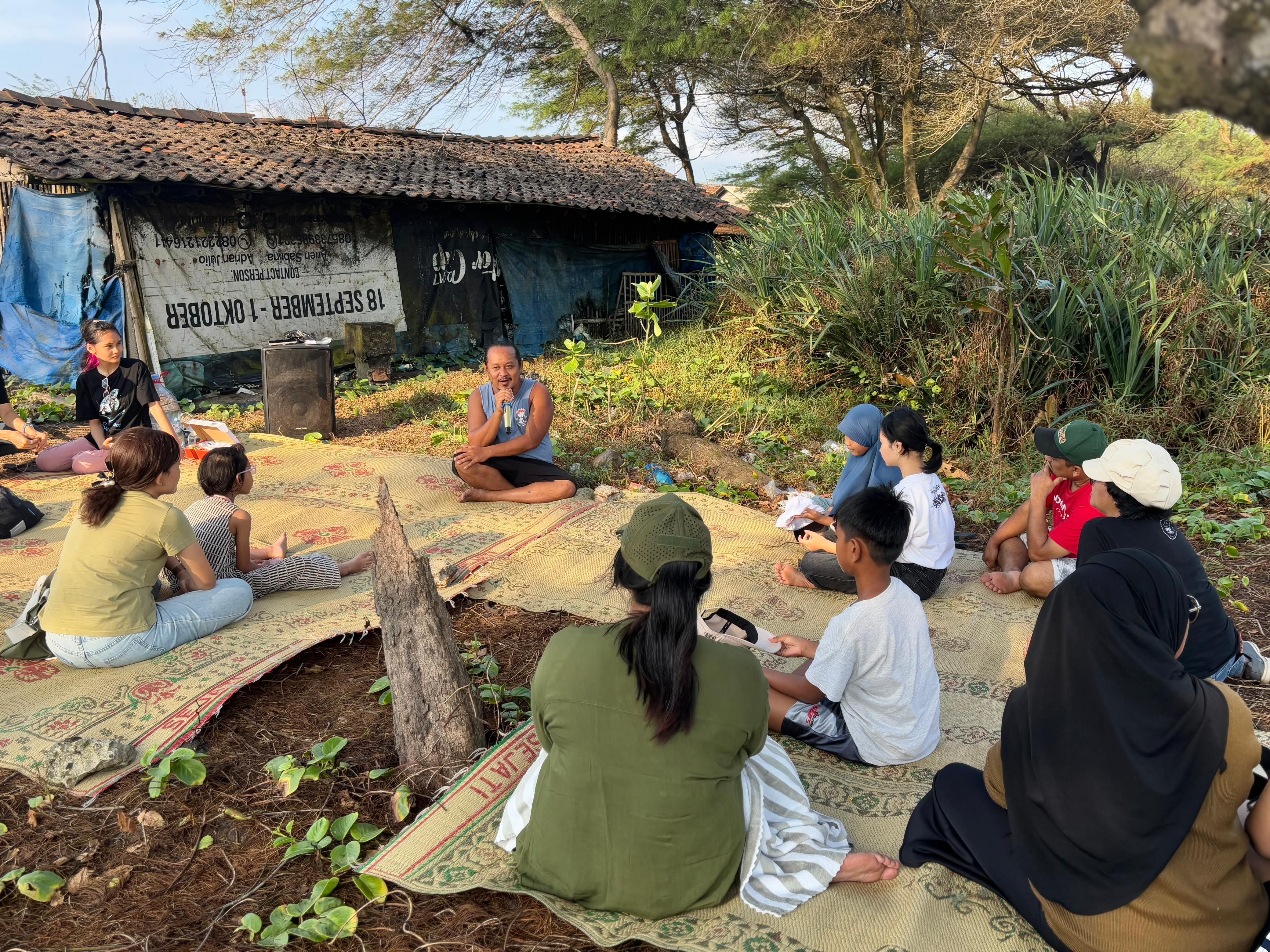
During a sharing session at Samas Beach, participants learned about sea turtle conservation, the inspiring story of local preserver Rujito, and the planting of casuarina trees, with insights from Deny Widyanto, co-founder of ReiSPIRASI. (Photo: RRI/Diva Rifdah Rizkia Puspitaningnala).
A profound natural phenomenon underpins this initiative: female turtles, once mature, are known to return to the very beach where they were born, often within meters of their original nesting spot, to lay eggs. This natural homing instinct emphasizes the long-term impact of today's conservation efforts.
"This theme was inspired by the film Sore: Istri dari Masa Depan (Afternoon: Wife from the Future), conveying that these hatchlings will send a message from the future: perhaps the future for hatchlings won't be easy, or they will open opportunities for future hatchlings, because what we do today, we won't necessarily see the results today," stated Deny Widyanto, a co-founder of reiSPIRASI, on the sidelines of the event.
The reiSPIRASI community has actively supported residents of Samas Beach, particularly Rujito, in their sea turtle conservation efforts. Their collaboration began around 15 years ago, on February 14, 2010, building upon Rujito's own two decades of dedication to saving turtles.
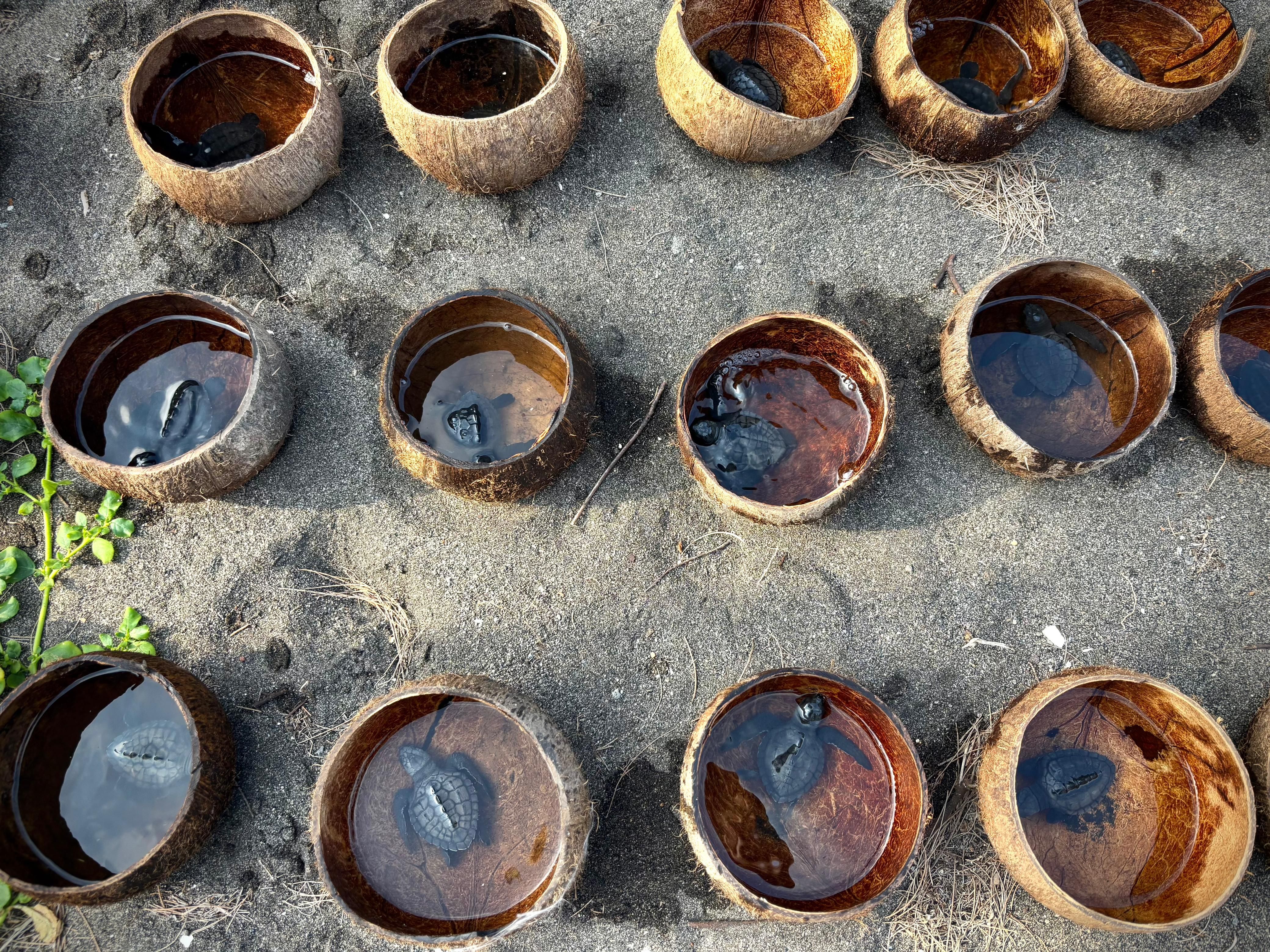
Hatchlings awaited their release into the sea, temporarily placed in individual coconut shell halves. (Photo: RRI/Diva Rifdah Rizkia Puspitaningnala).
Rujito’s path to conservation is nothing short of extraordinary. Once a turtle hunter who sold eggs and consumed the turtles himself, his perspective began to shift with the arrival of university students conducting research at Samas Beach. Invited to assist their studies, he felt a profound calling to protect the very species he once exploited.
Today, Rujito is a passionate advocate for sea turtle preservation. He envisions Samas not only as a sanctuary for marine life but also as a vibrant hub for educational tourism, where visitors can engage meaningfully with conservation and contribute to environmental learning.
He initiated conservation efforts at Samas Beach, pioneering a movement that eventually inspired similar initiatives at neighboring beaches like Pelangi Beach and Goa Cemara Beach. His dedication earned him the prestigious Kalpataru award twice, in 2007 and 2016, personally presented by the President of Indonesia for his environmental preservation work.
Early conservation activities involved participants planting casuarina trees, which serve multiple vital functions. These trees provide shade for visitors and help develop the area for tourism. Crucially, their dense foliage acts as a natural wind barrier, preventing salt-laden sea winds from reaching and damaging nearby agricultural lands.
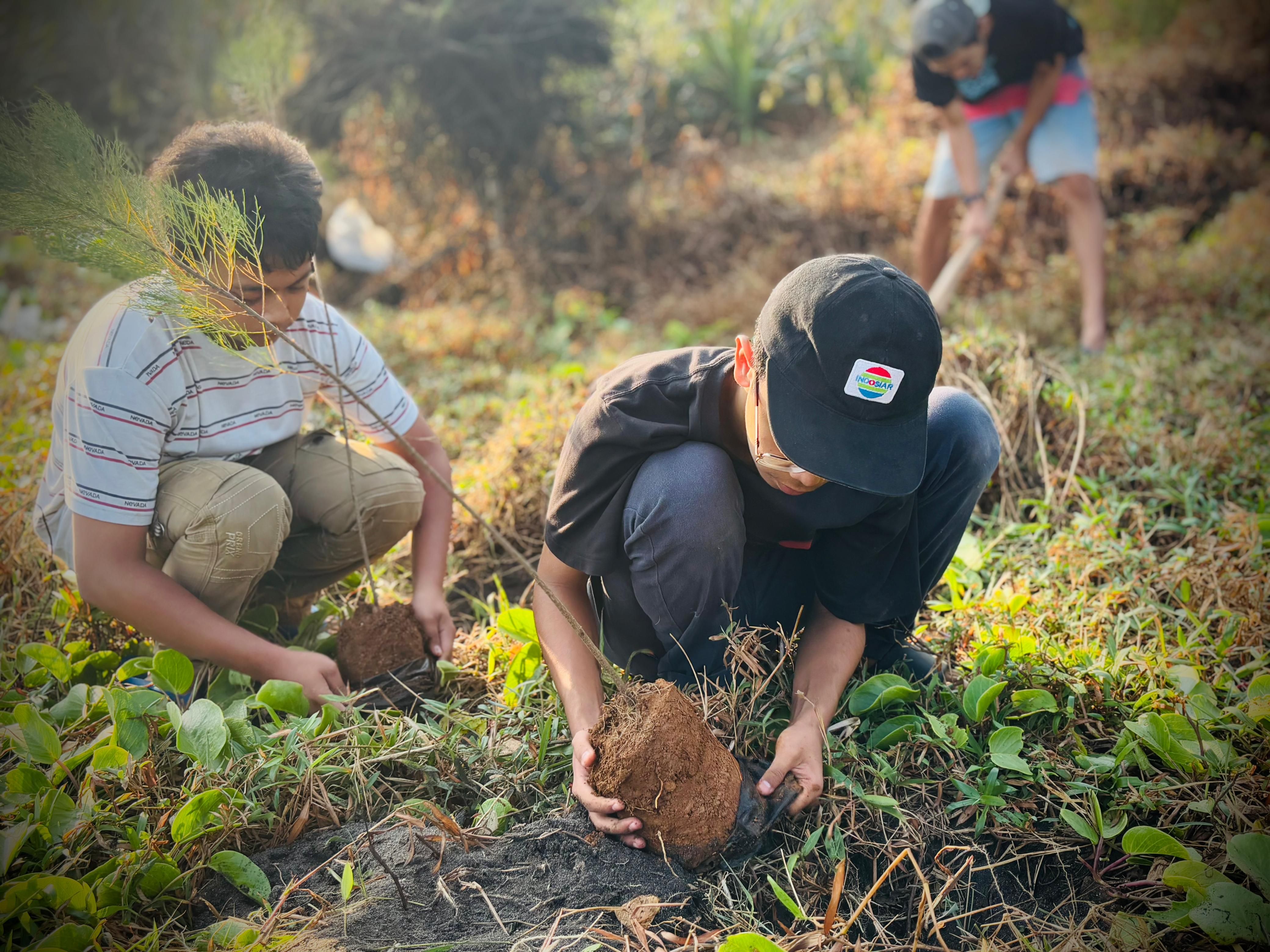
Participants planted casuarina trees around Samas Beach. (Photo: RRI/Diva Rifdah Rizkia Puspitaningnala).
"There were 100 casuarina tree seedlings provided by Kalbe Farma's CSR program for the greening of this beach, which were prepared for participants to plant. We hope that what we plant can grow large, to help the environment, our future, and the turtles," Deny stated.
The release of sea turtle hatchlings is carefully timed for late afternoon, just as the sun begins to set, an intentional strategy to boost their chances of survival. This timing aligns with the hatchlings’ natural camouflage: their dark upper shells blend into the sand from the view of aerial predators like birds, while their pale undersides help them disappear into the shimmering surface waters, shielding them from predatory fish below.
Local knowledge adds a fascinating layer to conservation efforts. Certain natural cues are believed to signal when a mother turtle may come ashore to lay eggs. For instance, if grey herons are seen hovering like kites over the water, it often foretells a nesting event that evening.
Other signs include a strong onshore breeze carrying sharp grains of sand and the presence of foamy, pungent waves—both considered harbingers of an imminent turtle nesting.
"Turtles possess a built-in GPS in their heads, allowing them to read the Earth's geomagnetic field," Deny explained.
He added that when a mother turtle comes ashore, digs a nest, and lays eggs, a process of imprinting begins within the eggs, registering the Earth's geomagnetic location. "This imprinting continues as the eggs incubate, hatch, and even when the hatchlings are released, a process called 'sand sensing' occurs.”
/xa79n47coxlwwb2.jpeg)
Participants released the hatchlings into the sea, watching them make their way towards the ocean. (Photo: RRI/Diva Rifdah Rizkia Puspitaningnala).
Female sea turtles typically hatch between June and July, reaching maturity and nesting age between 30 and 50 years old. These mothers emerge from the ocean at night, usually after 9 p.m., to lay eggs, as their heavy bodies and aquatic adaptation make them susceptible to dehydration in the heat of the day.
A single mother turtle can lay around 100 eggs. In this instance, 108 eggs were found, with approximately 60 hatching on July 12, 2025. It is crucial to remember that Olive Ridley sea turtles are highly endangered, making it strictly prohibited to use any part of them -- eggs, meat, shell, blood, bones, or any other body part -- whether alive or dead, intentionally or unintentionally.
Mesti, one of the participants in the sea turtle conservation event, shared her motivation for joining, sparked by social media observations. She had seen conservation efforts in other countries, like Australia, where adult turtles received care, including the removal of barnacles.
Inspired by her growing interest in turtle conservation, Mesti began searching for organizations in Indonesia dedicated to protecting these endangered species. When she discovered a community in Yogyakarta actively engaged in sea turtle preservation, she was eager to get involved.
“I wanted to join this initiative to give my child a meaningful experience, an opportunity to learn about the environment and develop a sense of care for it,” Mesti shared.
She added, “My hope is to contribute to the sustainability of life around us, and to play a role in environmental protection as an ordinary citizen, something not everyone gets the chance to do.”
/em3m68xxinln2bl.jpeg)
Mesti and her child secured a casuarina sapling to a bamboo stake for stability. (Photo: RRI/Diva Rifdah Rizkia Puspitaningnala).
As the sun dipped below the horizon, marking the conclusion of the release and planting activities, the collective hope for a sustainable future resonated among all participants. This multi-faceted conservation effort stands as a testament to what dedicated community action can achieve for endangered species and vital ecosystems.
"From this activity, it is hoped that a shared awareness can be fostered about the synergy between the past, present, and future. If we do nothing today, we cannot expect a future. We don't know if the hatchlings we release could be the last generation,” Deny concluded. ***
News Recomendation
Loading latest news.....