



'Buruh Gendong', Yogyakarta's Unsung Family Providers
- 28 Apr 2025 14:29 WIB
- Voice of Indonesia
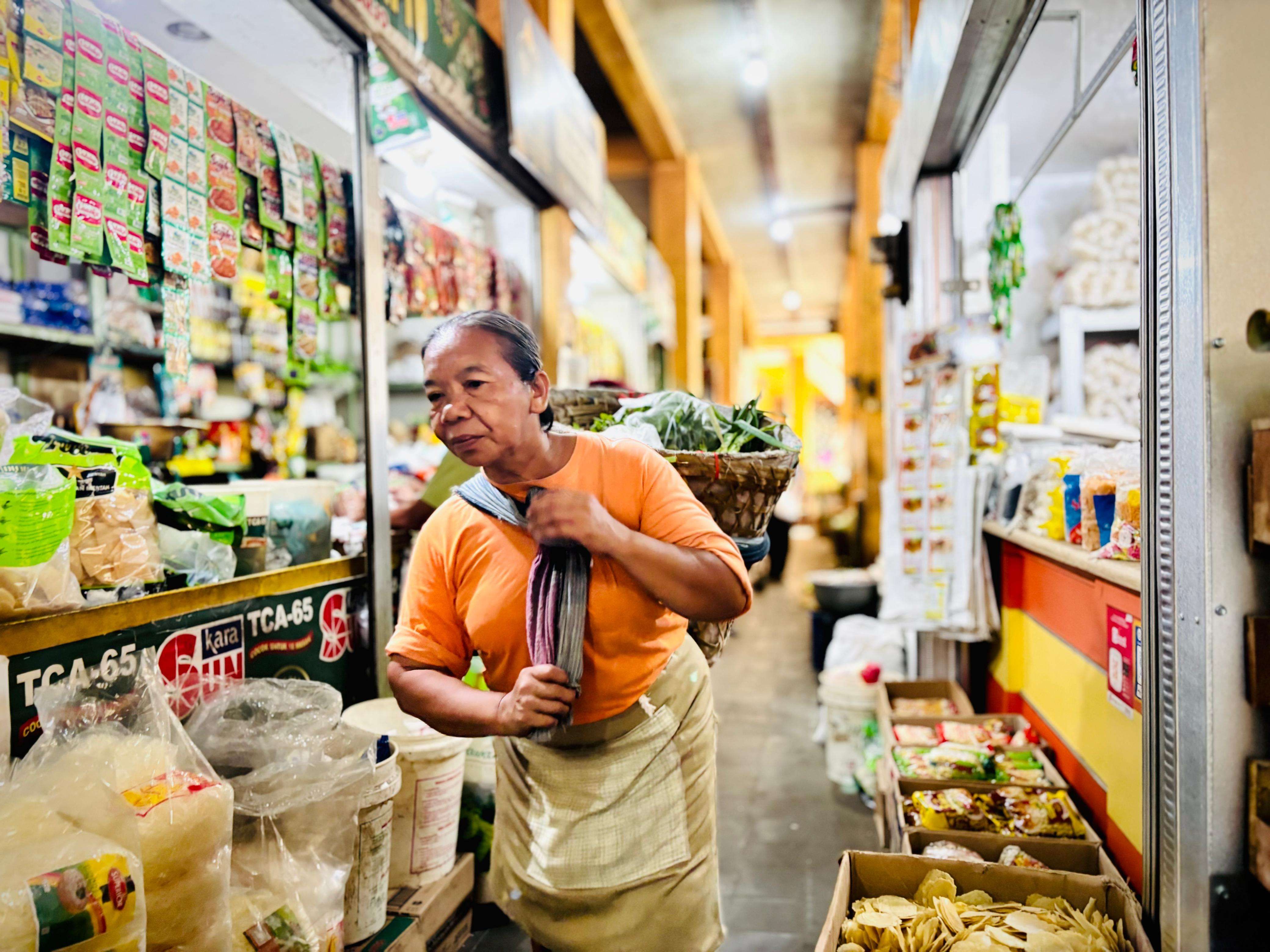
KBRN, Yogyakarta: In the bustling heart of Yogyakarta, Pasar Beringharjo, the province's oldest and most iconic traditional market, flourishes as a bustling center for affordable goods and a place of a unique workforce: buruh gendong, or female porters.
These mostly elderly women, their backs bearing heavy loads, navigate the market's labyrinthine alleys with surprising agility, a testament to their decades-long presence and resilience within the city's economic fabric.
Their existence underscores both the diverse employment landscape of Yogyakarta and the stark economic pressures compelling women to seek work, often in physically demanding roles, to support their families.
For decades, the buruh gendong of Yogyakarta have demonstrated remarkable agency, organizing to fight for their rights and livelihoods. This collective action highlights their marginalization across economic, educational, political, and social spheres, further compounded by the dual burden they often carry as working mothers and household managers.
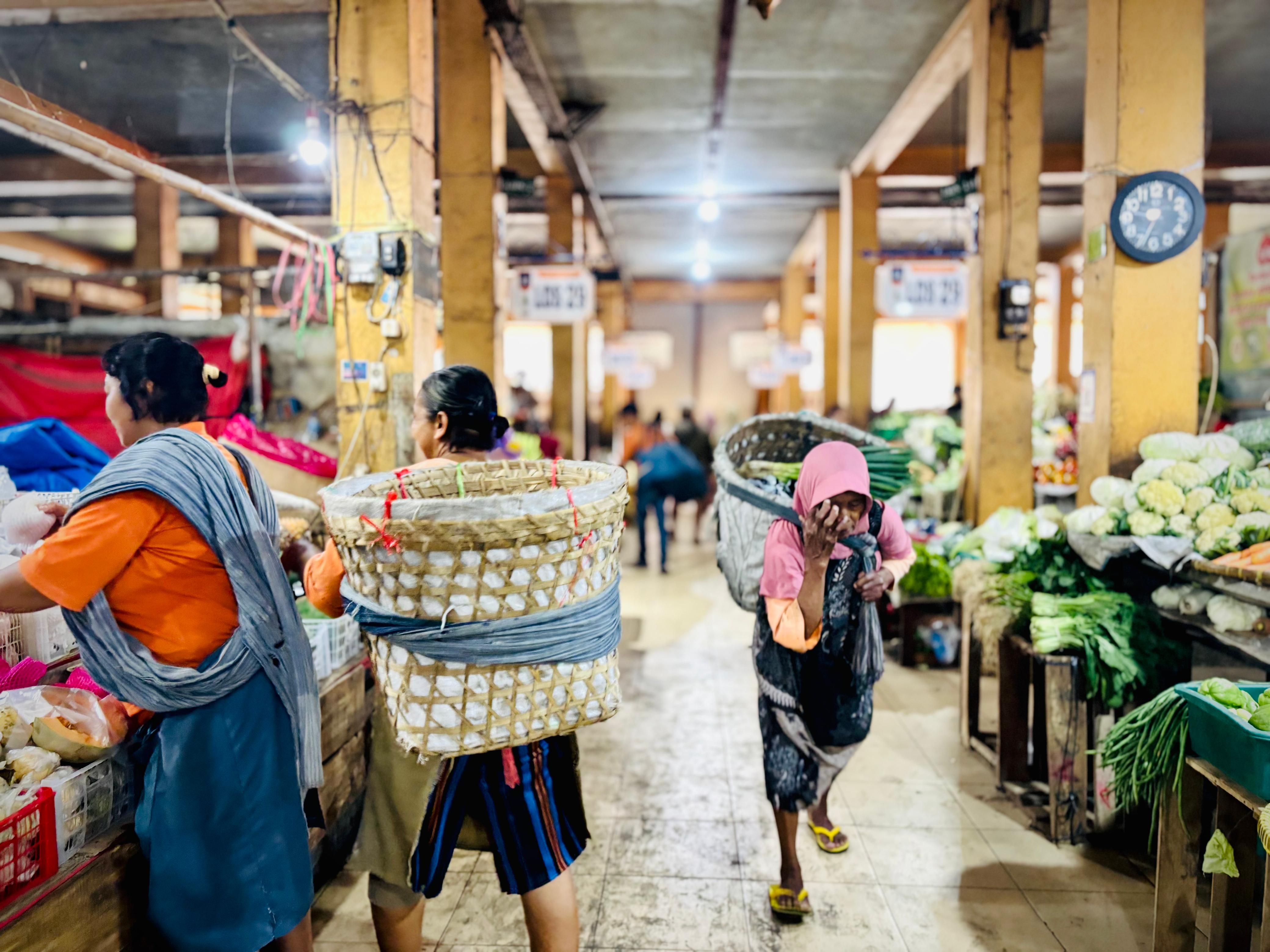
Amidst the lively atmosphere of Beringharjo Market, several 'buruh gendong' received orders from vendors, carefully placing goods into their large bamboo baskets, ready to transport them for their regular customers. (Photo: RRI English/Diva Rifdah Rizkia Puspitaningnala)
Despite the modernization of Beringharjo Market, these women persist, their presence a poignant reminder of the informal economy's enduring role and the strength of Javanese women challenging societal limitations through their labor.
"Buruh gendong have been around for a very long time, and we have been receiving assistance from YASANTI since 1992," Isah, Deputy Chairperson of Sayuk Rukun, an association of Beringharjo Market's buruh gendong, said earlier this week.
YASANTI (Yayasan Annisa Swasti) is an NGO that fights for the rights of female workers and has often provided training and assistance to them.
Isah said, the Sayuk Rukun association comprises of buruh gendong from four markets across Yogyakarta Province, namely Giwangan, Gamping, Kranggan, and Beringharjo Markets, all have been receiving assistance such as trainings and workshops from YASANTI.
Imagine the vibrant chaos of Pasar Beringharjo: the cacophony of bartering voices, the rich aroma of spices and street food hanging in the air, and the colorful array of merchandise spilling from stalls.
Amidst this lively scene, the buruh gendong move with practiced efficiency, their weathered faces etched with stories of hardship and perseverance.
With sturdy baskets or bundles secured to their backs, they become a vital, albeit often unseen, artery of the market, transporting goods and connecting vendors with their livelihoods, their tireless efforts a powerful symbol of endurance against economic adversity.
Among the many buruh gendong in Beringharjo Market is Parti, a 64-year-old woman from Sentolo, Kulon Progo Regency, who has carried burdens here for 30 years, working daily from 8 a.m. to 3 p.m. local time. On slow days like Mondays, she confided that her earnings barely cover her bus fare.
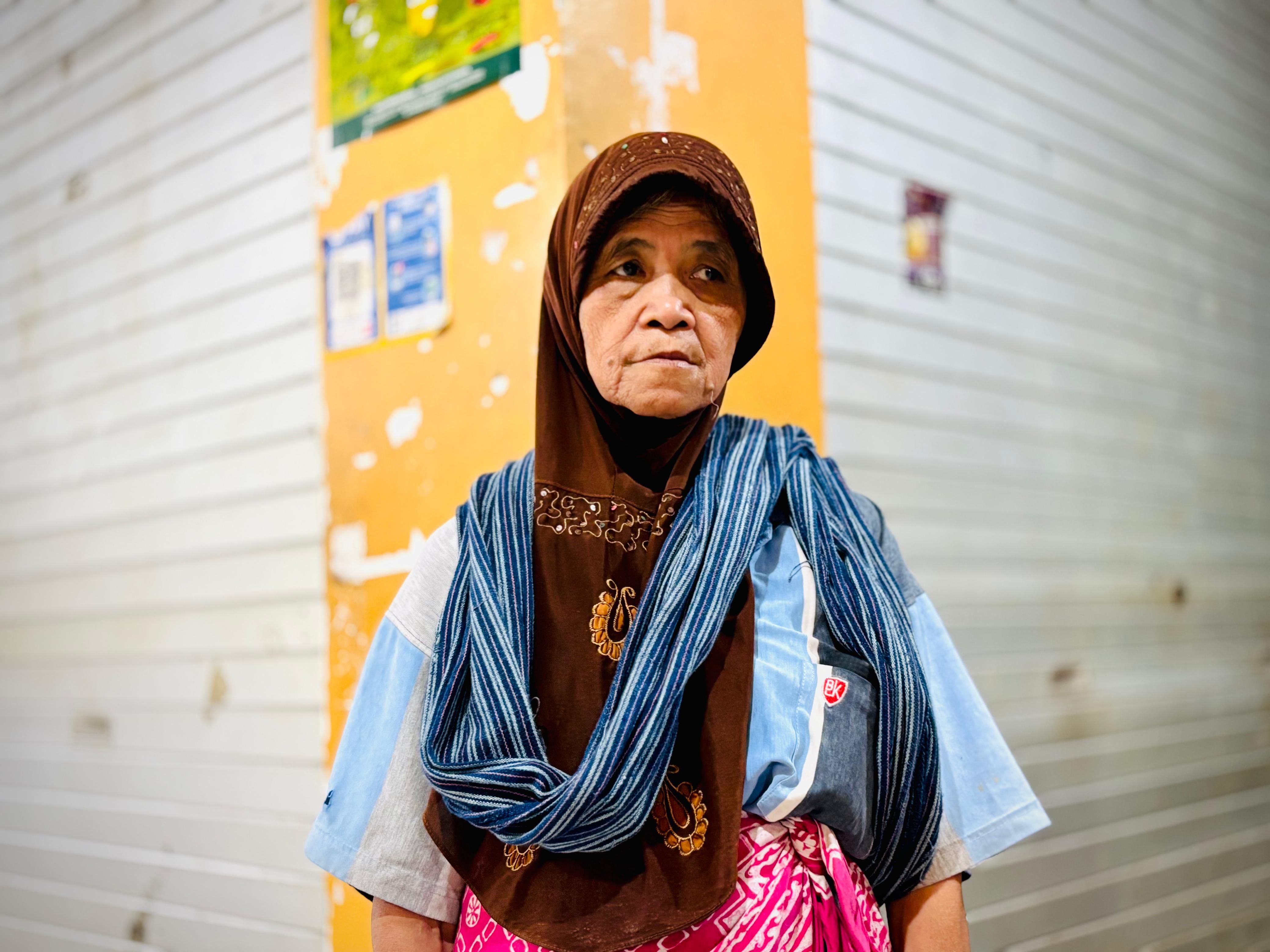
Parti, one of the 'buruh gendong' in Beringharjo Market, stood with a determined expression, suggesting the tireless work she undertakes carrying heavy goods daily to support her family. (Photo: RRI English/Diva Rifdah Rizkia Puspitaningnala)
"I used to take care of my grandchildren, but now that they've grown up, I've become a buruh gendong here," Parti said, adding that her children live far away from her home, while her husband who used to work at construction site is now unemployed and just does housework.
"As long as I can work, I will," said Parti who usually carries goods weighted over 15 kilograms on her back while working.
Lasiyem, another resilient buruh gendong, told a similar story. Despite her aching legs requiring a leg brace, she perseveres, diligently carrying loads exceeding 50 kg, sometimes up to 70 kg, from the first to the third floor, even to the parking area at the top, and navigating the market's corridors daily.
With unwavering determination, Lasiyem who has been a widow for two decades steadily carries these goods, often food supplies, using traditional woven bamboo containers.
She said she has three children. Her husband left her when their children were still very young. "I do the job because I didn't go to school. I'll do any work as long as it's halal," said Lasiyem, adding that he sometimes received aid from the government in the form of staple foods.
She explained that her services are typically used by regular customers, as passersby or tourists rarely hire her. "When regular customers come, we earn money. If they don't, we entrust it to God. Sustenance will always come as long as we keep praying," she remarked.
Isah recounted that since the COVID-19 pandemic, the market has become quieter. She previously could earn over IDR 50,000 (2,98 USD) a day, but now her income consistently falls below that amount.
She attributed this decline to more customers opting for online shopping and some vendors offering delivery services to transport orders directly to buyers. Even last Eid al-Fitr, which was expected to be busy, the market remained relatively quiet.
Isah typically earns IDR 5,000 (USD 0.30) for her service, which involves carrying 50-60 kg of goods to the second or third floor of the market. "We can't set fixed prices for our services here. The payment depends on how much people are willing to give," she explained.
Beringharjo Market is home to a community of around 210 buruh gendong, with approximately 190 currently active, spread across the market's three floors, and predominantly originating from Kulon Progo.
Sharing a sense of camaraderie and practicality, they often utilize a shared shuttle bus for their daily commute, a round-trip costing IDR 20,000 (1,19 USD), fostering a collective journey to and from their demanding work.
Sutiyem, another buruh gendong, has found her own way to adapt to the circumstances. Since the onset of the COVID-19 pandemic, she has started selling meals at the market, as customers for her porter services have become increasingly scarce.
She said she could sell 60 portions of various meals such as nasi bungkus oseng (wrapped steam rice served with stir-fried vegetables), kupat tahu (rice cake and fried tofu served with peanut sauce), jenang garut (arrowroot porridge), and tempe benguk, traditional food made of koro benguk (Mucuna pruriens), a type of legume.
"By selling meals, I can still earn money, even during quiet times when there is no demand for portering services," Sutiyem explained.
Isah adopted a similar approach, selling wedhang uwuh, a traditional Javanese herbal drink. With her husband—formerly a driver—losing his job during the pandemic, Isah has become the family's primary breadwinner. Driven by necessity, she feels compelled to find ways to support her household
"I hope the market will become busy again because here, most of the buruh gendong are the breadwinners of our respective families, even though we are women," Isah said.
With hope in their voices, the buruh gendong appealed for government attention, seeking recognition for their relentless contributions as part of the informal sector. Their plea emphasized the need for vital social protection and health insurance.
Though often overlooked, their steadfast efforts weave an essential thread in the vibrant fabric of the local economy. They long for the acknowledgment and security that formal recognition could bring.
"For all the female buruh gendong, let's stay strong and keep up the spirit. Hopefully, we'll remain healthy and resilient. Although we've been recognized as market residents, we must continue striving to be acknowledged as informal workers," Isah concluded. ***
News Recomendation
Loading latest news.....