



Getting to Know Lt. Gen. S. Parman, Intelligence Officer and Revolutionary Hero
- 14 Agt 2026 16:25 WIB
- Voice of Indonesia
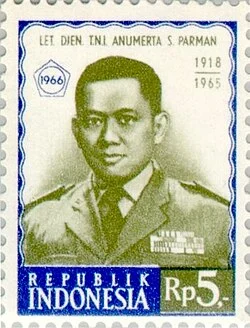
RRI.CO.ID, Jakarta - Lieutenant General TNI (Posthumous) Siswondo Parman or S. Parman is one of Indonesia's military figures known for his role in the field of intelligence. He was also one of the seven Heroes of the Revolution who fell during the events of September 30, 1965. Interestingly, S. Parman was the biological brother of Sakirman, one of the important figures in the Indonesian Communist Party (PKI). Although they came from the same family, they had different political views.
S. Parman was born in Wonosobo, Central Java, on August 4, 1918. He was the sixth child of 11 siblings from the couple Kromodihardjo, a merchant, and his wife. Since childhood, Parman helped his mother sell goods at the Wonosobo market. He pursued his education at the Hollandsch Inlandsche School (HIS) in Wonosobo, then continued to MULO and Algemeene Middelbare School (AMS) in Yogyakarta. After completing AMS, Parman continued his education at the Sekolah Tinggi Kedokteran (STOVIA) in Jakarta, but his studies were interrupted after Japan occupied Indonesia.
During the Japanese occupation, Parman worked at the Kenpeitai Office and was once arrested on suspicion by the Japanese authorities. After being released, he was sent to Japan to attend the Kenpei Kasya Butai training. That experience later became one of the assets in his career journey in the military and intelligence fields. After Indonesia proclaimed its independence, Parman joined the People's Security Army (TKR) and by the end of December 1945 was entrusted with the position of Chief of Staff of the Army Police Headquarters in Yogyakarta.
In the struggle to defend independence, Parman was involved in guerrilla warfare against the Dutch Military Aggression II. His career continued to develop after that. In December 1949, he was assigned as the Chief of Staff of the Jakarta Raya Military Governor and played a role in dismantling the Army of the Queen of Justice (APRA) movement led by Raymond Westerling. In 1951, Parman was sent to the United States to attend the Military Police School, which further strengthened his experience in the fields of security and intelligence.
In 1964, Parman was entrusted as the Assistant I to Minister/Army Chief of Staff Ahmad Yani with the rank of Major General. As an intelligence officer, he was aware of various political and security developments occurring at that time. When the proposal to form the Fifth Force, involving labor and peasant groups in the armed forces, emerged, Parman, along with several Army officers, rejected the idea.
The rejection of the formation of the Fifth Force took place amid rising political tensions between groups with differing views on the direction of the country. The situation then escalated into a political and military conflict in 1965. S. Parman was one of the Army officers targeted for abduction in the events of September 30, 1965.
In the early hours of October 1, 1965, S. Parman was abducted from his residence by the troops involved in the movement. He was then taken to the Lubang Buaya area in East Jakarta and was found to have passed away along with several other Army officers. The incident marked the end of his service as a military officer who had been in a career since the early days of independence.
S. Parman was later designated as a National Hero of the Revolution and was buried at the Kalibata Heroes Cemetery in Jakarta, alongside six other officers. His contributions in the fields of military and intelligence became part of Indonesia's defense history, while his life story also reflected the political and military dynamics that occurred from the early Republic to the mid-1960s.
News Recomendation
Memuat berita terbaru.....