



Jakarta’s Old Town Promotes Public Transit for Sustainable Tourism
- 14 Jun 2026 17:07 WIB
- Voice of Indonesia
Poin Utama
- Jakarta’s Kota Tua (Old Town) management urges visitors to use public transportation.
- A massive multi-transit hub integration is planned for 2029.
- Infrastructure upgrades prioritize sustainability and tourism comfort.
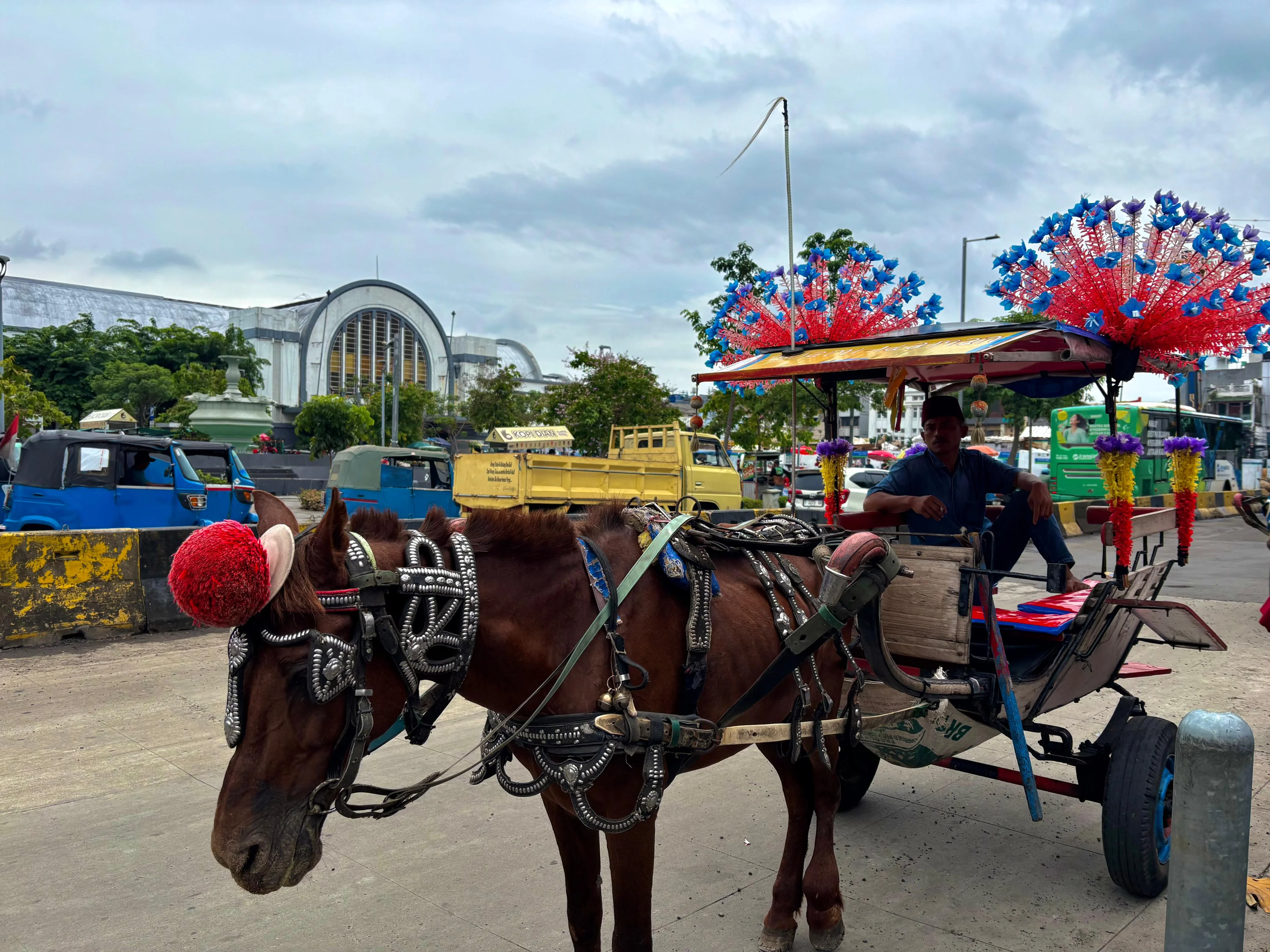
RRI.CO.ID, Jakarta - Jakarta’s historic Kota Tua (Old Town) is being reshaped into a model of sustainable urban tourism, with its management urging visitors to rely on Transit Oriented Development (TOD) principles by using public transport.
Head of the Old Town Management Unit, Denny Aputra, explained on Sunday, June 14, 2026, that the goal is to make access easier while reducing reliance on private vehicles. “We encourage the use of TOD, transportation to and from here. The goal is to simplify access for visitors,” he said, as quoted by Antara.
Kota Tua has long been a favorite destination, easily reached by commuter rail (KRL) and other public transport options. Tourists arrive not only from Jakarta but also from surrounding regions and beyond. “Visitors from Serang, Banten, are among those who frequently use trains to visit Kota Tua,” Denny noted, highlighting the area’s regional appeal.
Beyond accessibility, the district offers a unique atmosphere with its historic architecture and open public spaces. These features remain central to its charm, drawing both domestic and international tourists seeking cultural and heritage experiences.
Transport integration is being strengthened as part of the revitalization program of Kota Tua, which is expected to reach a milestone by 2029. Public education is already underway through the MRT Museum, which explains the development of Jakarta’s MRT and future integration plans at Jakarta Kota Station.
“By 2029, Transjakarta and MRT will be connected through Kota Station. The station will be integrated, MRT connected, Transjakarta connected,” Denny explained.
Alongside connectivity, the management is preparing facility upgrades including waste separation programs, improved road access, enhanced security, and stronger visitor information services. These efforts aim to make the district more comfortable and environmentally friendly.
A major feature of the revitalization is the planned introduction of a Low Emission Zone (LEZ) to limit private vehicles. “One of the plans is to build a LEZ or Low Emission Zone. We will restrict vehicles once everything is ready,” Denny said, stressing the importance of sustainability.
The government also intends to revive the historic tram system, which once operated in the area, but with modern electric power. “The tram will follow the old routes, but it will run on electricity in the future,” Denny explained. The tram is expected to connect Kota Tua with strategic points, including the Sunda Kelapa port, though final route details are still under review.
These initiatives form part of a broader revitalization strategy that combines heritage preservation, tourism development, and eco-friendly transport. Denny emphasized that the project is designed to restore Kota Tua’s historical value while enhancing visitor comfort.
“The Governor sees this as a way to revive history and ensure that by 2029, Kota Tua becomes a global destination for Jakarta,” he concluded.
The revitalization aligns with the completion of the MRT Lebak Bulus-Kota line, targeted for early 2029, which will further strengthen the district’s role as a hub of culture, history, and sustainable mobility. This transformation reflects Jakarta’s commitment to Transit Oriented Development, the creation of a Low Emission Zone, and the revival of electric trams in Kota Tua as part of its global city vision. ***
News Recomendation
Memuat berita terbaru.....