



UGM Lecturer Develops AI‑Powered Smart Waste Bin to Boost Circular Economy
- 06 Okt 2026 18:44 WIB
- Voice of Indonesia
Poin Utama
- UGM’s AI-powered Smart Waste Bin could improve waste sorting while generating data on waste types, weight, location and carbon emissions.
- WESTA could support circular economy efforts by linking waste data with producers and offering incentives for users who sort recyclable waste.
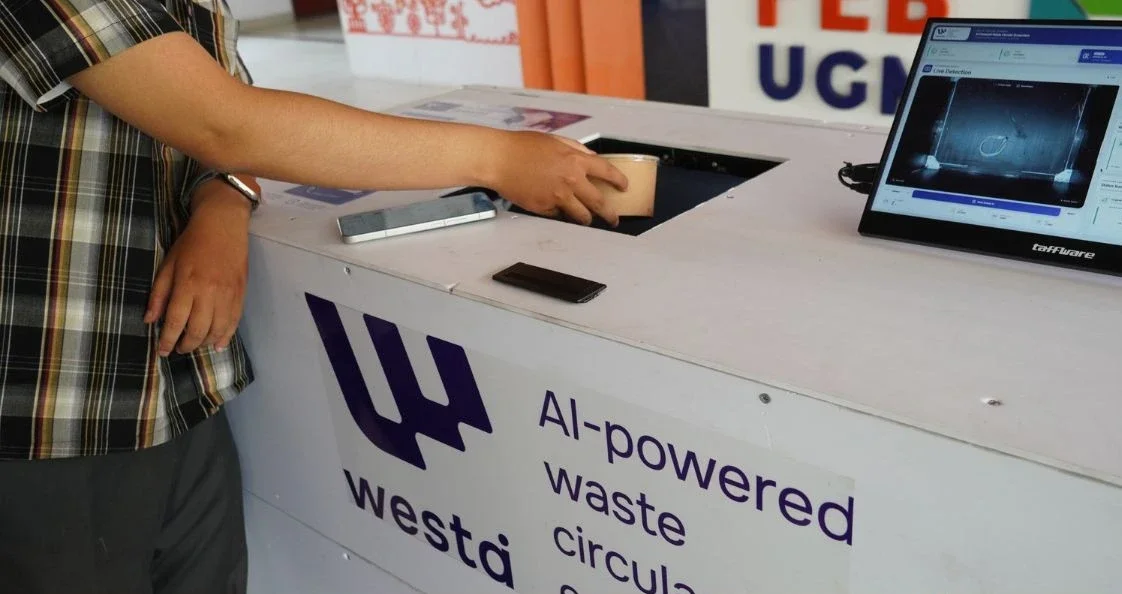
RRI.CO.ID, Jakarta - Indonesia could strengthen data-driven waste management and expand its circular economy through an artificial intelligence-powered Smart Waste Bin developed by Gadjah Mada University (UGM), which can identify waste, estimate its weight, map disposal locations and calculate carbon emissions.
A lecturer at UGM's Faculty of Economics and Business, Luluk Lusiantoro, has unveiled Smart Waste Bin -- an artificial intelligence‑based device designed to automatically identify and sort waste while generating valuable data on waste type, weight, location, and carbon emissions.
The innovation forms part of the WESTA (AI‑Powered Waste Circular Ecosystem), aimed at reducing errors in manual waste separation.
“Often, mistakes occur even when bins are labeled organic, inorganic, and residual. With AI, users simply place waste in the smart bin, and the system sorts it automatically,” Luluk explained, as quoted on UGM's official website.
Developed with Qubit Instrument (CV Bumi Lestari), the bin currently recognizes three categories -- organic, inorganic, and residual -- with plans to expand to hazardous and toxic waste.
Integrated with the WESTA mobile app, the system displays identification results, including product brands, supporting Extended Producer Responsibility by linking waste data back to manufacturers.
The device connects via Bluetooth Low Energy, allowing users to scan waste and receive information on category, estimated weight, and carbon footprint reduction. A reward system is also being developed, enabling recyclable items such as plastic bottles to be converted into points for incentives.
The project is part of the Innovation Development Grant (HPI) 2026, designed to scale up WESTA into an operational system. By August 2026, electronic installation and AI integration were completed, with trials planned in FEB UGM. Next steps include expanding waste classification, optimizing AI accuracy, and testing usability.
Luluk emphasized that Smart Waste Bin is not only a tool for households but also a data‑driven solution to support circular economy practices. “Waste management should go beyond disposal and sorting; it must also generate insights that guide decision‑making and strengthen sustainable economic ecosystems,” he said. ***
News Recomendation
Memuat berita terbaru.....