



Peanut Waste Innovation Inspires Sustainable Snack Bar Development
- 12 Agt 2026 18:19 WIB
- Voice of Indonesia
Poin Utama
- The innovation addresses food waste, underutilized crops, and malnutrition in Da Nang, Vietnam.
- The results were shared to enable Da Nang partner communities to replicate the process independently.
- A student at Brawijaya University developed a nutritious snack bar from peanut milk residue.
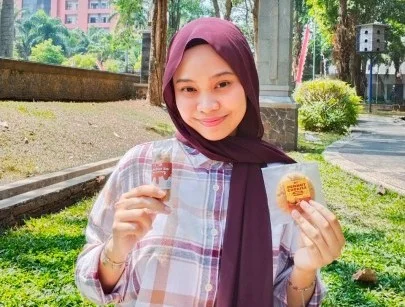
RRI.CO.ID, Malang – What began as a simple idea in a student program has grown into a cross‑border initiative with real impact. At Brawijaya University (UB), Zahrah Nabila Ariq has transformed peanut waste into a nutritious snack bar, showing how local resources can be reimagined to address global challenges.
Her project is part of the International Community Development Thematic SDGs under the Students Build Villages – Doctors Serve (MMD-DM) program, under the supervision of Sudarma Dita Wijayanti, and carried out in collaboration with the University of Science and Education – The University of Da Nang (UED–UD), Vietnam.
The innovation centers on using the solid by‑product from peanut milk extraction. Instead of discarding this residue, Zahrah dries and processes it into the base for a snack bar, an application of the zero‑waste concept in food production.
By combining the peanut residue with oats, dried fruit, honey, and peanut butter, she created a chewy yet crunchy bar with a distinctive nutty flavor. Consumer testing with 34 panelists confirmed strong acceptance across taste, texture, aroma, and appearance.
Her work is not only about product development but also about addressing pressing issues in Vietnam. Rising food waste in Da Nang, underutilization of abundant peanut crops, and the country’s triple burden of malnutrition all inspired the project.
By introducing plant‑based, affordable, and nutritious alternatives, Zahrah’s snack bar offers both environmental and economic value.
“Peanuts are abundant in Central Vietnam, but local use is limited to simple preparations like boiling or roasting. This innovation shows how by‑products can be turned into something with higher value,” explained Sudarma, as quoted on UB's official website on Wednesday, August, 2026.
Beyond the snack bar, Zahrah’s team also developed peanut yogurt and peanut butter, ensuring that every part of the crop is maximized. The results were shared through modules, posters, and video tutorials, enabling partner communities in Da Nang to replicate the process independently.
This dissemination stage ensures that the innovation is not confined to academia but reaches households and small businesses.
The project highlights how student‑led initiatives can contribute to the Sustainable Development Goals by tackling waste reduction, nutrition, and sustainable consumption.
More importantly, it demonstrates that simple, locally grounded ideas--like turning peanut residue into snack bars--can resonate globally when paired with research, collaboration, and community engagement. ***
News Recomendation
Memuat berita terbaru.....