



Indonesia Develops Radar Absorbing Material Based on ZnO Nanocomposite
- 30 Jul 2026 16:35 WIB
- Voice of Indonesia
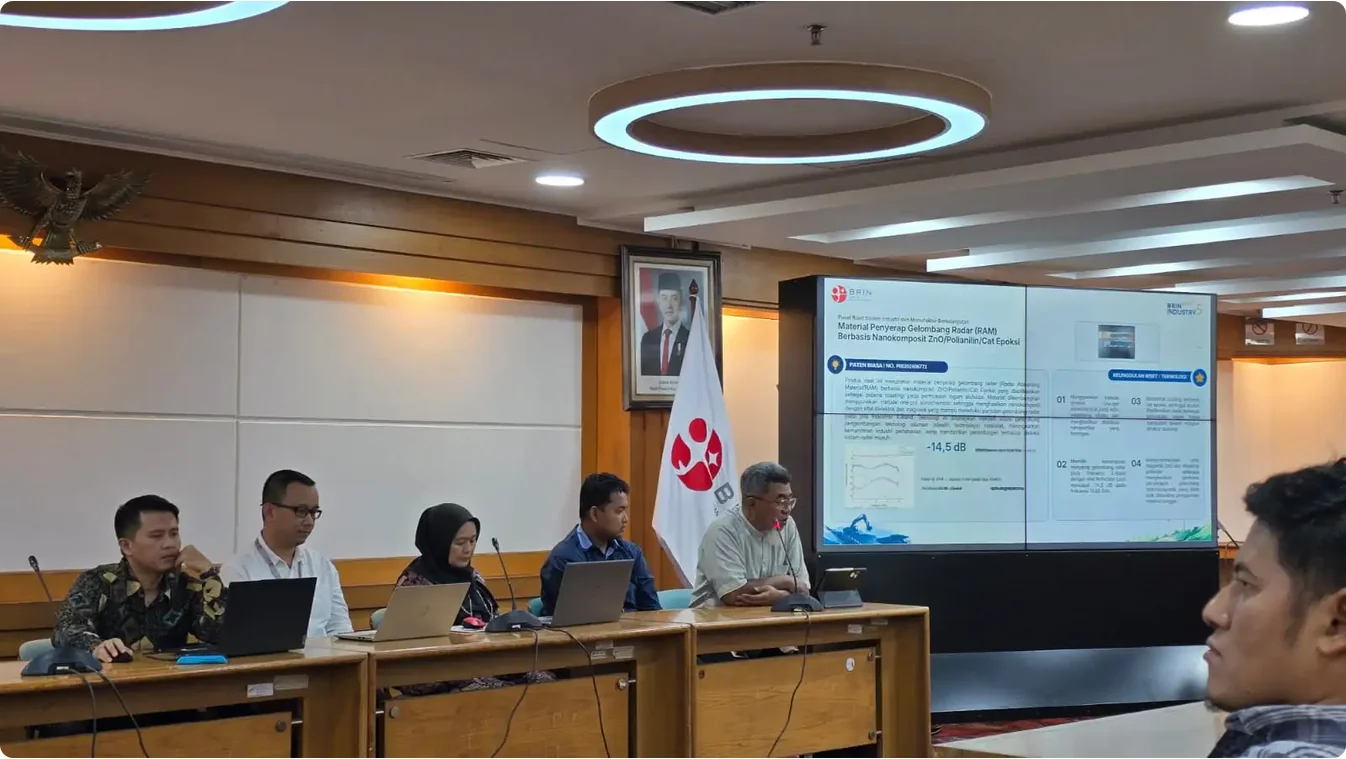
RRI.CO.ID, Jakarta - The Indonesia's National Research and Innovation Agency (BRIN) has developed a radar absorbing material (RAM) based on a nanocomposite of zinc oxide (ZnO), polyaniline, and epoxy paint. This innovation, which has been granted Patent Number P00202406771, was presented at the BRIN Goes to Industry #5 event titled "Downstreaming Research and Innovation in the Mining Sector" at the B.J. Habibie Building, Jakarta.
In a press release received by RRI VOI on July 29, 2026, a researcher at BRIN's Center for Industrial Systems and Sustainable Manufacturing Research, Oktaufik, explained that this technology offers a radar absorbing coating material solution for defense platforms. The material is capable of reducing radar wave reflection without changing the design or main structure of the vehicle or vehicle.
According to him, the RAM material was developed through a combination of ZnO nanoparticles, polyaniline, and epoxy paint formulated in a single synthesis process. "This developed material produces a nanocomposite with dielectric and magnetic properties capable of reducing radar wave reflection in the X-Band frequency range," he said.
This method results in a more homogeneous distribution of nanoparticles while simplifying the overall production process. "This technology is expected to be a solution to strengthen protection against radar detection," he said.
The technology is designed as a coating applied directly to the metal surface, unlike structural approaches that require changes to vehicle design. This characteristic makes the material easier to integrate into various defense platforms, from ships to aircraft.
Oktaufik also highlighted the significant opportunity for downstreaming this technology through strengthening the national supply chain, given that Indonesia has abundant zinc resources, from ore to high-purity ingots. However, at the production stage of nano-ZnO measuring 10–50 nanometers, Indonesia still relies on imports, opening up investment opportunities to develop a domestic upstream industry.
Despite its promising prospects, Oktaufik acknowledged that this technology is still at Technology Readiness Level (TRL) 4, requiring further validation and development before mass production. "Hopefully, through collaboration with the national defense industry, this technology can be mass-produced as Indonesian-made stealth material," he said.
News Recomendation
Memuat berita terbaru.....