


BRIN Calls Cassava Potential as Indonesia’s Strategic Sustainable Commodity
- 01 Apr 2026 15:25 WIB
- Voice of Indonesia
Poin Utama
- Currently, over 80% of Indonesia’s cassava is sold as fresh produce, representing a massive missed opportunity for downstream processing and higher economic returns.
- Cassava has the potential to transition from a basic staple into a high-value strategic commodity to strengthen national food security and provide sustainable income.
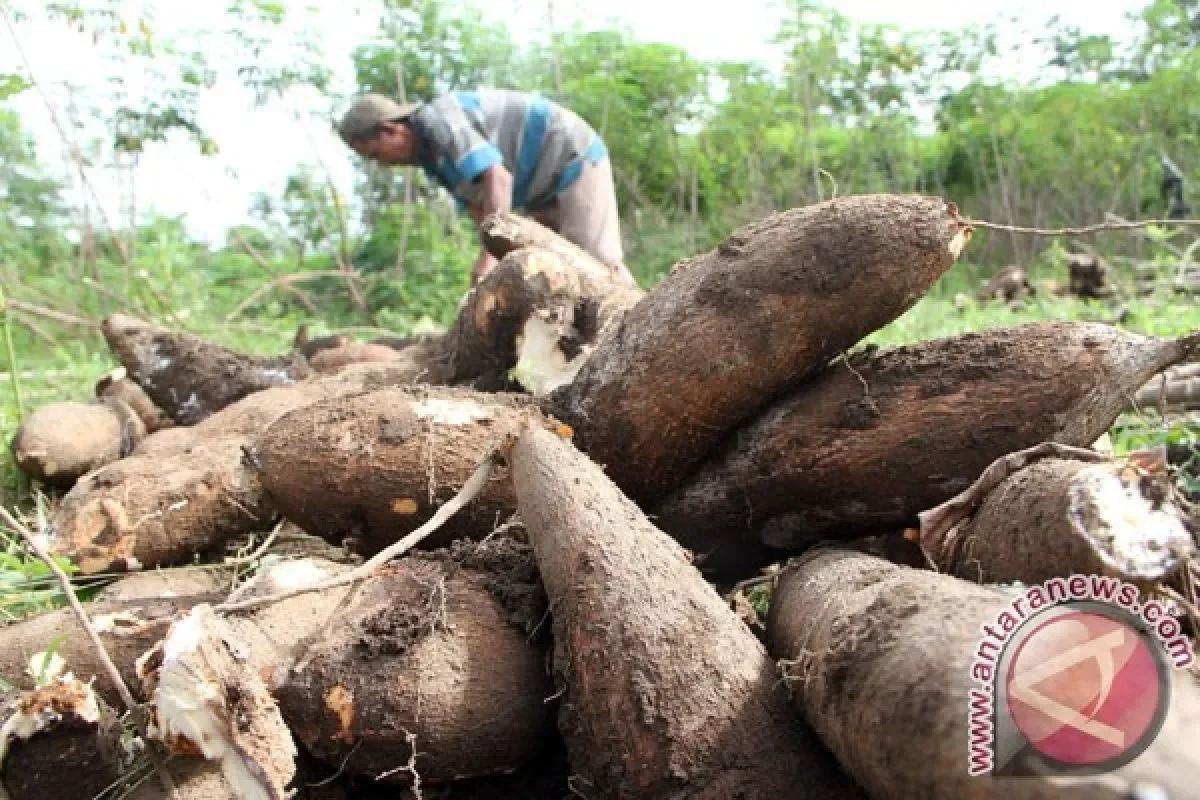
RRI.CO.ID, Jakarta - Indonesia’s vast cassava reserves are poised to transition from a traditional staple into a high-value strategic commodity. This shift is possible if the nation can overcome systemic inefficiencies in production and pricing.
A Research Professor in Agricultural Economics at the National Innovation and Research Agency (BRIN), Robert Asnawi, highlighted that the current landscape offers a massive opportunity for value addition. He noted that over 80 percent of Indonesia’s cassava output is still sold as fresh produce.
Speaking in Jakarta on Wednesday, April 1, 2026, Robert emphasized that the current average yield of 26 tons per hectare remains far below its biological potential of 50 to 60 tons per hectare. This disparity suggests that the industry is ripe for a technological and structural revolution.
To bridge this productivity gap, Robert advocates for a national production optimization strategy that aligns with the rising global demand for alternative food sources. This shift is not merely about increasing volume but about repositioning the crop within the national framework.
"This situation should result in cassava having a great opportunity to become a food substitute while simultaneously strengthening national food security," he said, as quoted by Antara.
Achieving this requires a holistic transformation that integrates advanced cultivation technologies with a more equitable market structure.
According to the BRIN researcher, the path forward necessitates a thorough transformation that includes boosting productivity through cultivation technology innovations. This must be accompanied by transparent, quality-based pricing mechanisms and the strengthening of inclusive partnerships between farmers and the industrial sector.
By adopting more efficient planting systems, farmers could potentially more than double their current harvests. Furthermore, Robert suggested that intercropping methods, incorporating crops such as corn or soybeans, could serve as a vital secondary income stream for farmers while mitigating the inherent risks of monoculture farming.
Central to this vision is the "inclusive partnership" model, where industrial players move beyond the role of simple off-takers to become active collaborators. Under this framework, industries would provide essential support, including high-quality seeds, production tools, and technical guidance.
Robert concluded that the future of the commodity depends on downstream processing to add value, the professionalization of farmer institutions, and the creation of more inclusive distribution networks. "This transformation is not just about technology, but also concerns economic, social, and institutional aspects," he remarked.
He underscored the hope that cassava will finally be recognized as a cornerstone of Indonesia’s strategic agricultural portfolio. ***
News Recomendation
Memuat berita terbaru.....