



House Calls for Faster Response to Drought-Driven Water Crisis
- 01 Okt 2026 07:59 WIB
- Voice of Indonesia
Poin Utama
- The government must strengthen clean water distribution and develop water resilience infrastructure to address the water crisis caused by the prolonged dry season.
- BMKG says July 2026 recorded Indonesia's lowest rainfall level since 1991, highlighting the need for stronger drought preparedness.
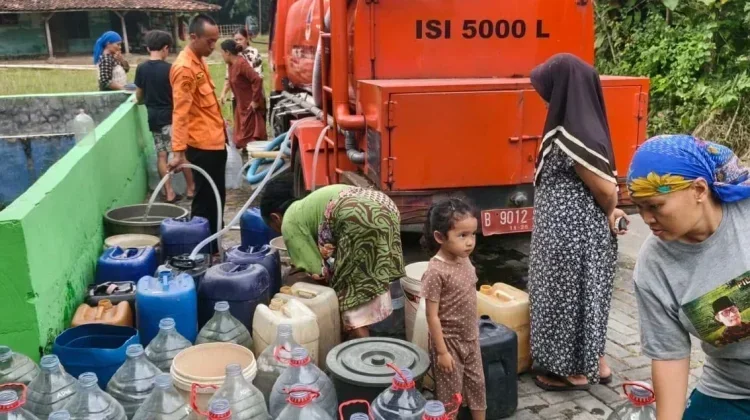
RRI.CO.ID, Jakarta - Indonesian House of Representatives (DPR) Speaker Puan Maharani has urged the government to strengthen efforts to address the water crisis, including by improving infrastructure in vulnerable areas, following widespread clean water shortages caused by the prolonged dry season.
Puan said that when a region begins to experience declining water availability, the government should immediately organize water distribution, identify alternative water sources, and ensure adequate water storage facilities are available.
She noted that the Meteorology, Climatology and Geophysics Agency (BMKG) already provides early warning information on climate conditions and potential drought risks.
"Indonesia's water resilience is being tested as many regions face water crises and drought due to the prolonged dry season. The government needs to intervene to help affected communities," Puan said in a statement in Jakarta on Wednesday, Sept. 30, 2026, as quoted by Antara.
According to Puan, communities should not remain trapped in a cycle of waiting for rain, facing water shortages, searching for alternative sources, receiving water tanker assistance, and then encountering the same problems during the next dry season.
She called on the government to pursue two solutions simultaneously: meeting residents' immediate water needs while building systems that better prepare communities for future droughts.
Puan also stressed the importance of developing sustainable water resilience infrastructure. She noted that the BMKG has predicted Indonesia is entering a longer dry period, with July 2026 recording the country's lowest rainfall since 1991.
According to Puan, successful drought management is not measured by how quickly water can be delivered after a crisis occurs, but by whether communities have sufficient, safe and sustainable access to water before conditions reach an emergency stage. "Infrastructure must continue to be strengthened," she said.
Puan said clean water shortages have spread across several regions, including Sikka in East Nusa Tenggara (NTT).
The water crisis in Sikka has lasted for around three weeks, forcing residents to seek alternative water sources to meet their daily needs. Some residents have even relied on water extracted from banana tree trunks for bathing, washing and cooking.
Water shortages have also been reported in parts of West Java, East Java and Central Java.
In Trenggalek, East Java, clean water shortages have affected 51 villages across 12 districts, impacting 27,786 people. In Boyolali, Central Java, more than 36,000 people have been affected by drought, forcing residents to queue for clean water deliveries after wells ran dry.
Meanwhile, 1,196,815 people in West Java have reportedly experienced water shortages due to drought during the current dry season. ***
News Recomendation
Memuat berita terbaru.....