



Immigration Ministry Reviews Service Gaps to Improve Performance
- 21 Sep 2026 20:18 WIB
- Voice of Indonesia
Poin Utama
- The Ministry of Immigration and Correctional Affairs identified service gaps in areas such as timing, authority, governance risks, and record‑keeping.
- The ministry has adopted an evaluation‑to‑action approach to strengthen service performance as a core element of organizational reform.
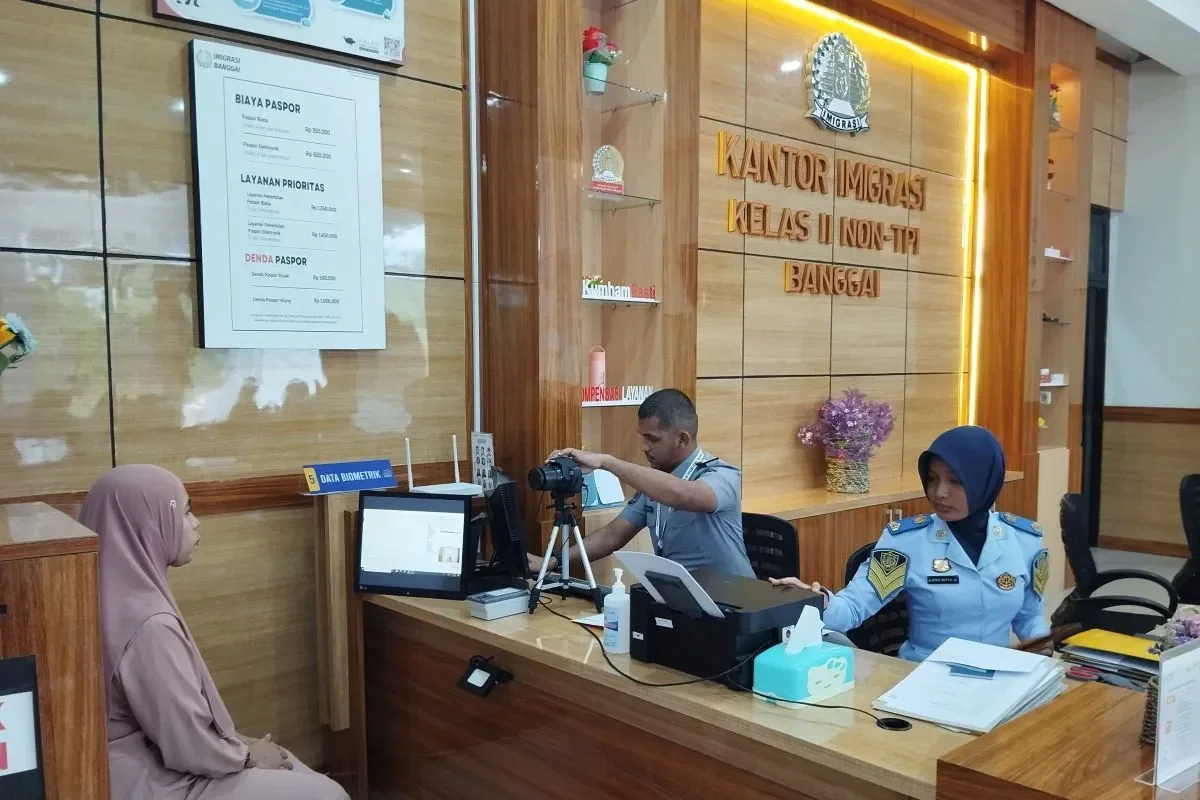
RRI.CO.ID, Jakarta – The Ministry of Immigration and Correctional Affairs (Kemenimipas) has identified several weak points in public service delivery as part of efforts to accelerate performance improvements in the immigration and correctional sectors.
The evaluations assessed factors such as time certainty, division of authority, governance risks, and data traceability. These findings were then translated into specific improvement measures and priority services.
Immigration and Correctional Affairs Minister Agus Andrianto said improvements must be reflected in public perception, not only in internal processes.
“We will have succeeded when the public experiences better services, gains certainty, and recognizes the Ministry of Immigration and Correctional Affairs as a solution provider for the duties and functions entrusted to us,” Minister Agus said while opening the 2026 Kemenimipas Coordination Meeting in Jakarta on Monday, September 21, 2026, as quoted by Antara.
In the correctional sector, the ministry evaluated 52 types of services. The screening process considered urgency, impact on inmate rights, governance risks, frequency of issues, and the need for improvement.
The mapping identified eight high‑impact services, three of which were designated as “quick wins”: assimilation, parole, conditional leave and pre‑release leave, community assessment, and the correctional database system.
Observations in five regions and 18 Technical Implementation Units (UPT) showed that challenges in correctional services extend beyond processing times. The evaluation highlighted the need for clearer timeframes, authority, decision‑making standards, and data traceability.
To improve performance, services with unclear timeframes are being transformed into services with measurable time standards.
Management is receiving social inquiry reports through baseline assessments and workload redistribution. Data management is being strengthened through individual account‑based transactions and traceable audit trails.
In the immigration sector, 99 services across three technical directorates were evaluated. Priority services were selected based on strategic impact, risk levels, reliance on automation, interaction intensity with the public and foreign nationals, and impact on sovereignty, security, and state revenue.
Three services were designated as priorities: passport issuance and renewal via the M‑Paspor system; residence permit services via the Indonesian Immigration Service Online Module (Molina), a digital application developed by the Directorate General of Immigration; and immigration clearance at Immigration Checkpoints (TPI) using automated and manual gates.
The immigration evaluation involved observations and spot checks across six regional offices and 13 UPTs between July 21 and August 8, 2026.
Based on the evaluation, the ministry developed several plans to improve passport services, including a single‑window system to resolve issues, faster processing, risk‑based residence permits, enhanced supervision of foreign nationals, and “fast lanes” at TPIs.
Minister Agus said improvements must target the service system, not individual performance. Six cross‑service enablers are strengthening efforts in the immigration sector: workload‑ and risk‑based human resource management, segregation of authority, system strengthening and data integration, infrastructure upgrades, risk intelligence, and reinforced internal oversight.
These service improvements are part of the ministry’s 15 action programs, which the ministry monitors and reports through the STAR Proaksi system. The application serves as a communication channel and dashboard, providing a single source of data on the implementation of the 15 action programs. The system is expected to strengthen monitoring, enabling measurement and reporting of progress and improvement outcomes.
Minister Agus urged that the coordination meeting serve as more than a forum for discussion, saying it should mark the starting point for concrete action across all levels of the Ministry of Immigration and Correctional Affairs.
“Don’t go home with nothing but presentation materials. Take back tasks to be completed and changes to be made,” he said.
Kemenimipas has adopted an evaluation‑to‑action approach to enhance service performance as a key area of organizational reform. Leaders at all levels must understand tasks, deadlines, success indicators, and reporting mechanisms. ***
News Recomendation
Memuat berita terbaru.....