



Minister: Indonesia a Global Model for Managing Diversity, with the Medina Charter
- 16 Sep 2026 13:08 WIB
- Voice of Indonesia
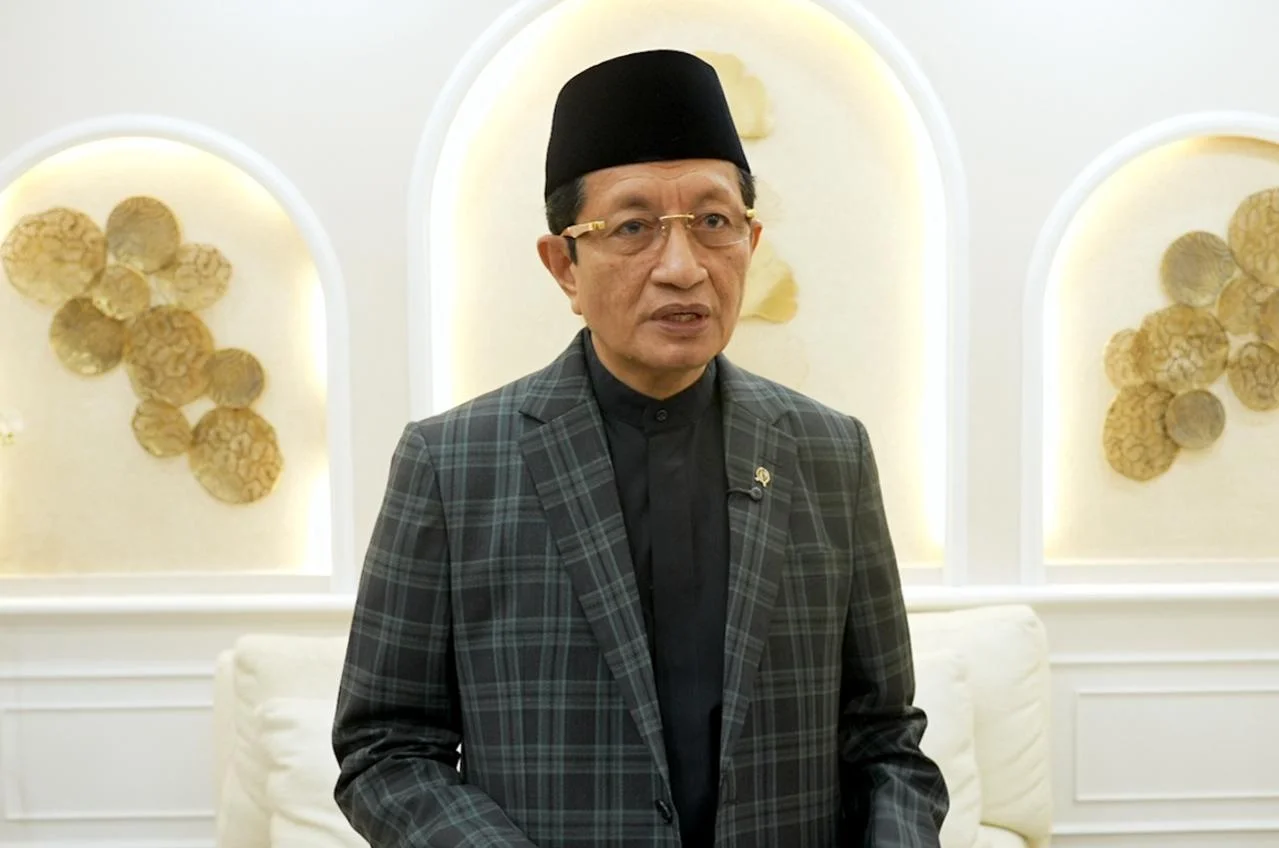
RRI.CO.ID, Jakarta — Minister of Religious Affairs, Nasaruddin Umar, emphasized Indonesia's position as a global model for managing diversity, given its status as the nation with the largest Muslim population and one of the most diverse societies in the world. He conveyed this message in remarks delivered at the 39th Edition of the Annual International Conference on Biography and Support of the Prophet (SAW), held in Nouakchott, Mauritania, on Monday, September 14, 2026.
The international conference focused on the theme "The Prophetic Guidance on Managing Diversity and Difference and Strengthening Common Grounds." Attendees included the President of Mauritania, Mohamed Ould Cheikh Ahmed Ould Ghazouani; the Grand Mufti of Mauritania and Imam of the Grand Mosque, Sheikh Ahmed Al-Murabit Al-Shanqeeti; Mauritania’s Minister of Religious Affairs and Basic Education, El-Vadil Sidati Louly; as well as numerous religious scholars and delegates from various countries.
In his address, the Minister cited the Sirah Nabawiyah (Prophetic biography) and the leadership of the Prophet Muhammad (SAW) in Medina as exemplars for managing a pluralistic society. He highlighted the Medina Charter as a historic milestone in modern human civilization, demonstrating that diversity in ethnicity, race, and religion can be managed under a unified framework of citizenship, where minority rights are protected and religious freedom is respected.
According to the Minister, the diversity of ethnicities, languages, and religions spread across Indonesia’s more than 1,700 islands is not a threat to national unity, but rather a blessing. He emphasized that this had been successfully united through the spirit of "bhinneka tunggal ika", which means different but still one.
The Minister of Religious Affairs explained that the key to maintaining the integrity of Indonesia's multiculturalism amidst the currents of modernization and global challenges lies in the harmony between prophetic values and the national consensus, namely Pancasila and the 1945 Constitution. According to him, these two foundations strengthen each other in maintaining tolerance amidst the nation's diversity.
Furthermore, the Minister outlined three points of convergence between prophetic values and Indonesia's national consensus. First is social monotheism and humanity, where the principle of "Belief in the One and Only God" aligns with the Quranic principle that there is no compulsion in religion.
Second, the tradition of deliberation and consensus in resolving national problems. Third is social justice, which he noted reflects the spirit of the Charter of Medina, wherein all elements of the nation possess equal rights and obligations before the law, regardless of majority or minority status.
In addition to discussing diversity, the Minister of Religious Affairs also invited all conference participants to strengthen humanitarian collaboration in addressing various global crises, ranging from climate change, extreme poverty, food crises, to social injustice. He also touched upon the suffering of the Palestinian people, describing it as a source of deep sorrow for Muslims worldwide.
The Minister invited all attendees to emulate the noble character of the Prophet Muhammad (PBUH) in their lives as citizens of the nation. He hoped that the conference would produce concrete results and strengthen Islamic brotherhood and human brotherhood at the global level, while closing his remarks with a prayer that every effort to uphold the values of peace, justice, and compassion would always be blessed.
News Recomendation
Memuat berita terbaru.....