



Ombudsman Calls for Comprehensive Reform of Detention Management
- 15 Sep 2026 20:50 WIB
- Voice of Indonesia
Poin Utama
- The Ombudsman of Indonesia has asked the Ministry of Immigration and Correctional Affairs to evaluate and improve correctional governance.
- The Ombudsman highlights the need to tighten oversight of mobile phone use, illicit levies, and narcotics trafficking in correctional institutions and detention centers.
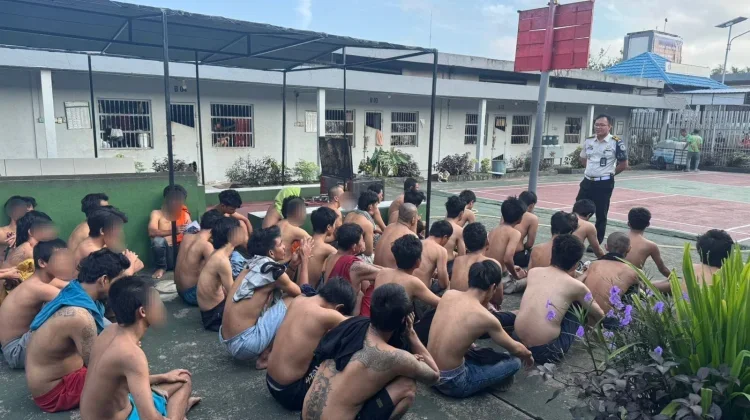
RRI.CO.ID, Jakarta - The Ombudsman of the Republic of Indonesia (ORI), an independent state institution overseeing public services, has urged the Ministry of Immigration and Correctional Affairs (Imipas) to conduct a thorough evaluation and reform of correctional governance.
The goal is to close loopholes that enable misconduct in correctional institutions (lapas) and state detention centers (rutan).
Ombudsman member Syafrida Rasahan said reforms must prioritize the supervision and control of mobile phone usage, the prevention of illicit levies, and the eradication of narcotics trafficking within these facilities.
“These three aspects frequently serve as entry points for recurring maladministration in correctional institutions and detention centers,” Syafrida said in a statement confirmed in Jakarta on Tuesday, September 15, 2026, as quoted by Antara.
Her statement follows complaints received by the Ombudsman regarding alleged illicit levies and the renting out of cells within correctional facilities.
She stressed that allegations of misconduct must be examined and verified in accordance with the law. She added that while action against individuals is important, systemic weaknesses that allow misconduct to occur must also be addressed.
Therefore, supervision of mobile phone usage, eradication of illicit levies, and control of narcotics trafficking must be integrated into efforts to strengthen governance and internal controls.
Oversight, she added, must extend beyond inmates and detainees to include correctional officers and other individuals with access to these facilities.
“An effective oversight system must prevent the entry of contraband and swiftly detect and address any potential misconduct,” Syafrida stated.
She explained that the administration of the correctional system is a form of public service that must be carried out based on the principles of certainty, transparency, accountability, and professionalism, while remaining free from maladministration.
Consequently, every service provided and the fulfillment of inmates’ and detainees’ rights must be handled transparently and accountably, in accordance with service standards and free from illicit levies.
The Ombudsman supports the actions taken by the Directorate General of Corrections under the Ministry of Imipas, which has conducted inquiries and established an investigative team.
According to the Ombudsman, these measures are essential to ensure that information about alleged misconduct is addressed rather than ignored. However, the investigative process must also be conducted firmly and transparently to demonstrate openness to the public.
The Ombudsman believes resolving these issues requires examining the correctional service system and governance, including complaint mechanisms and procedures for following up on public reports.
From a public service perspective, Syafrida said oversight must ensure that officers and other parties do not provide discriminatory services, solicit unauthorized payments, abuse their authority, or grant access to specific facilities based on an individual’s ability to pay.
She added that the Ministry of Imipas must ensure that all services and facilities for inmates and detainees operate under clear, accessible standards, procedures, and requirements. Such transparency is vital to minimizing opportunities for illicit levies and abuse of authority.
The Ombudsman emphasized that improvements to correctional governance should focus on establishing a system capable of preventing misconduct from the outset rather than merely reacting after problems occur.
“Correctional services must provide certainty and fair treatment for inmates and detainees, while assuring the public that correctional institutions and detention centers are managed professionally, transparently, and accountably,” Syafrida said. ***
News Recomendation
Memuat berita terbaru.....