



ADEXCO 2026: Homegrown Technology Innovations Promote Sustainable Resilience
- 14 Sep 2026 22:24 WIB
- Voice of Indonesia
RRI.CO.ID, Jakarta – Indonesian universities are showcasing technological innovations to strengthen disaster resilience at the Asia Disaster Management and Civil Protection Expo & Conference (ADEXCO) 2026 in Jakarta.
According to an official statement from Indonesia’s National Disaster Management Agency (BNPB) on Saturday, September 12, 2026, the innovations include early warning systems for landslides and floods developed by Gadjah Mada University (UGM), an earthquake-resistant building design from the University of Indonesia (UI), and emergency response equipment developed by Pasundan University (Unpas).
UGM Develops Early Warning Systems
UGM is showcasing its Deteksi Dini Longsor (DENILO) landslide early warning system and Deteksi Dini Banjir (DENIJI) flood early warning system, developed in 2021 and 2023, respectively. The systems are designed to give communities more time to take protective measures when potential disasters are detected.
Both systems operate in real time and are integrated with the Regional Disaster Management Agency’s (BPBD) Operations Control Center, known as Pusdalops. The systems can activate sirens and transmit data to a dashboard within seconds when potential hazards are detected. In addition to internet connectivity, DENILO and DENIJI use GSM cellular networks as an alternative communication channel. Warnings can also be delivered through WhatsApp, while DENILO is equipped with a spotlight to provide visual warnings for people with hearing impairments.
DENILO has currently been installed at around 75 locations, while DENIJI has been installed at four locations, primarily in Central Java. The installation is accompanied by community education to ensure residents understand the warning indicators and can respond appropriately. UGM has also developed the Early Warning System (EWS) School program to improve communities’ ability to understand, operate, maintain, and implement early warning systems according to local conditions.
UI Represents Indonesia in International Final
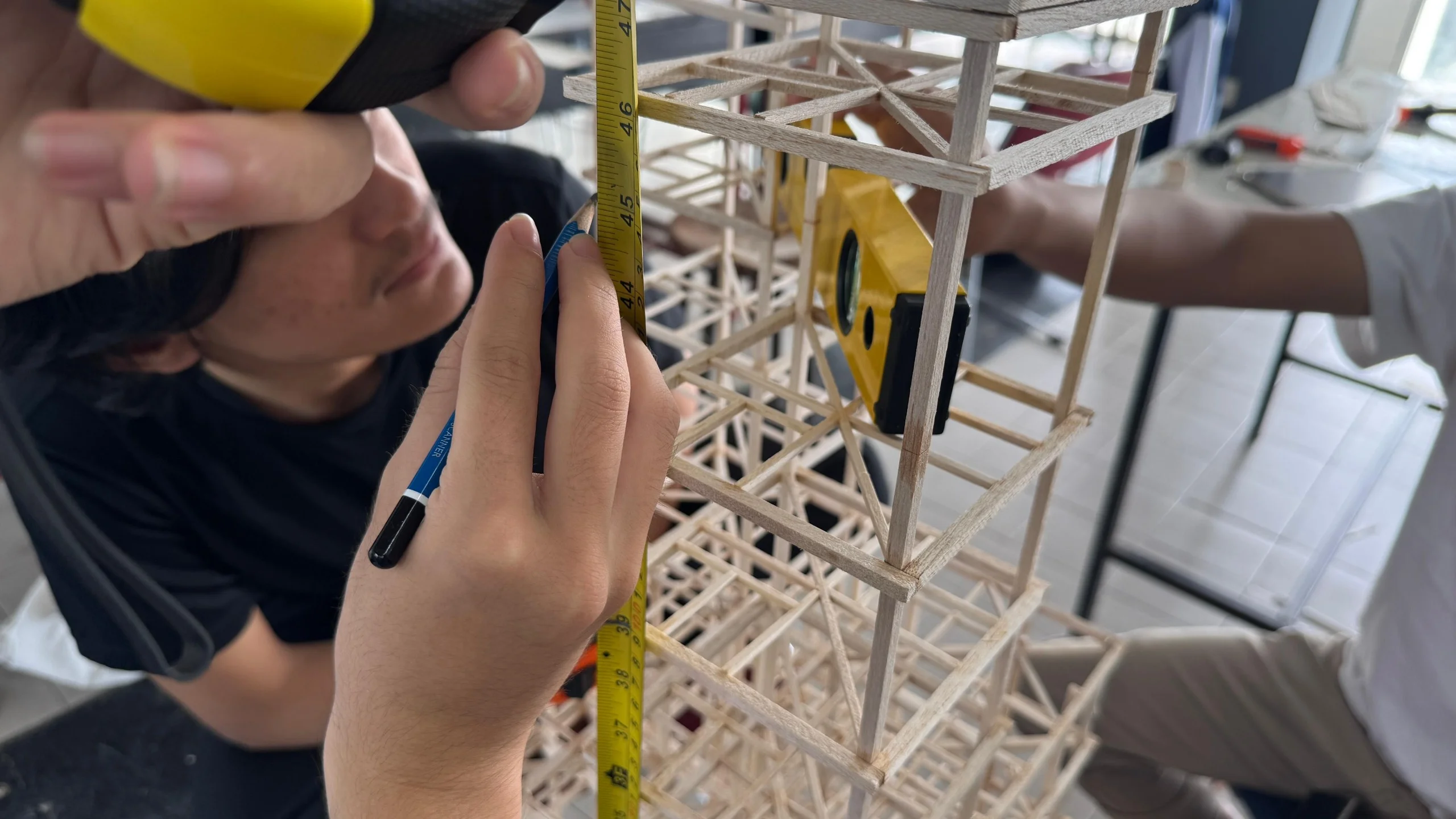
Meanwhile, UI is showcasing its earthquake-resistant building design, Bifurca Tower, which was developed for the Earthquake Engineering Research Institute (EERI) Seismic Design Competition (SDC) 2026 in Portland, Oregon, United States, from July 13 to 17, 2026.
The international competition brought together 47 university teams from various countries. The UI team was the only representative from Indonesia and Southeast Asia to reach the final round. The team ranked sixth overall, sixth in the communication category, fourth for its proposal, fifth for its presentation, and third in the T-Shirt Design Competition.
Bifurca Tower was developed by six UI Faculty of Engineering students, combining expertise in civil engineering and interior architecture. One of the approaches used was the Negative Stiffness Friction Damper, a system designed to help structures respond to seismic movement while dissipating earthquake energy.
The development also opens opportunities for the application of retrofit structures, or the strengthening of existing buildings, to improve their resistance to earthquake hazards.
Unpas Presents Emergency Response Equipment
Meanwhile, Unpas is presenting a portable fire pump (PFP) and a prototype portable water purification technology as innovations aimed at supporting emergency response. The PFP was developed by lecturers and students from the Unpas Faculty of Engineering to help tackle fires in areas that are difficult for fire trucks to reach, such as forests and densely populated settlements.
Weighing around 13 kilograms, the equipment can be carried on a person’s back and can spray up to 80 liters of water per minute, with a range of approximately 25 meters horizontally and 15 meters vertically. The PFP uses an 80-cc two-stroke engine and can operate for around one to 1.5 hours on one liter of fuel.
The innovation has been patented and is being prepared for wider use by communities and village-owned enterprises (BUMDes) that require equipment for initial firefighting. Unpas has also developed a prototype portable water purification technology to help provide access to clean water during emergencies, particularly when community water sources are contaminated following disasters.
The innovations demonstrate the role of universities in strengthening disaster resilience through research and technological development. ADEXCO 2026 provides a platform for connecting academic innovations with real-world disaster management needs, from mitigation and preparedness to emergency response and recovery.
News Recomendation
Memuat berita terbaru.....