



Behind the Mic at VOI (Part 3): When Voices Become Diplomacy
- 10 Sep 2026 16:27 WIB
- Voice of Indonesia
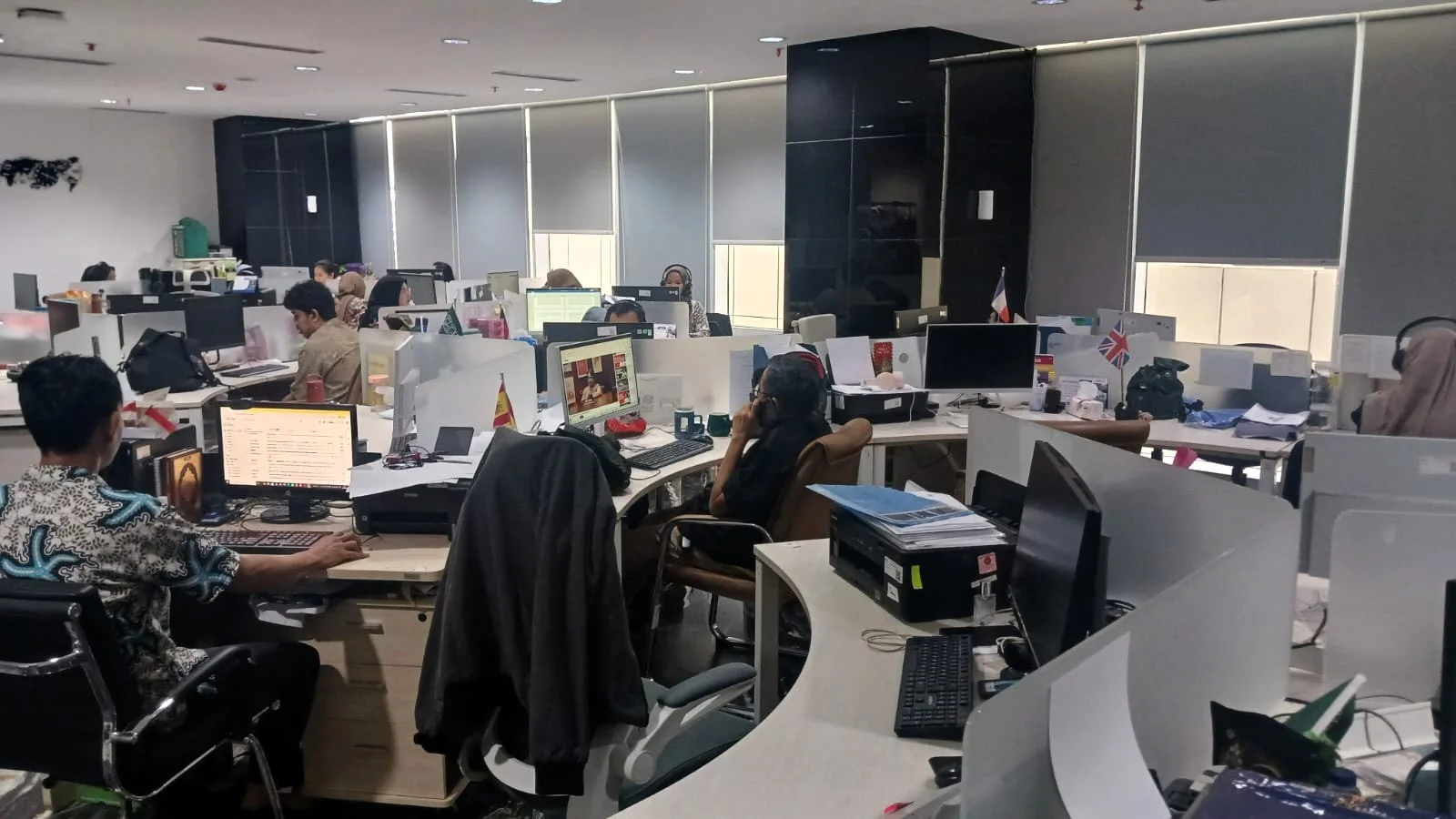
RRI.CO.ID, Jakarta – From a broadcasting studio in Jakarta, these voices cross national borders and reach listeners who may never have set foot in Indonesia. They listen to news, stories, music, and conversations about a country thousands of kilometers away.
It is at this point that RRI Voice of Indonesia (VOI), the international media service of Radio Republik Indonesia (RRI), becomes more than just a radio program. Every word that goes on air carries an image of Indonesia, meaning that broadcasters and reporters are not merely speaking to listeners, but also helping introduce how Indonesia wants to be understood by the world.
Borgias has felt this responsibility throughout his years at VOI. He joined in 2001 as a volunteer at the Spanish-Language Desk, then became a full-time employee in 2010 and has covered a number of international events, including the Asian-African Conference.
His years of experience have taught him that for international broadcasting, the news itself is not enough. The way an event is presented, the words chosen, and the context provided can all shape how listeners perceive Indonesia. “VOI has a responsibility from the state to safeguard the nation’s image, so word choice is important,” Borgias said.
However, safeguarding the country’s image does not mean turning a blind eye to problems at home. For Borgias, negative news must still be reported openly, but listeners should be given a complete picture—for example, by “providing context that the government is not standing idly by” when reporting negative developments.
The importance of bringing Indonesia to the world is also a principle held by Hudri, Head of the French-Language Desk. Since joining RRI in 2006, he has handled numerous European and French-related issues, ranging from embassy activities and cultural centers to visits by heads of state, before returning to VOI in 2018.
Hudri’s own journey to VOI has involved extensive experience across languages and cultures. A French-language graduate, he received a one-year scholarship in Siena, Italy, before working at an Italian Cultural Center. “I have a degree in French, but I also wanted my knowledge from Italy to be useful. Eventually, I moved to VOI,” he said.
For Hudri, the experiences of senior colleagues provide a foundation that continues to be passed down to the next generation. More than that, he sees VOI as part of second-track diplomacy—a channel for bringing information about Indonesia to international audiences while maintaining the country’s relationships and image through communication.
Yet the world VOI is reaching is changing rapidly. Listeners are no longer simply waiting for voices to come through the radio. They can choose podcasts, videos, social media, and various digital platforms that are accessible at any time.
Rifai has experienced this shift firsthand. He officially joined VOI in 2025 after previously undertaking field-based university training at the Arabic-Language Desk. For him, the challenge facing the new generation is to give broadcasts a reason to be heard amid the abundance of available choices. “How can we keep broadcast content interesting so that listeners want to come back and listen to the radio?” he said.
Meanhwile, Social Media Coordinator, Dora Pardede has said the same challenge from the perspective of the new media and social media platforms she now works with extensively. In her view, VOI must continue adapting to audience habits without losing its identity as a media outlet that brings Indonesia to the world. Meanwhile, Andy Romdoni, VOI’s Coverage Coordinator, who has also previously broadcast in Arabic, hopes VOI will grow into an increasingly influential international media outlet capable of supporting Indonesian diplomacy on the global stage.
Ultimately, diplomacy does not always take place in official meeting rooms or at negotiating tables. Sometimes, it takes shape through the voice of a broadcaster mentioning Indonesia in a foreign language, through a news report carefully presented with context, or through a broadcast eagerly awaited by listeners in a distant country. From a studio in Jakarta, that voice continues to travel—bringing Indonesia closer to the world. (Bidadari Nanzira Sakti)
(EDITOR'S NOTE: This is the third and last part of the article series "Behind the Mic at VOI" by RRI Voice of Indonesia. Click on the tag "Behind the Mic at VOI" below to read all articles)
News Recomendation
Memuat berita terbaru.....