



Behind the Mic at VOI (Part 1): Before the Microphone, Broadcasts Must Go On
- 10 Sep 2026 05:59 WIB
- Voice of Indonesia
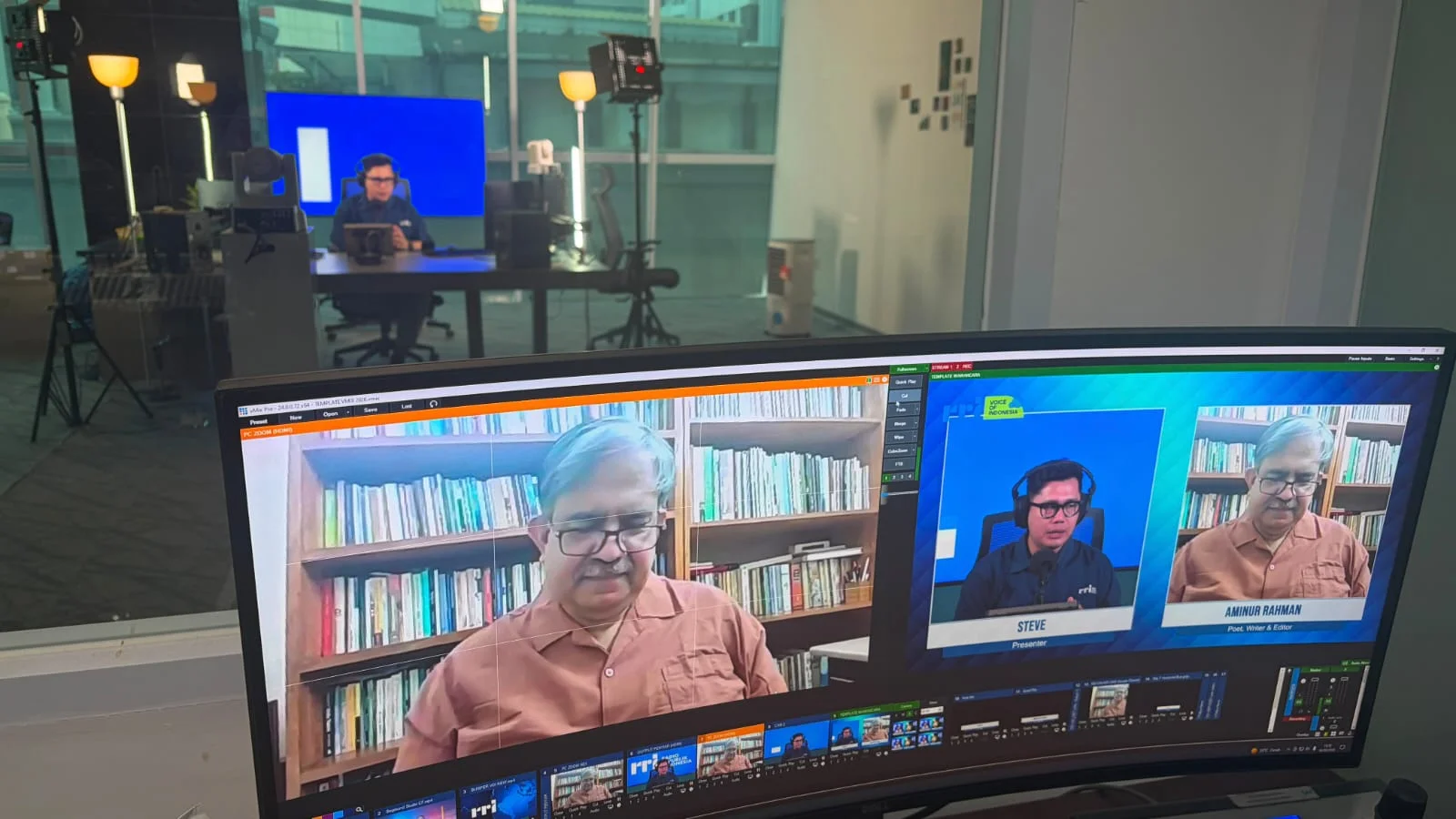
RRI.CO.ID, Jakarta – The calm voice heard from the broadcasting studio doesn't always reflect what is happening behind the microphone. At times, broadcasters have to deal with equipment that suddenly malfunctions, accidentally press the wrong button, or make split-second decisions to keep the broadcast running.
Stories like these are part of everyday life for the people at Voice of Indonesia (VOI), the international broadcasting service of Indonesia's public radio Radio Republik Indonesia (RRI) that brings the voice of Indonesia to audiences across the globe. They work as broadcasters, reporters, producers, and editors, ensuring that information about Indonesia continues to reach listeners overseas.
Every September 11, Indonesia commemorates National Radio Day, as well as RRI's anniversary. The occasion reminds Indonesians that for decades, radio has provided information while accompanying its listeners amid changing times.
RRI serves domestic audiences through the Pro 1, Pro 2, Pro 3, and Pro 4 radio networks, while the VOI serves international audiences. Information about Indonesia is delivered in various languages: Indonesian, German, Spanish, Arabic, French, Dutch, Japanese, English, and Mandarin.
For listeners, a radio broadcast may sound simple: a broadcaster speaks, music plays, and information flows from one segment to the next. In the studio, however, every minute requires concentration because even a minor problem with a computer, mixer, or audio equipment can be heard immediately.
Stevanus, or Steve, has experienced such situations during his roughly 10 years at VOI, where he has worked as a broadcaster, reporter, audio-video editor, and presenter. On one occasion, when he intended to play a song, he accidentally pressed the wrong broadcast material and ended up playing a Mandarin program.
“Once, I wanted to play a song, but I accidentally pressed the Mandarin broadcast instead. I panicked, but I had to stay alert,” Steve said, adding that such situations require broadcasters to make immediate decisions without allowing their panic to be heard on air.
Technical problems are also familiar to Indah, who has spent around nine years with the Dutch language desk. In addition to hosting Dutch broadcasts, she has also been assigned to conduct live broadcasts in Indonesian, meaning she must always be prepared when digital equipment suddenly malfunctions.
“Mixer errors, PC errors it’s all part of the job. The important thing is to make sure there’s no dead air,” Indah said.
According to her, staying calm is key when equipment doesn't work as it should, because broadcasters must still ensure that the broadcast and recording proceed safely. However, challenges in front of the microphone do not always come from equipment.
Dora Pardede joined VOI in 2010 and has taken on various roles as a broadcaster, reporter, and producer. She sees communicating with interviewees as another equally important challenge.
“What stands out most is interviewing someone who seems ordinary, but whose conversation turns out to be extraordinary,” Dora said.
Dora explained that interviews do not always match the prepared list of questions, so an interviewer must also be skilled at reading the situation and understanding the character of the person they are speaking with. She said that “preparation is important, but the ability to read the other person’s mood is just as important".
Ultimately, working in front of a microphone is not simply about having a good-sounding voice. It is also about staying calm, reading the situation, and ensuring that listeners never miss the story that needs to be told. (Bidadari Nanzira Sakti)
(EDITOR'S NOTE: This is the first part of the article series "Behind the Mic at VOI" by RRI Voice of Indonesia. Click on the tag "Behind the Mic at VOI" below to read all articles)
News Recomendation
Memuat berita terbaru.....