



Sulawesi Quarantine Aligns Fish Disease Monitoring Strategy
- 08 Sep 2026 20:06 WIB
- Voice of Indonesia
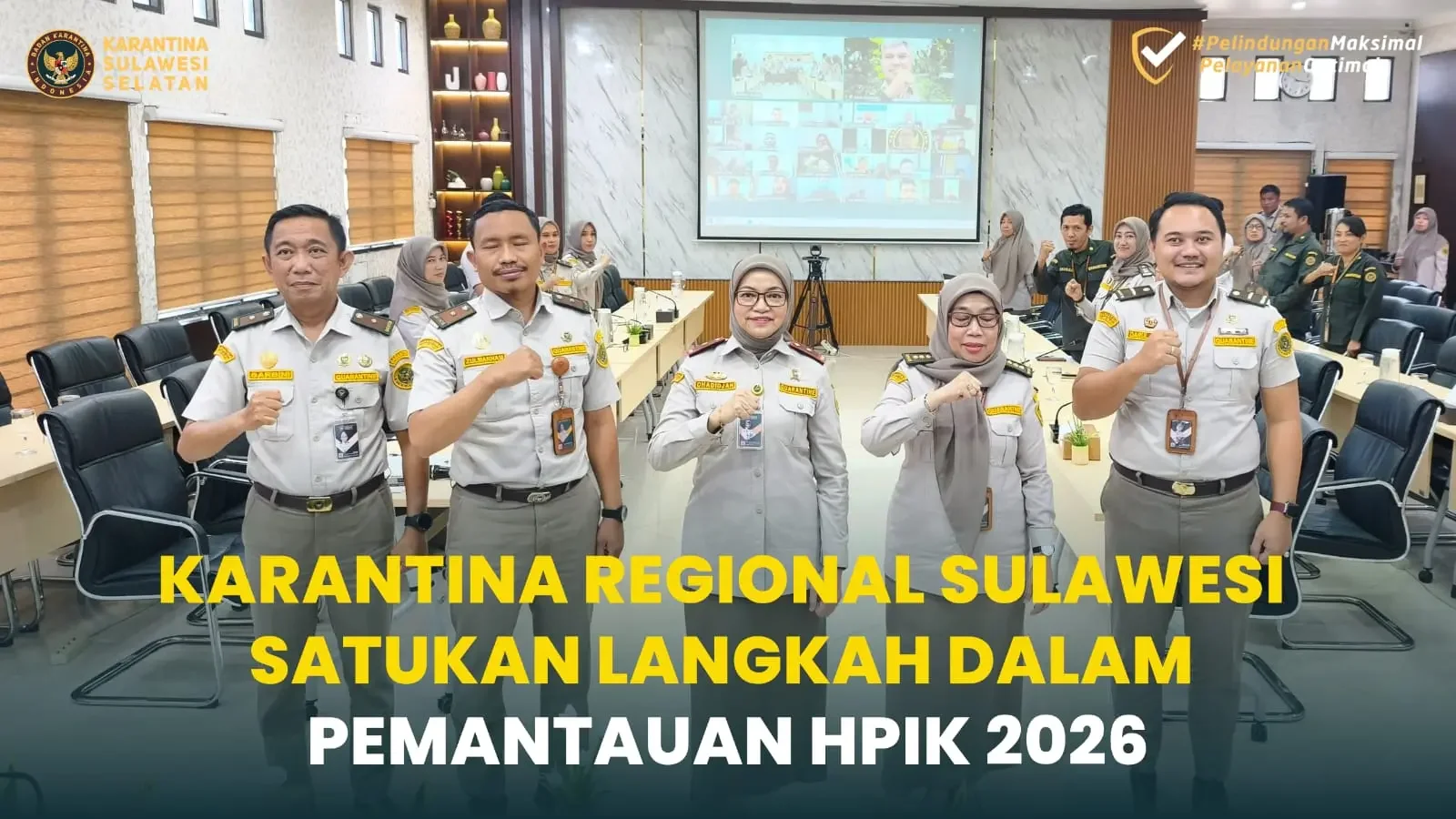
RRI.CO.ID, Makassar – Regional Sulawesi Quarantine agencies held a Coordination Meeting on Quarantine Fish Pest and Disease (HPIK) Monitoring for 2026 on September 7, 2026. The meeting, coordinated by the Sulawesi Selatan Center for Animal, Fish, and Plant Quarantine (Sulawesi Selatan Quarantine), was attended by functional officials of Fish Quarantine across Regional Sulawesi and was held in a hybrid format.
The meeting served as a forum to align perspectives, harmonize strategies, and strengthen coordination among the Quarantine's technical implementation units across Sulawesi. The goal was to ensure this year's HPIK monitoring runs effectively and reaches its intended targets.
The Head of Sulawesi Selatan Quarantine, Sitti Chadidjah, emphasized that HPIK monitoring plays a vital role in mapping the presence and spread of fish diseases in a given area. “This monitoring isn't just about collecting field samples, but about how we build communication, synergy, and collaboration across UPTs as well as with related regional agencies," she said.
She said that data produced then serves as a basis for determining risk mitigation measures while strengthening the protection of fisheries resources. "The monitoring results must produce accurate and valid data so they can serve as input for shaping fisheries resource protection policies,” Sitti said.
Taking into account budget efficiency and the remaining implementation timeline, Sitti urged all Regional Sulawesi Quarantine UPTs to adopt a risk-based approach in determining monitoring locations, commodities, and targets. Regional collaboration is also being directed toward optimizing laboratory capacity across UPTs to address facility and infrastructure limitations in each area, while ensuring monitoring targets are achieved optimally and accountably.
Based on the evaluation of monitoring results from the 2024–2025 period, several fish diseases are of particular concern for this year's monitoring, including White Spot Syndrome Virus (WSSV), Enterocytozoon hepatopenaei (EHP), and Acute Hepatopancreatic Necrosis Disease (AHPND), which need close attention at aquaculture centers. The exchange of data and information between regions is also a key part of building an early warning system, given that interregional fisheries commodity traffic across Sulawesi is closely interconnected.
Sitti expressed hope that the synergy built would continue to be strengthened through communication, information exchange, and follow-up coordination on any findings in the field. “With valid data and strong coordination, we can take preventive measures more quickly and precisely. Regional collaboration is our strength in safeguarding fish health and supporting the sustainability of the fisheries sector,” she concluded.
News Recomendation
Memuat berita terbaru.....