



Economic Empowerment as a Path to Deradicalization Success
- 20 Agt 2026 23:49 WIB
- Voice of Indonesia
Poin Utama
- The agency uses economic empowerment to support the social reintegration of former terrorism convicts.
- Deradicalization success is measured not only by security outcomes but also by economic self‑reliance, social acceptance, and the ability of former terrorism convicts to contribute productively to society.
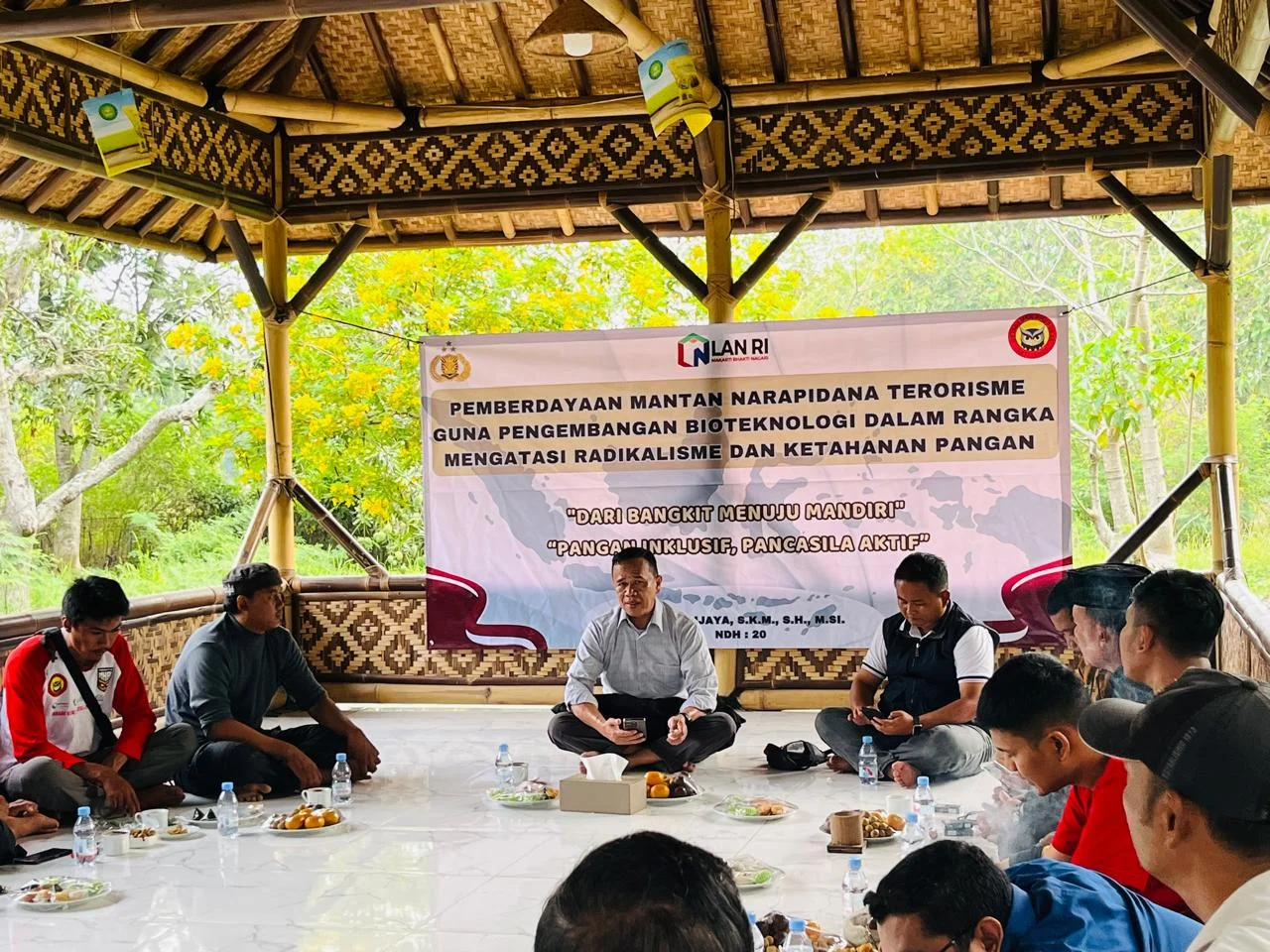
RRI.CO.ID, Jakarta - The Indonesian National Counterterrorism Agency (BNPT) is using economic empowerment as a strategy to strengthen the social reintegration of former terrorism convicts and ensure the sustainability of the deradicalization process.
BNPT Head Eddy Hartono said economic self‑reliance is essential for deradicalization partners to resume productive lives and gain acceptance within their communities. For this reason, the BNPT encourages developing entrepreneurial skills through productive sectors.
“This is a follow‑up to the deradicalization program. It is a social reintegration initiative for former terrorism convicts, and we aim to develop their entrepreneurial capabilities,” Eddy said in Jakarta on Thursday, August 19, 2026, as quoted by Antara.
The program is implemented by the Deradicalization Implementation Coordination Team, involving the BNPT, the Ministry of Immigration and Corrections (Kemenimipas), and the National Police’s Special Detachment 88 (Densus 88) Anti‑Terror unit.
Deradicalization partners are empowered through agricultural, livestock, and fishery activities conducted on land owned by PT Sang Hyang Seri (SHS), a state‑owned enterprise under Danantara Indonesia that operates in the agricultural seed sector.
The empowerment program has produced harvests from cultivation activities managed by deradicalization partners in the Sukamandi area, Subang Regency, West Java.
A joint harvest event held on July 31, 2026, serves as tangible evidence of cross‑sector support aimed at fostering economic independence and reinforcing social reintegration.
Eddy said the program’s success stems from the continuous support provided to participants from the time they serve their sentences until their return to community life. “We hope our fellow citizens can be accepted back into society,” he said.
The program aims to strengthen social reintegration and support national food security. It is a cross‑sector collaboration aligned with the Indonesian President’s Eight Missions (Asta Cita).
Minister of Immigration and Correctional Affairs, Agus Andrianto, said his ministry supports the initiative as part of its responsibility to provide guidance and rehabilitation for deradicalization participants.
“This is part of the Vocational Training Center initiative that we are developing with PT Sang Hyang Seri and the BNPT to support the President’s food security program,” Minister Agus said.
He noted that the Sukamandi area has strong potential as a training and empowerment hub. Spanning approximately 3,200 hectares, the land can be used for various productive activities.
PT Sang Hyang Seri President Director Adhi Cahyono Nugroho said the company is also promoting integrated agriculture, or circular farming. This model combines crop farming, goat husbandry, and catfish farming while serving as a training platform for program participants.
“We’re not only talking about agriculture. There is goat husbandry and catfish farming as well. We will focus on this circular farming model going forward, as it also allows us to educate participants and impart knowledge,” Adhi said.
The program’s impact is felt directly by deradicalization participants. One of them, Didin Kamaludin, has received guidance for four years involving rice cultivation, sheep fattening, and catfish farming.
“Economically, it has helped a lot. Alhamdulillah, I earn income from rice, catfish, and sheep farming, which supports our household economy,” Didin said.
In addition to business mentoring, participants receive guidance and moral support from the BNPT, Kemenimipas, Densus 88, and PT Sang Hyang Seri.
This collaboration demonstrates that the success of deradicalization is not measured solely by security outcomes. Economic independence, social acceptance, and the ability of former terrorism convicts to contribute productively to society are crucial for the program’s sustainability.
Through this approach, economic empowerment improves well‑being and strengthens social integration and trust between deradicalization participants and the community. ***
News Recomendation
Memuat berita terbaru.....