



One Data Indonesia Bill and Evidence-Based Policy Must Be Prioritized
- 15 Agt 2026 23:05 WIB
- Voice of Indonesia
Poin Utama
- Rieke emphasized that the government needs accurate and up-to-date data so that national plans and aid programs, like food distribution, reach the right people.
- She pointed out that fake data leads to fake budgets and corruption, stating that even the best government plans will fail without real evidence.
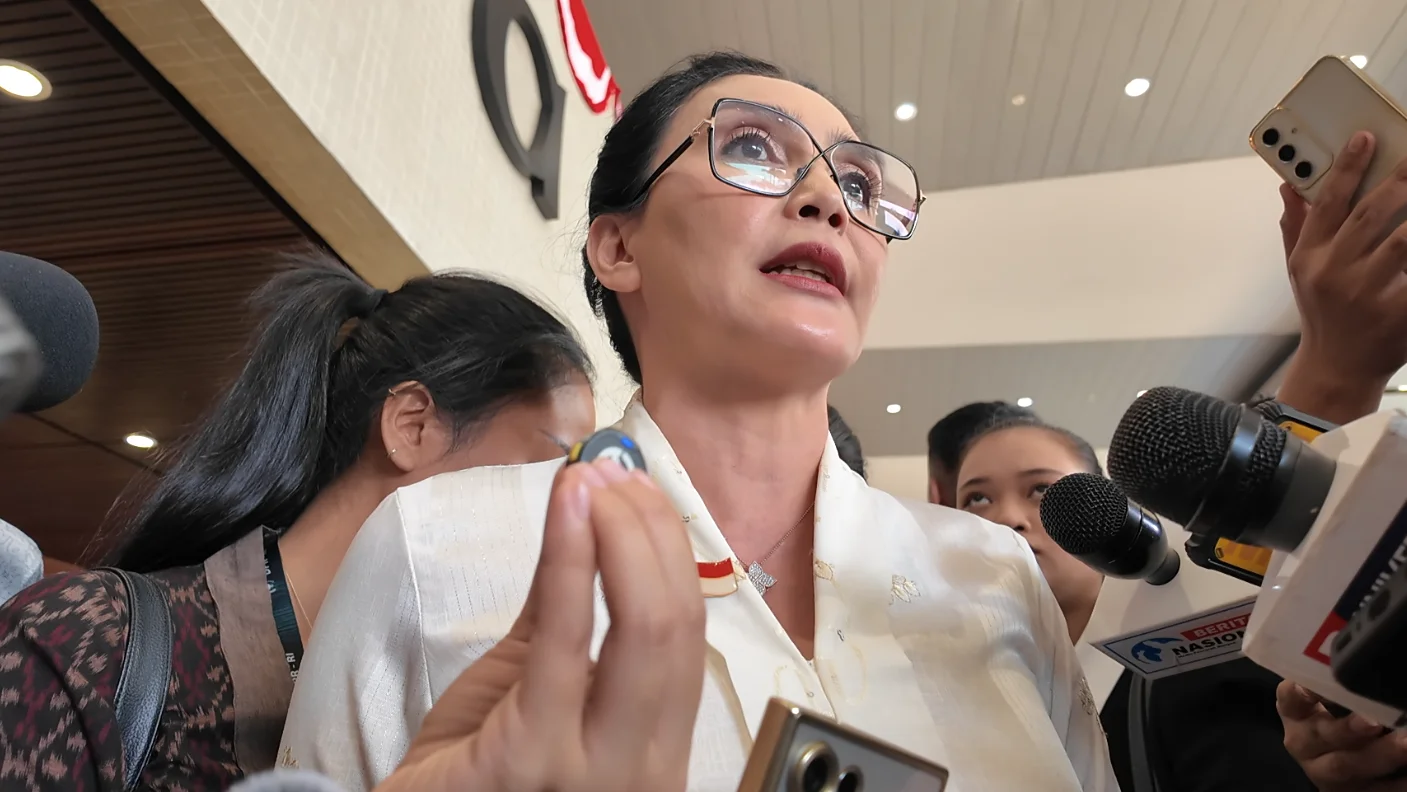
RRI.CO.ID, Jakarta – A member of Commission XIII of the Indonesian House of Representatives, Rieke Diah Pitaloka, emphasized the importance of the One Data Indonesia Bill and evidence-based policy. According to her, all of the Red and White Cabinet’s development ideas and plans can only proceed in a focused, measurable, and targeted manner if supported by accurate, up-to-date, and relevant national data.
“All of these concepts are good and sound. But as Mr. Sumitro suggested, if I may use the term ‘suggestion’, we must immediately pass the Indonesia Single Data Bill. Because this concept cannot possibly be implemented without being based on accurate, up-to-date, and relevant national data,” Rieke affirmed.affirmed.m
She made these points in a press statement following the Annual Session of the People’s Consultative Assembly (MPR) and the Joint Session of the House of Representatives (DPR) and the Regional Representatives Council (DPD) in commemoration of Indonesia’s 81st Independence Day, held at the Nusantara II Building Lobby, Parliament Complex, Senayan, Jakarta, on Friday, August 14, 2026. Furthermore, according to her, the passage of the One Data Indonesia Bill is a crucial step, particularly to ensure that food aid or interventions reach the intended recipients.
“Furthermore, the distribution of food, including emergency food assistance, must be data-driven to ensure it reaches the intended recipients, as well as other aspects. Every country is data-driven nowadays. Data is the ‘new oil,’ as the President often says,” she said.
Moreover, evidence-based policy-making is essential to prevent the use of fictitious data. Rieke stated that fictitious data can lead to the creation of fictitious budgets, which in turn fuel corruption.
Rieke explained, “Fictitious data is likely to result in fictitious budgets. Fictitious budgets lead to corruption. No matter how good the development plans are, no matter how sound the government’s concepts are, without accurate data, all of this remains merely on paper.”
In this context, Rieke highlighted four key guidelines of the Red and White Cabinet that are closely tied to Indonesia’s development history. These guidelines include the obligation to adhere to Article 33 of the 1945 Constitution, the technocratic concept formulated by the 513 members of the first People’s Consultative Assembly (MPR) in 1958 and 1960, the swift resolution of the people’s hardships in the spirit of Hatta’s 1947 Economic Strategy Committee, and a long-term orientation based on Sumitro Djojohadikusumo’s 1951 technocratic model.
News Recomendation
Memuat berita terbaru.....