



Cooperatives Urged to Manage Palm Oil Processing Plants
- 12 Agt 2026 14:17 WIB
- Voice of Indonesia
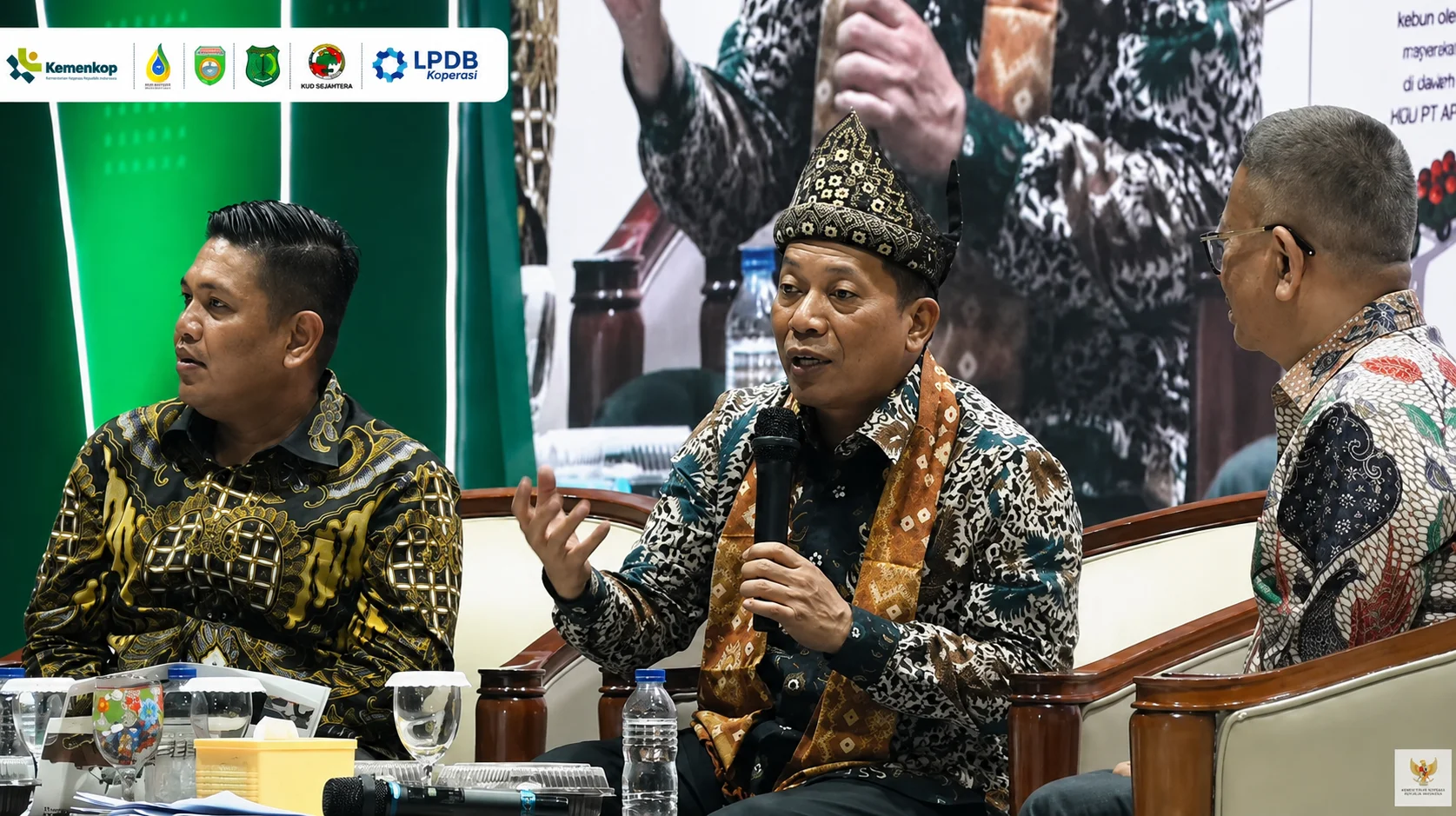
RRI.CO.ID, Musi Banyuasin – Indonesia's Minister of Cooperatives, Ferry Juliantono, has encouraged plantation-sector cooperatives to own and manage crude palm oil (CPO) processing plants. It is to strengthen downstream processing and increase added value for farmers.
Speaking at the National Seminar on “Optimizing and Downstreaming Palm Oil Based on Cooperatives” at the Musi Banyuasin Regent’s Office, South Sumatra, on Tuesday, August 11, 2026, Ferry said accelerating cooperative-based palm oil downstreaming requires cooperation among various stakeholders.
One of them is PT Agrinas Palma Nusantara (Persero), a state-owned enterprise mandated by the government to manage palm oil plantations resulting from enforcement actions by the Task Force for Forest Area Regulation (Satgas PKH).
Ferry also said active cooperatives located around palm oil plantation areas need to play a greater role in the palm oil industry supply chain, not only in production but also in processing and downstream activities.
“We will work together with large corporations, state-owned enterprises, regional-owned enterprises, and cooperatives to improve palm oil production and the palm oil industry. Cooperatives and state-owned enterprises can also be involved in downstream processing, so that we can provide products to the public at more affordable prices,” Ferry said.
He said greater cooperative involvement in downstream processing could strengthen farmers’ bargaining power while improving the welfare of communities around plantations. To achieve this, he said, new strategies and instruments are needed to increase the productivity of smallholder plantations. One approach is to consolidate palm oil farmers into cooperative business entities so they can operate on a stronger scale.
Ferry explained that two business models could be developed for cooperative-based palm oil downstreaming. The first is to strengthen existing palm oil cooperatives. The second is to consolidate primary cooperatives through larger business entities, enabling them to enter the downstream sector.
Meanwhile, President Director of PT Agrinas Palma Nusantara (Persero), Mohammad Abdul Ghani, said the company would prioritize cooperatives located around plantation areas as its partners.
“We have established a policy that Agrinas Palma Nusantara must involve cooperatives around the plantations as partners in plantation management, as well as in planting and developing food crops,” Ghani said.
He explained that cooperatives would be involved in various plantation activities, ranging from plant maintenance and harvesting to other plantation management activities.
Abdul Ghani added that at least 20 percent of the total palm oil plantation land entrusted to Agrinas is required to be allocated as plasma plantations for local communities. To meet this requirement, Agrinas will work with cooperatives as management partners.
Through this approach, communities around plantations are expected not only to work as employees but also to benefit economically from plantation management and the downstream development of the palm oil industry.
News Recomendation
Memuat berita terbaru.....