



Indonesia Faces High Working-Age Unemployment Amid Skills Mismatch
- 12 Agt 2026 11:45 WIB
- Voice of Indonesia
Poin Utama
- Unemployment remains high due to the dominance of the informal sector and a mismatch between young people’s career choices and available job opportunities.
- Expanding employment opportunities and improving youth competencies require collaboration between the central government, regional administrations, and various ministries.
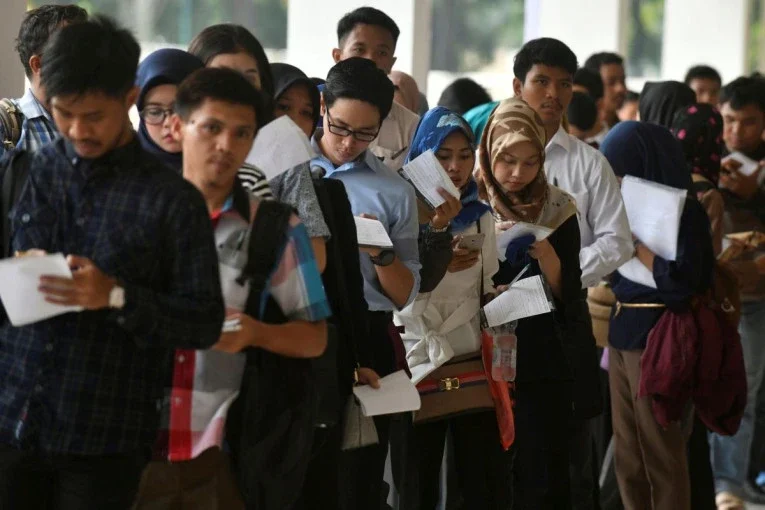
RRI.CO.ID, Jakarta – Unemployment among Indonesia’s working-age population remains high due to the dominance of the informal sector and a mismatch between the career choices of the younger generation and available job opportunities.
Head of the Manpower Planning and Development Agency at the Ministry of Manpower, Anwar Sanusi, said the situation has become a major labor issue.
He noted that the government needs to identify industries with strong potential to sustainably absorb young workers. He also highlighted the agricultural sector, which is experiencing an aging farmer population and therefore attracts little interest from younger people.
“The unemployment figure for the working-age population remains quite high due to several contributing factors,” Anwar said during a discussion with RRI Pro3 on Tuesday, August 11, 2026.
He explained that the gap between existing skills and job requirements is a critical challenge in the national labor market. Government intervention through internships and vocational training is considered necessary to narrow this competency gap.
“The skills gap is a challenge that requires government intervention to help reduce and close that gap,” he said.
The government is also strengthening the national labor market system to ensure a more accurate match between workforce needs and job seekers. The system is expected to provide updated and valid job information that aligns with job seekers’ competencies.
“We are implementing an active labor market system. Essentially, we are strengthening the national labor market infrastructure to create a more dynamic market,” he said.
Anwar also encouraged entrepreneurship, saying it offers young people a path to independence while creating new job opportunities. He added that central government and regional administrations need to collaborate with various ministries to expand employment opportunities and improve youth competencies.
“Keep building your competencies. One competency is not enough to secure more opportunities in the labor market,” he advised.
Data from the Central Bureau of Statistics (BPS) shows that Indonesia’s Open Unemployment Rate has declined in the latest period. However, unemployment among the youth demographic has risen significantly compared with the national average.
The 15–24 age group accounts for most youth unemployment, with an Open Unemployment Rate of around 16 percent to 17 percent nationwide. Most unemployed individuals in this group are graduates of senior high schools (SMA) and vocational high schools (SMK).
The BPS National Labor Force Survey (Sakernas) recorded 1.03 million unemployed individuals with higher education degrees. This group includes graduates of Diploma IV (D-IV), Bachelor’s (S-1), Master’s (S-2), and Doctoral (S-3) programs who are classified as openly unemployed.
According to BPS, this figure represents 14.31 percent of the total 7.22 million unemployed people nationwide. In May 2026, BPS recorded Indonesia’s open unemployment rate at 4.65 percent, or approximately 7.22 million people. (Misni Parjiati)
News Recomendation
Memuat berita terbaru.....