



Govt Prepares Three Funding Schemes to Ensure Contract Employee Salaries
- 11 Agt 2026 18:55 WIB
- Voice of Indonesia
Poin Utama
- The government is preparing three schemes to help local administrations cover the salaries of Government Employees with Work Agreements (PPPK).
- To support the regions, the central government has allocated IDR 18.9 trillion under Minister of Finance Decree No. 198/2026.
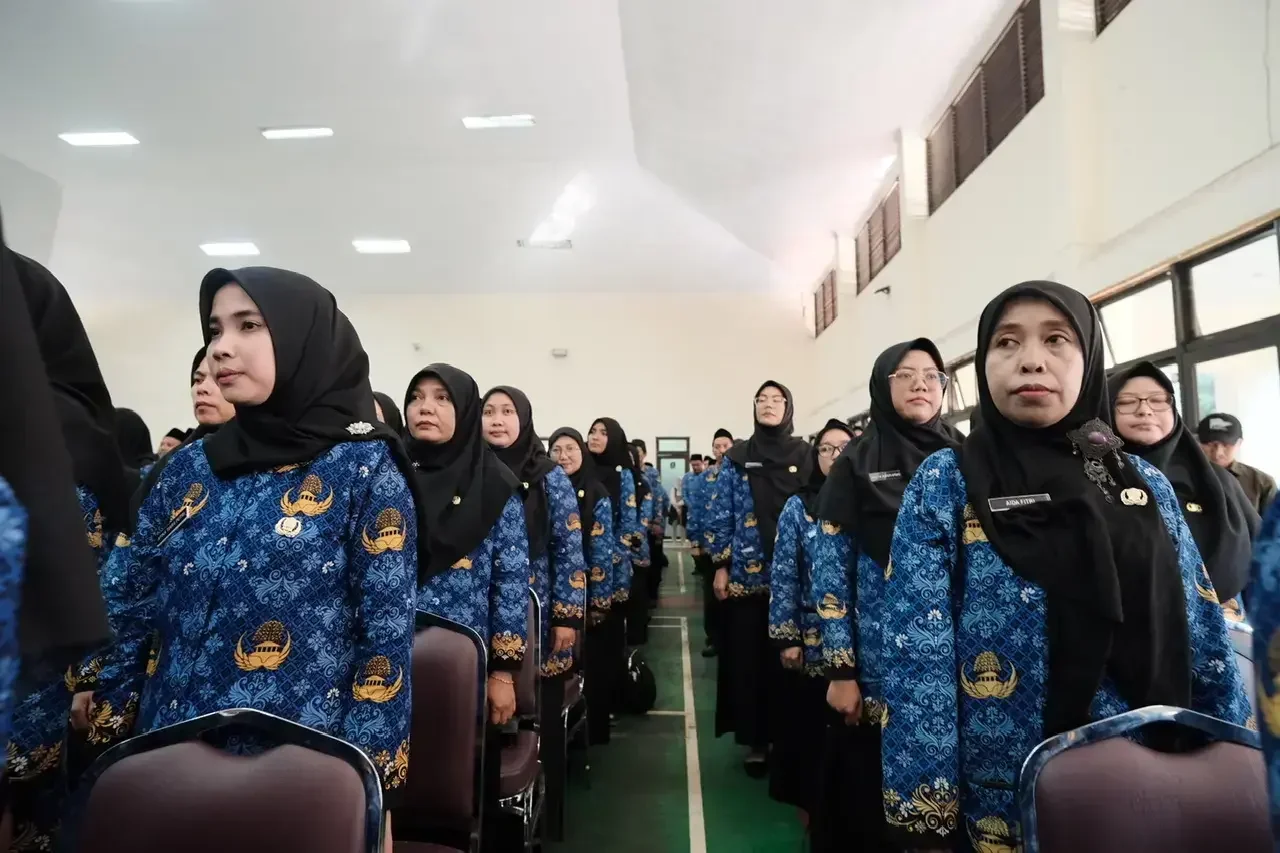
RRI.CO.ID, Jakarta - The Indonesian government is preparing three schemes to help local administrations cover the salaries of Government Contract Employees (PPPK), Indonesia’s category of state-employed contract workers, and ensure that no employees are furloughed or left without work because of budget constraints.
Minister of Home Affairs, Tito Karnavian, said the measures include local budget efficiency, the use of outstanding revenue-sharing funds (DBH), and additional General Allocation Funds (DAU) for regions that continue to face shortfalls in personnel expenditures.
“We have conducted simulations for several regions and met with the Minister of Administrative and Bureaucratic Reform (PANRB) as well as the Minister of Finance. Our guiding principle is that there can be no option to furlough PPPK employees, let alone leave them unemployed; their salaries must be paid,” Minister Tito said in a statement in Jakarta on Tuesday, August 11, 2026, as quoted by Antara.
He conveyed the statement after a coordination meeting on the status of PPPK and ASN teachers at the parliamentary complex in Senayan, Jakarta, on Monday, August 10.
Under the first scheme, local administrations are expected to improve budget efficiency by reducing official travel, unnecessary meetings, and spending on food and beverages.
The second scheme applies to regions that have outstanding or underpaid DBH owed by the central government. These funds will be disbursed to help cover personnel expenditures.
The third scheme is intended for regions that have already implemented efficiency measures but still lack sufficient funds, particularly those with little or no outstanding DBH. In such cases, the central government will provide additional DAU.
“I believe this reflects the President’s policy of paying close attention to fiscal issues in the regions, particularly regarding mandatory payments such as personnel expenditures,” he said.
The government has been discussing the status and financing of PPPK employees with relevant ministries after several local administrations raised concerns about their ability to meet personnel expenditure obligations, particularly PPPK salaries.
To support the regions, the central government has allocated a total of IDR 18.9 trillion under Minister of Finance Decree No. 198/2026. The decree covers adjustments to 2026 DAU allocations and disbursements, the settlement of DBH arrears through 2024, and the disbursement of Treasury Deposit Facility funds in 2026.
Of the total, around IDR 10 trillion consists of DBH payments to regions, while more than IDR 8 trillion comes from additional DAU.
“So, the total is nearly IDR 19 trillion -- IDR 18.9 trillion-odd, essentially IDR 19 trillion. With this additional funding, we all hope to resolve issues regarding personnel expenditures; the costs for both PPPK and part-time staff are to be covered and paid by the respective regional administrations,” Minister Tito said.
The government is also considering measures to address the distribution of teachers and other educators.
Under Law No. 23/2014 on Regional Administration, responsibility for education is divided among different levels of administration. Early Childhood Education (PAUD), Kindergarten (TK), Elementary School (SD), and Junior High School (SMP) fall under regency and city administrations.
Senior High Schools (SMA) and Vocational High Schools (SMK) are under provincial administrations, while higher education falls under the central government.
Tito said the central government could also consider transitioning teachers to the status of State Civil Apparatus (ASN) of the central government. Teachers under the central government could then be deployed to regions facing shortages, helping improve the distribution of educators and address staffing needs across the country. ***
News Recomendation
Memuat berita terbaru.....