



Indonesia Eyes Future Role in Space Traffic Monitoring, Calling Global Governance
- 07 Agt 2026 07:48 WIB
- Voice of Indonesia
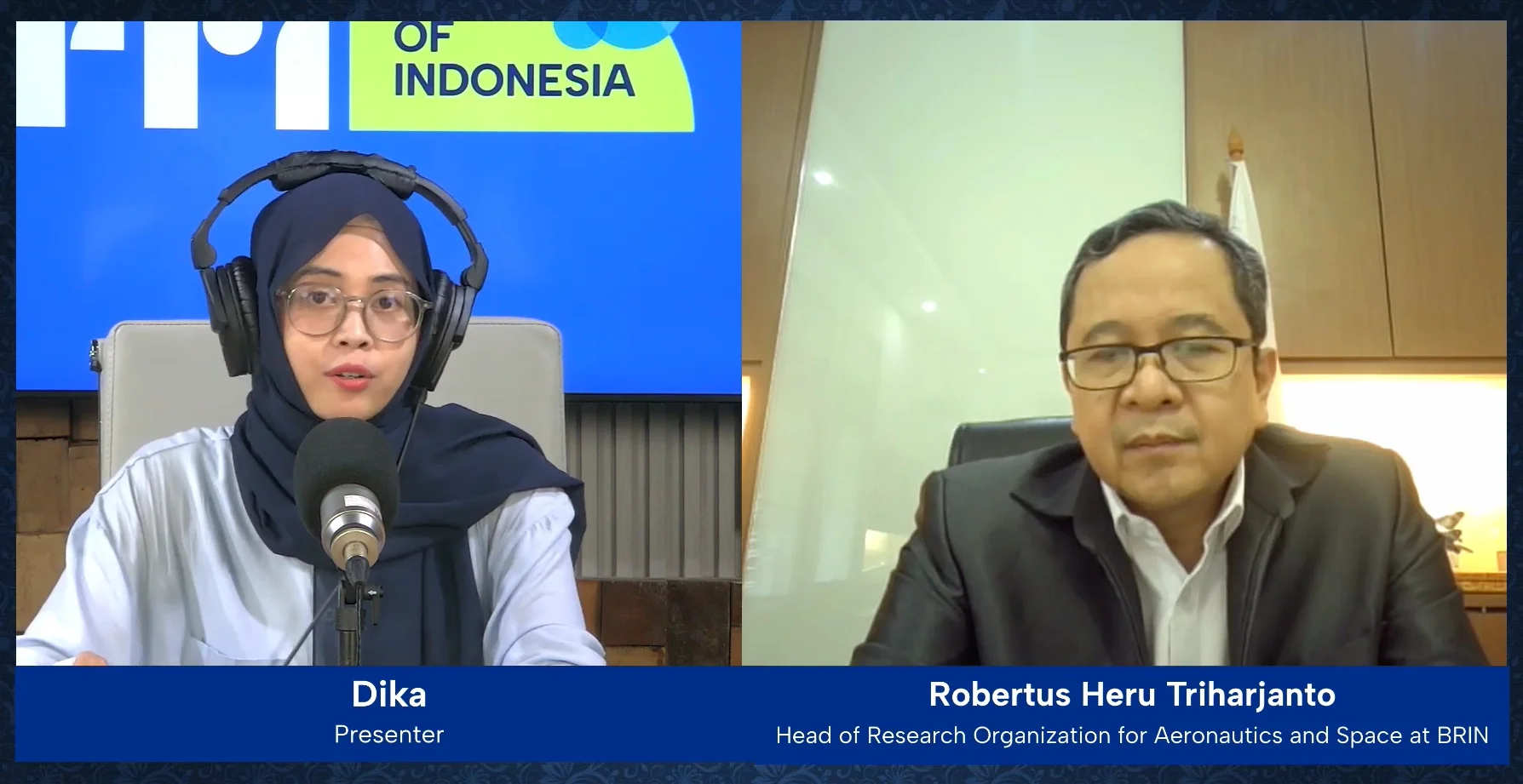
RRI.CO.ID, Jakarta - Indonesia could become an important contributor to future global efforts to monitor satellites and space debris as the number of objects orbiting Earth continues to grow, according to the National Research and Innovation Agency (BRIN). The country's observatories, particularly the Timau Observatory in East Nusa Tenggara, could help support international space traffic awareness while advancing scientific research.
Head of BRIN's Research Organization for Aeronautics and Space, Robertus Heru Triharjanto, said Indonesia possesses observation infrastructure that few countries have. He told RRI Voice of Indonesia on Thursday, 6 August 2026, that Indonesia has a strategic position to contribute data for future global monitoring systems.
"This national observatory's capacity, it could contribute to global space situational awareness, because not every country has the capacity and infrastructure to monitor space like Indonesia," he said in commemoration of Indonesia’s Space Day on 6 August.
Heru explained that Indonesia could observe satellites and other space objects passing over its territory and share the information with a future international authority responsible for managing space traffic.
"Indonesia could contribute with our infrastructure in Timau, for example, to observe the space objects that pass through our sky and pass the data globally, in the future probably to global space traffic authorities,” he stated.
He said such cooperation is becoming increasingly important as the rapid expansion of satellites and commercial space activities raises the risk of congestion and collisions in Earth's orbit. According to Heru, one of the biggest challenges is the absence of a binding international governance framework comparable to those governing aviation or maritime transport.
"This global governance on space is something that at the moment does not yet exist. It is unlike in the maritime world or in the aviation world when some UN-based hard laws and institutions agree in the countries how do we manage our air traffic, our ship traffic,” he said on the same occasion.
Without internationally agreed rules on satellite disposal and traffic coordination, Heru warned that future space activities could become increasingly difficult. He also expressed hope that there will be global governance of space in the future, noting that it will be difficult to regulate the satellite ecosystem without it.
News Recomendation
Memuat berita terbaru.....