



Get to Know About Bank Indonesia, Indonesia's Central Bank
- 28 Jul 2026 11:01 WIB
- Voice of Indonesia

RRI.CO.ID, Jakarta - Bank Indonesia (BI) is the central bank of Indonesia. It is best known for issuing Indonesia's national currency, the rupiah, while also maintaining the country's monetary and financial system.
BI was established on July 1, 1953, succeeding the privately owned De Javasche Bank, which operated during the Dutch East Indies period. Founded in 1828, De Javasche Bank served as the colony's circulation bank and issued the Dutch East Indies guilder.
BI is closely associated with the rupiah, Indonesia's currency. The word rupiah is derived from the Sanskrit word rupya (रूप्यक), meaning "wrought silver". As of 2026, the rupiah is available in coins (Rp100, Rp200, Rp500, and Rp1,000) and banknotes (Rp1,000, Rp2,000, Rp5,000, Rp10,000, Rp20,000, Rp50,000, and Rp100,000), and is the unit of account for non-cash payments throughout Indonesia.
Bank Indonesia derives its constitutional mandate from Article 23D of the 1945 Constitution. It states that Indonesia shall have a central bank regulated by law.
"The State shall have a central bank whose organization, position, authority, responsibilities, and independence shall be regulated by law," the article said.
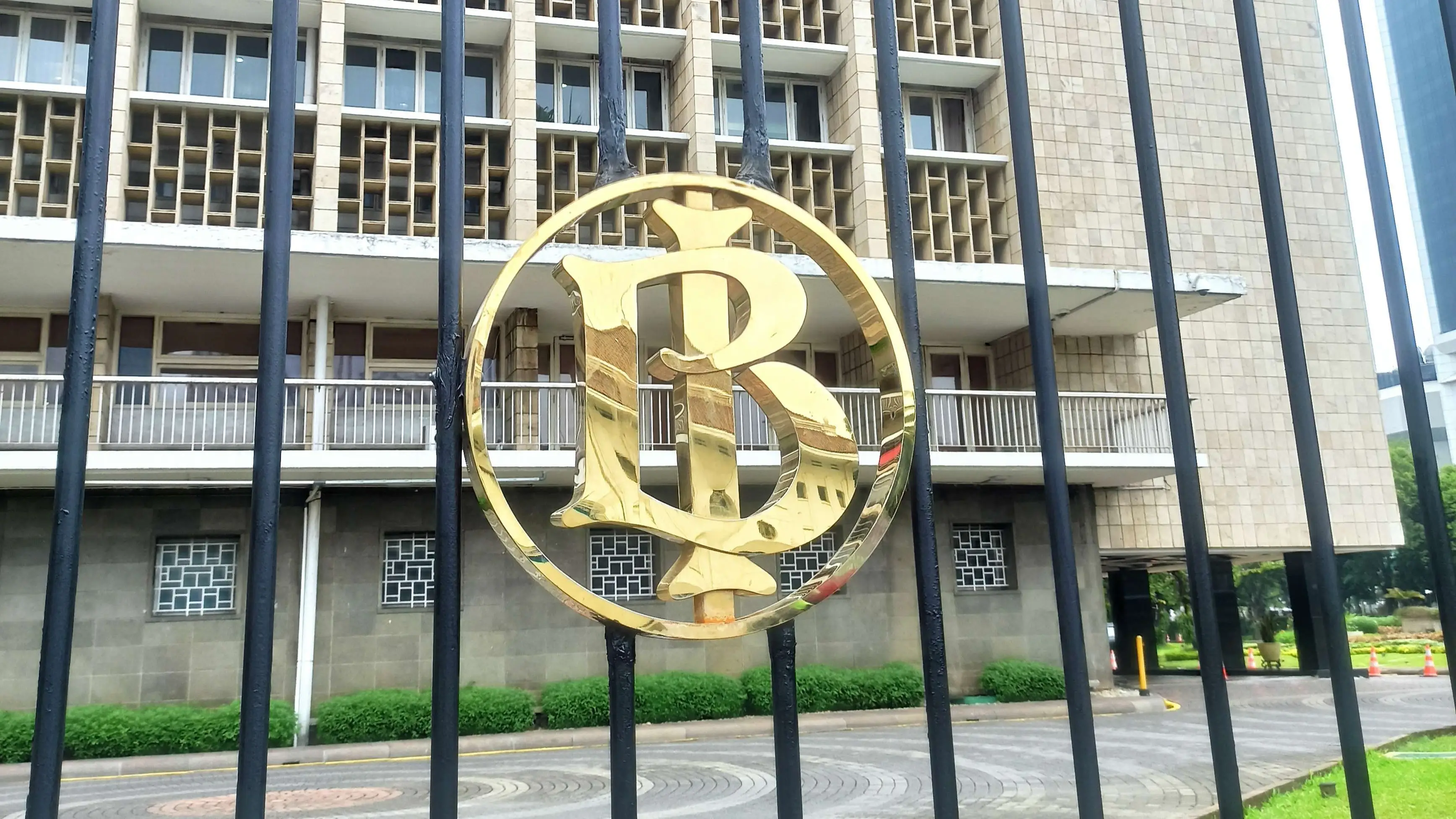
Under Act No. 23 of 1999 on Bank Indonesia, BI is designated as Indonesia's central bank. Its primary objective is to achieve and maintain the stability of the rupiah. To fulfill this mandate, BI is responsible for formulating and implementing monetary policy, regulating and ensuring the smooth operation of the payment system, and regulating and overseeing the macroprudential aspects of Indonesia's banking sector.
Before 1999, BI operated under the executive branch of government, in which its leader, called the Governor, held ministerial rank and served as a member of the cabinet. The current law establishes BI as an independent state institution, free from interference by the government or any other parties, "except in matters explicitly provided" for by law.
In addition, Bank Indonesia is governed by a Board of Governors, consisting of one Governor, one Senior Deputy Governor, and between four and seven Deputy Governors. Members of the board serve five-year terms and can be renewed once.
President of Indonesia nominates BI's Governor and the Senior Deputy Governor, while the Governor nominates the Deputy Governors. All members of the board of governors must receive approval from the House of Representatives (DPR) before being formally appointed by the president.
News Recomendation
Memuat berita terbaru.....