



Energy Expert Urges Sorghum-Based Bioethanol to Safeguard Food Security
- 26 Jul 2026 16:07 WIB
- Voice of Indonesia
Poin Utama
- Energy expert Ali Ahmudi Achyak urged the government to develop sorghum-based bioethanol, highlighting its resilience on dry land and minimal impact on food supplies.
- He cautioned against using sugarcane or corn for ethanol, stressing food security must take priority as Indonesia prepares for E10 fuel blending in 2027.
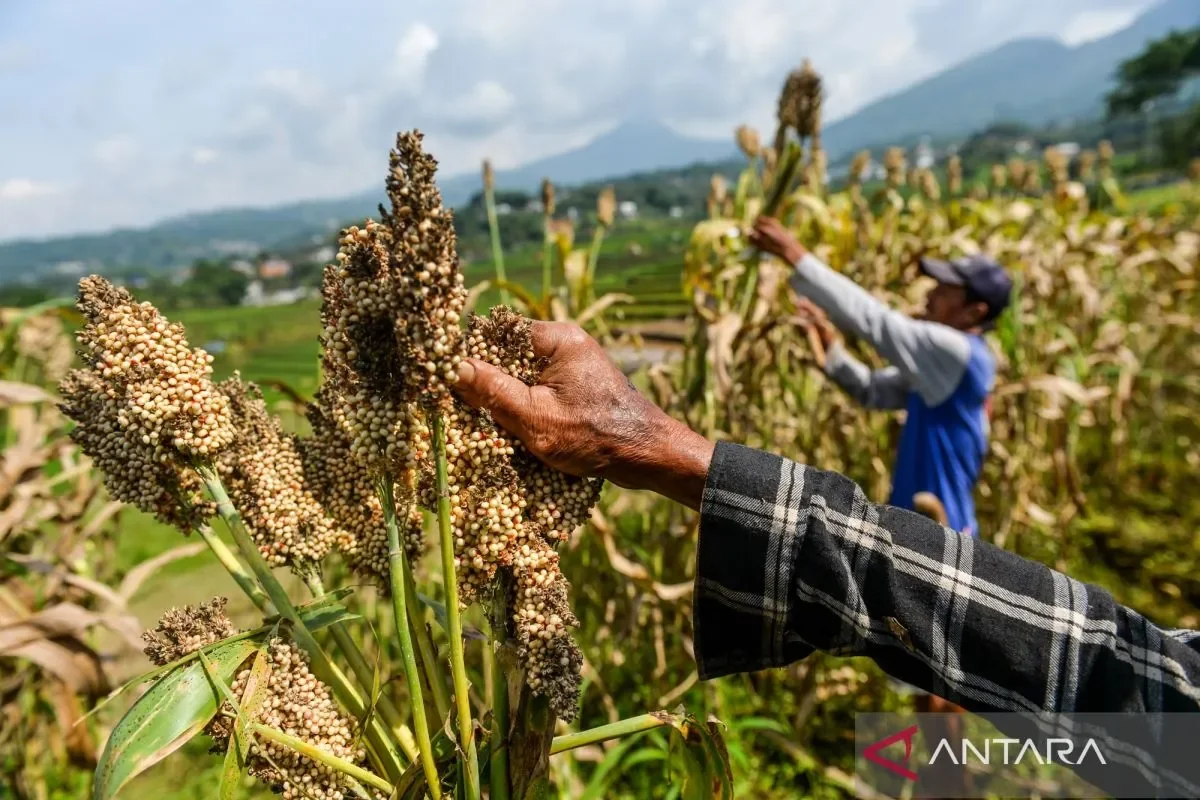
RRI.CO.ID, Jakarta - Sorghum is considered to have multiple benefits as both a food crop and a renewable energy source. It can grow on dry land, does not compete directly with staple food needs, and has potential as a raw material for bioethanol.
This makes sorghum a promising option to support Indonesia’s energy transition without compromising food security.
An energy expert from the University of Indonesia, Ali Ahmudi Achyak, proposed that the government develop sorghum-based bioethanol.
He noted that sorghum consumption in Indonesia remains far lower than rice, corn, or wheat, so its use for energy would not disrupt food supplies. Sorghum also grows well in poor soils and tolerates dry conditions.
“Sorghum can survive. If cultivated along Java’s southern coast, in East Nusa Tenggara (NTT), West Nusa Tenggara (NTB), and the west coast of Sumatra, it could provide large-scale bioethanol,” said Ali, who is also a bioenergy researcher, in Jakarta on Sunday, July 26, 2026, as quoted by Antara.
He cautioned the government against developing bioethanol from primary food commodities such as sugarcane, cassava, and corn, as this could threaten food security.
Ali stressed that if sugarcane is used extensively for ethanol, the government must balance national sugar needs with production capacity to avoid shortages. “Sugar is used not just for households but also for cakes and other foods, so let’s not import sugar just for ethanol,” he said.
He also advised against using corn as the main raw material for bioethanol, since it is vital for both human consumption and animal feed. “If corn is used, it will create a three-way conflict: first for humans, second for animal feed, and third for energy. Food should be prioritized,” he said.
Previously, Energy and Mineral Resources Minister Bahlil Lahadalia announced that the government is targeting a 10 percent ethanol blend in fuel (E10) starting in 2027, as a first step before transitioning to E20.
According to Minister Bahlil, the government has been reviewing the mandatory ethanol policy since 2025 and is finalizing the roadmap for E20 implementation, scheduled gradually between 2028 and 2029. He added that blending ethanol into gasoline aims to reduce Indonesia’s dependence on imported fuel, particularly gasoline. ***
News Recomendation
Memuat berita terbaru.....