



Economic Census 2026, Momentum to Map Strengths of Creative Economy
- 30 Jun 2026 14:33 WIB
- Voice of Indonesia
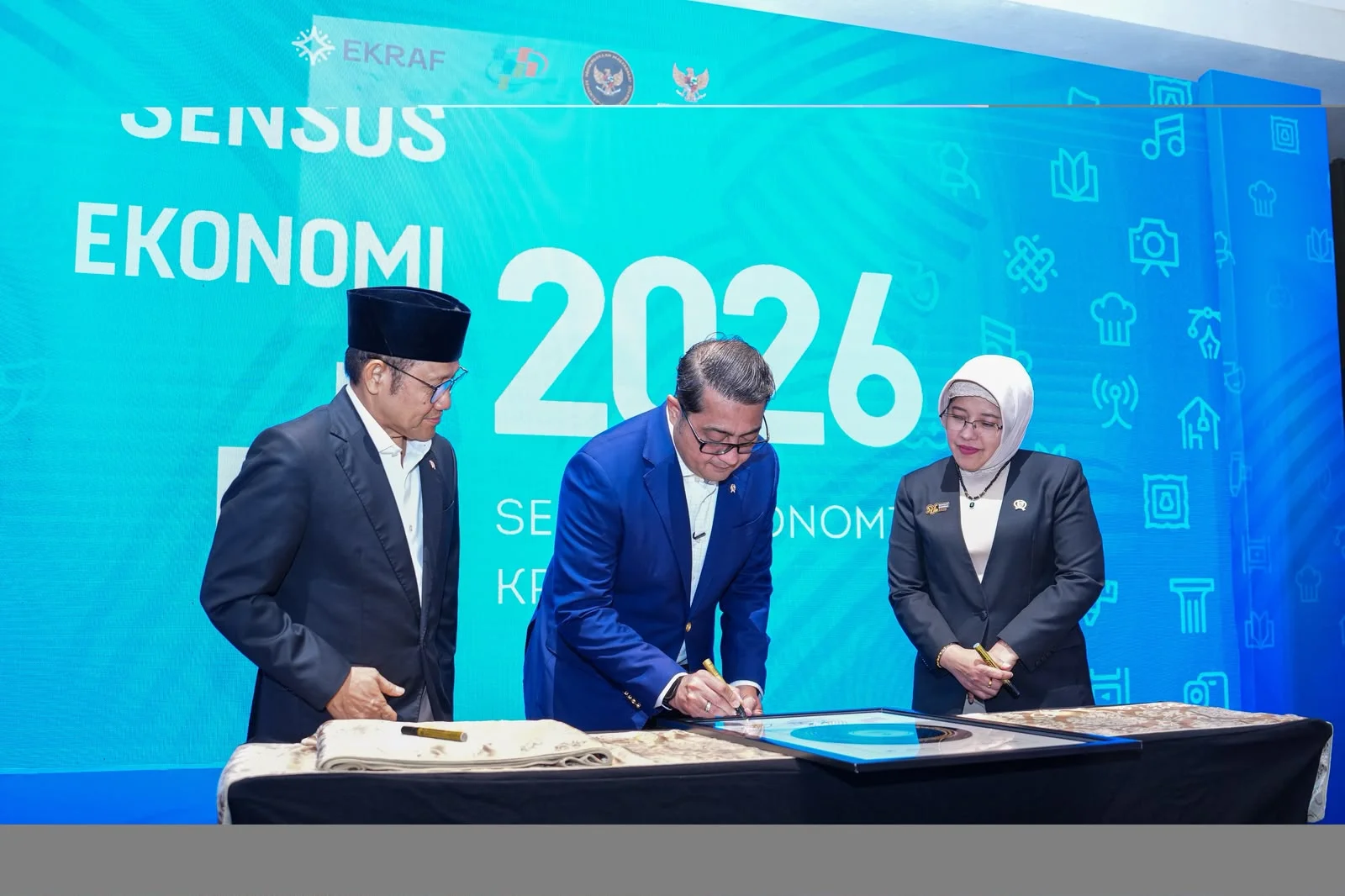
RRI.CO.ID, Jakarta - Indonesia's Ministry of Creative Economy/Creative Economy Agency, in collaboration with Statistics Indonesia (BPS), has announced the implementation of the 2026 Economic Census (SE) for the creative economy sector. This collaboration aims to strengthen the creative economy database, serving as a foundation for formulating more targeted policies.
The Coordinating Minister for Community Empowerment, Abdul Muhaimin Iskandar, emphasized that data constitutes strategic infrastructure for national development. "Data is an essential infrastructure requirement for both the government and non-governmental sectors. Therefore, the 2026 Economic Census represents a major investment in the nation's progress. Accurate data will lead to sound policies, open up new avenues for accelerating the creative economy, and serve as a foundation for achieving a just, prosperous, and thriving Indonesia," stated Muhaimin during the dissemination event for the 2026 Economic Census (Creative Economy Sector) in Jakarta on Monday, June 29, 2026.
Echoing Muhaimin’s sentiments, the Minister of Creative Economy/Head of the Creative Economy Agency, Teuku Riefky Harsya, stated that the 2026 Creative Economy Census (SE 2026) serves as a crucial moment to comprehensively map Indonesia's creative economy potential.
"With clearer data, the government, associations, academia, and business players can collaborate more effectively to establish the creative economy as a new engine for national economic growth," the Minister said.
According to the 2025 Creative Economy Statistics released by Statistics Indonesia (BPS), the creative economy's Gross Domestic Product (GDP) value continued to rise, reaching IDR 1,757.87 trillion in 2025 with a growth rate of 6.86 percent—surpassing the national economic growth rate of 5.11 percent.
According to a release received by RRI Voice of Indonesia on Tuesday, June 30, 2026, the sector also employs approximately 27.4 million workers, representing 18.7 percent of the total national workforce. "From the outset, we have believed that data on creative economy subsectors is crucial. This data serves as the foundation for the government in formulating policies and acts as a reference for associations and all stakeholders in developing Indonesia's creative economy ecosystem," the Minister of Creative Economy said.
Meanwhile, the Head of BPS (Statistics Indonesia), Amalia Adininggar Widyasanti, stated that creative economy statistics would be continuously updated.
According to her, the active participation of creative economy practitioners is a key factor in producing high-quality data that accurately represents the state of the national economy.
"An economic census is akin to a medical record for Indonesia's economy. When we possess complete and accurate data, the resulting policies will be more targeted and effective. Therefore, we urge all business practitioners to provide truthful information. There is no need for concern; data confidentiality is guaranteed in accordance with statutory regulations," stated the Head of BPS.
The outreach event regarding the 2026 Economic Census for the creative economy sector also featured the presentation of 2025 Creative Economy Statistics. The collaborative activities between the Ministry of Creative Economy and BPS in support of the 2026 Economic Census continued with an information session and a collective census questionnaire completion exercise involving representatives from creative economy subsector associations.
News Recomendation
Memuat berita terbaru.....