



Indonesia, Japan Conclude Landmark Wildfire-Fighting Cooperation Mission
- 30 Sep 2026 19:16 WIB
- Voice of Indonesia
Poin Utama
- Indonesia and Japan concluded a joint wildfire-fighting mission in West Kalimantan.
- Japan deployed three CH-47 Chinook heavy-lift helicopters for aerial firefighting operations.
- Japanese Ambassador Ueno Atsushi noted the deployment marked the JSDF's first overseas wildfire mission.
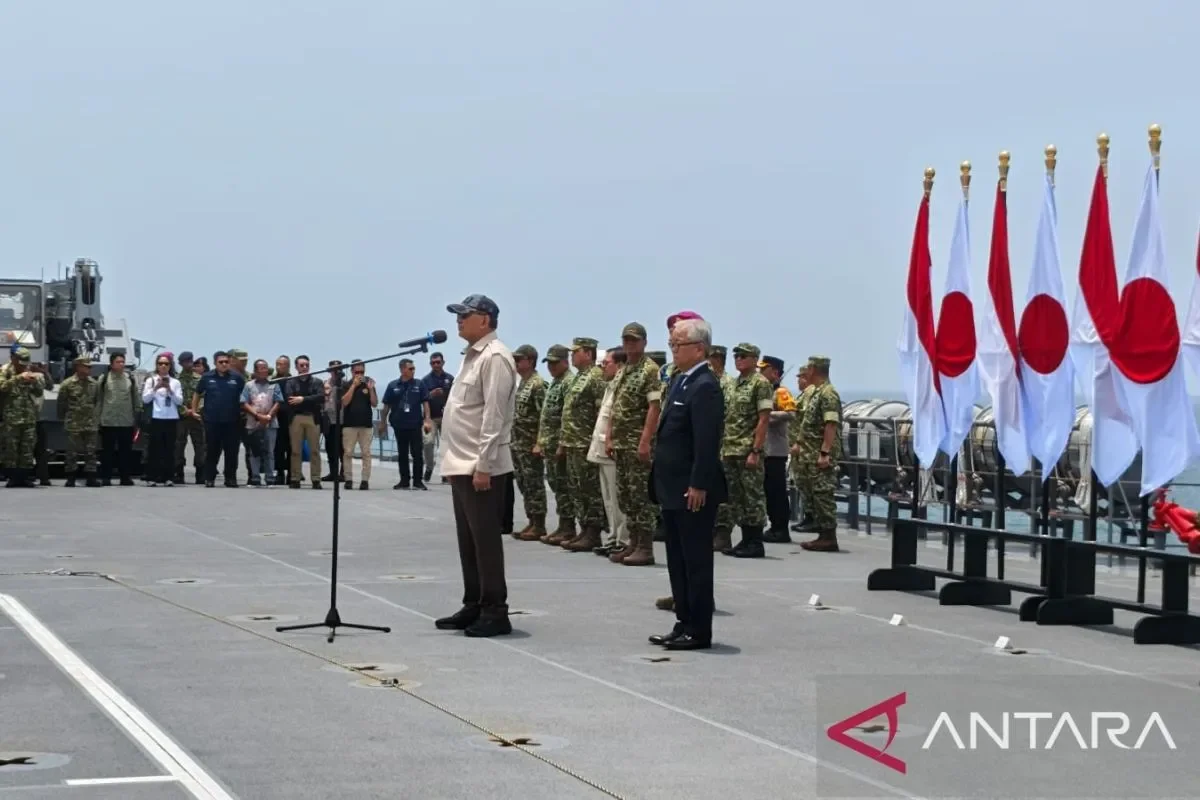
RRI.CO.ID, Jakarta - A landmark disaster-response mission between Indonesia and Japan concluded in West Kalimantan as the Japan Self-Defense Forces (JSDF) completed their first overseas forest and land fire-fighting deployment.
Indonesian Defense Minister Sjafrie Sjamsoeddin formally bid farewell to the Japanese personnel aboard the LST-03 Kunisaki at Kijing International Port in Mempawah Regency, West Kalimantan, on Wednesday, September 30, 2026.
“Today, I am on the deck of this ship to personally send off the JSDF forest and land fire suppression mission, which will return to its home country in the coming days,” Minister Sjafrie said, as quoted by Antara.
The mission formed part of Japan’s support for Indonesia’s efforts to combat forest and land fires in West Kalimantan. Japan deployed three CH-47 Chinook heavy-lift helicopters, transported by the JS Kunisaki, to conduct aerial firefighting operations in affected areas.
Indonesia’s National Disaster Mitigation Agency (BNPB) expressed appreciation for the assistance. Acting Head of BNPB’s Disaster Data, Information, and Communication Center, Berton S.P. Panjaitan, said the operation officially concluded on Tuesday, September 29, 2026, after more than two weeks of support.
“The Indonesian government and BNPB highly appreciate the full support of the Japan Self-Defense Forces, which operated for more than two weeks in assisting wildfire suppression efforts, particularly in Kalimantan’s peatland areas,” Berton said.
BNPB said the operation began on September 16 and involved three Chinook helicopters carrying out 40 aerial missions. During the deployment, the aircraft dropped more than 220 tons of water on priority fire hotspots in West Kalimantan, including areas around Pontianak and Ketapang.
Berton said Japan’s Defense Minister, Shinjiro Koizumi, authorized the conclusion of the mission after assessing that the joint water-bombing operations had helped prevent the fires from spreading further and that Indonesian firefighting teams were capable of continuing the response independently.
Japanese Ambassador to Indonesia Ueno Atsushi described the deployment as a historic experience for the JSDF, noting that it was the force’s first overseas wildfire-fighting mission.
“We hope to strengthen similar cooperation with Indonesia in the future, both in disaster management and defense cooperation,” Ambassador Ueno said.
The operation also underscored growing strategic cooperation between Indonesia and Japan, particularly in non-combat military operations and international disaster response efforts.
The helicopters arrived in West Kalimantan on September 10 after being transported from Japan aboard the JS Kunisaki, which departed from Kure Port in Hiroshima Prefecture on August 30.
With the Japanese mission now completed, responsibility for handling remaining hotspots will continue under Indonesia’s National Task Force, local administrations, and volunteer groups.
The deployment leaves behind not only operational results in suppressing fires but also a significant example of Indonesia-Japan cooperation in responding to humanitarian and environmental challenges. ***
News Recomendation
Memuat berita terbaru.....