



BRIN Hosts 2026 FNCA Regional Nuclear Workshop on Research Reactor Utilization
- 18 Sep 2026 13:47 WIB
- Voice of Indonesia
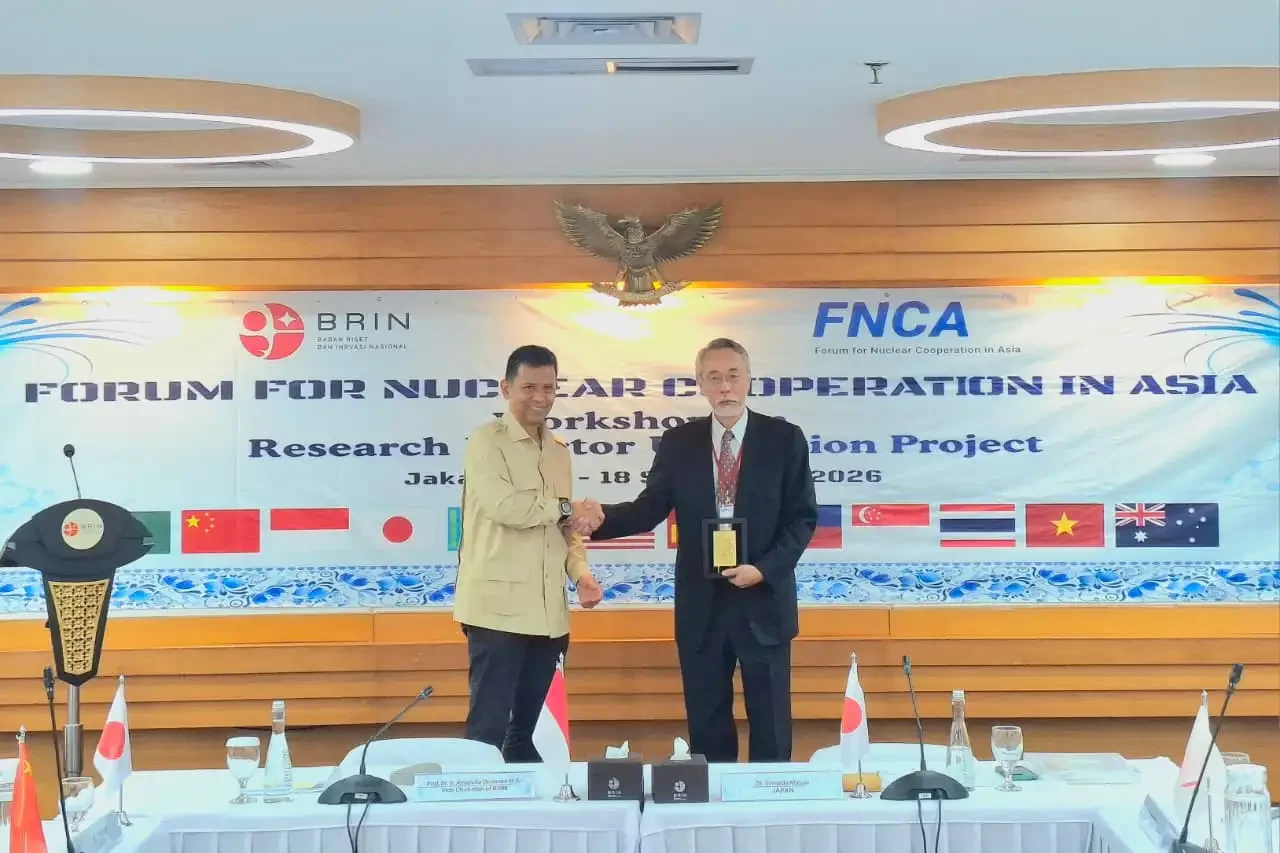
RRI.CO.ID, Jakarta - The National Research and Innovation Agency (BRIN) is hosting the 2026 Forum for Nuclear Cooperation in Asia (FNCA) Workshop on the Research Reactor Utilization (RRU) Project at the B.J. Habibie Building in Jakarta. Held in a hybrid format, the event aims to strengthen technical cooperation and facilitate the sharing of regional experiences regarding research reactor utilization, while simultaneously reinforcing Indonesia's strategic position within the global nuclear research ecosystem.
In an official statement received on Wednesday, September 16, 2026, BRIN Deputy Head, Amarulla Octavian, stated that BRIN’s research reactor facilities and nuclear analysis laboratories serve as platforms open to various stakeholders, ranging from academia to industry. "Our research reactor facilities and laboratories provide a platform for research, human resource development, analytical services, and collaboration with universities, government institutions, industry, and other users," he said.
Amarulla emphasized that the true value of utilizing research reactors lies in their ability to address real community needs, such as in the fields of health, the environment, food, agriculture, and even cultural heritage preservation. "For Indonesia, our involvement in the FNCA goes beyond merely sharing our achievements. It is also about learning from one another, strengthening partnerships, building regional capacity, and transforming our collective knowledge into practical cooperation that delivers tangible benefits to our nations and the region," Amarulla stated.
Echoing this sentiment, the Japanese Coordinator for the FNCA, Tamada Masao, highlighted the evolving and essential functions of research reactors, specifically citing two key applications: medical isotope production and neutron activation analysis (NAA). "Medical isotopes play a crucial role in diagnostics, imaging, and cancer therapy, and new demands continue to emerge in this field," he noted.
Tamada further explained that the NAA technique is now attracting great attention for analyzing rare and valuable samples, ranging from extraterrestrial materials collected from asteroids to cultural heritage materials such as fossils. He noted that international collaboration within the Asian region is crucial to optimizing this potential, making the FNCA a strategic platform for member countries to formulate the future direction of its development.
The meeting was attended in a hybrid format by delegates from eight countries in person: Indonesia, China, Japan, Kazakhstan, Malaysia, Mongolia, Thailand, and Vietnam, and four other countries that joined online: Australia, Bangladesh, South Korea, and Singapore.
News Recomendation
Memuat berita terbaru.....