



ASEAN Secretary-General Stresses ASEAN Centrality Amid Strategic Rivalry
- 15 Sep 2026 08:24 WIB
- Voice of Indonesia
Poin Utama
- ASEAN Secretary General Kao Kim Hourn emphasized that the regional grouping's centrality must continue to be pursued amid strategic rivalry.
- ASEAN needs to strengthen dialogue mechanisms to remain relevant amid changes in the regional architecture.
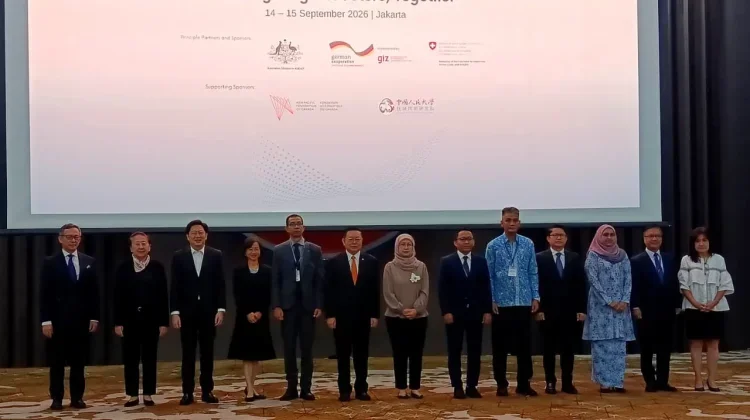
RRI.CO.ID, Jakarta - ASEAN Secretary‑General Kao Kim Hourn emphasized the need to strengthen the Association of Southeast Asian Nations' centrality amid intensifying strategic rivalry, noting that the increasingly complex regional architecture demands the grouping to maintain its central role.
“Centrality, ultimately, cannot rely solely on institutional legacy. Centrality must continue to be pursued through ASEAN’s ability to bring countries together, manage differences, and enable collective action when necessary,” Kao said at the 3rd ASEAN Think Tanks Summit (ATTS) at the ASEAN Secretariat, Jakarta, on Monday, September 14, 2026.
Kao said the challenge is growing as the regional and international environment becomes more competitive, complex, and unpredictable. He said ASEAN needs to maintain unity and solidarity to ensure it has a clear direction in facing various pressures.
“The challenge is not simply navigating those pressures, but also doing so without losing unity, solidarity, centrality, and direction as it moves toward the ASEAN Community Vision 2045: Our Shared Future,” he said.
He highlighted growing strategic rivalry as well as the emergence of various new institutions and initiatives in the region. The situation has been accompanied by a tendency among countries to rely on issue-based coalitions and minilateral arrangements.
According to him, these developments pose challenges for ASEAN in maintaining a coherent and relevant regional architecture. ASEAN needs to ensure that its various ASEAN-led processes remain capable of bringing countries together amid the region’s increasing complexity.
He said the success of ASEAN centrality will ultimately be reflected in the achievements of institutions operating within the ASEAN framework. Therefore, ASEAN needs to ensure that its mechanisms can respond to changes and deliver tangible benefits.
He also emphasized the importance of ASEAN maintaining its capacity to determine its own priorities and shape its future. At the same time, ASEAN needs to remain open to partnerships with major powers and other partners.
“ASEAN benefits greatly from the expertise, experience, engagement, and support of dialogue partners, sectoral dialogue partners, and development partners. However, engagement with partners must strengthen, not replace, ASEAN’s own capacity to determine its interests and make its choices,” he continued.
He stressed that ASEAN’s openness to partnerships does not mean reducing regional ownership of its strategic direction. According to him, ideas from within and outside the region can be utilized as long as ASEAN’s interests remain the basis for decision-making.
“Ownership does not mean closing ourselves off. Ownership means drawing on the best ideas from within and outside the region, while keeping ASEAN’s principles, priorities, and interests as the strategic compass,” he concluded. (Diffa Sephiawardhani)
News Recomendation
Memuat berita terbaru.....