



Indonesia’s Criminal Law Transition Spotlighted at Asian Lawyer Union's Summit
- 07 Sep 2026 21:22 WIB
- Voice of Indonesia
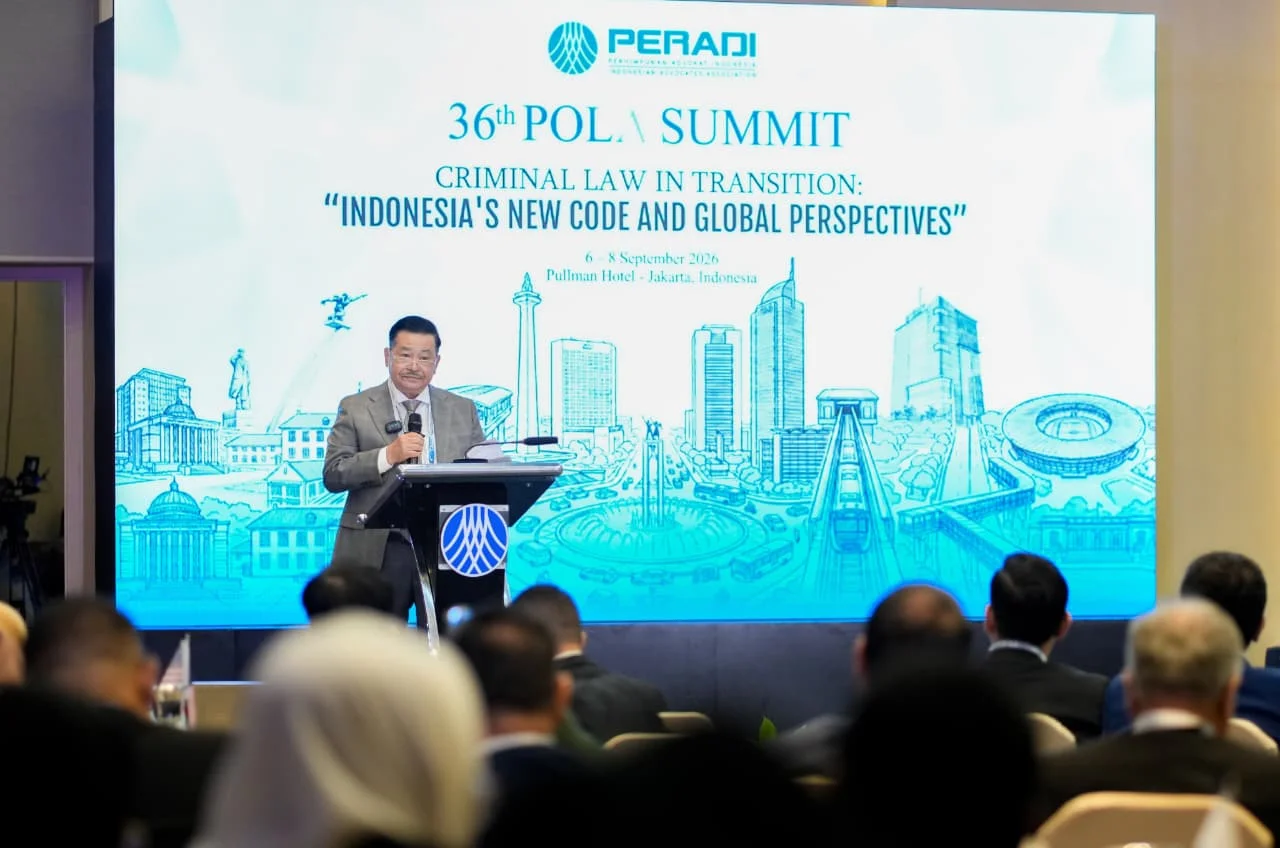
RRI.CO.ID, Jakarta – Presidents of Law Associations in Asia (POLA) held its 36th summit in Jakarta on Monday, 7 September 2026. The conference, which carried the theme "Criminal Law in Transition: Indonesia’s New Code and Global Perspectives", served as an opportunity to introduce Indonesia’s major transition in its national criminal justice system to the international community.
POLA President Otto Hasibuan warmly welcomed the delegates and emphasized that this year’s conference theme was highly relevant to Indonesia’s current situation. He noted that the enactment of the new 2023 Act on Criminal Code marked an "important" chapter in the history of Indonesian law, while stressing that its greatest challenge lies in its implementation.
"The true test of every major legal reform lies in its implementation," Otto said, according to a statement from Indonesia’s Coordinating Ministry for Legal Affairs, Human Rights, Immigration, and Corrections on Monday.
Otto, who also serves as Chairman of the Indonesian Advocates Association (PERADI), further emphasized that crime today frequently transcends national borders, making regional cooperation increasingly crucial. He also reiterated the importance of advocates as law enforcers.
"An advocate is not merely a client’s representative. An advocate is also a law enforcer within the justice system, with professional and ethical responsibilities that extend beyond the interests of any individual case," he said.
Chairman of the Criminal Chamber at the Indonesian Supreme Court, Prim Haryadi, said that, effective January 2, 2026, Indonesia officially implemented new laws governing the criminal code, criminal procedural code, and criminal sentencing adjustments. Haryadi described the changes as "a concrete manifestation of a transition in legal philosophy", while underscoring the importance of balance in the administration of justice.
"Certainty without justice can turn into rigidity, while justice without certainty can turn into arbitrariness. The wisdom of a judge lies in the ability to maintain both," Prim Haryadi said.
Indonesia's Coordinating Minister for Legal Affairs, Human Rights, Immigration, and Corrections, Yusril Ihza Mahendra, delivered the keynote speech. In his speech, which highlighted the government’s commitment to criminal law reform, he emphasized that the transition in Indonesia’s criminal justice system fundamentally changes the orientation of punishment.
"We are moving away from a punitive approach that was once heavily centered on retribution toward a system that seeks to balance prevention, rehabilitation, restoration, public protection, and respect for human dignity," Yusril said.
Yusril outlined four major challenges facing modern criminal law that require the collective attention of Asian countries: corporate criminal liability, cybercrime in the digital era, transnational banking and financial crimes, and transnational criminal law enforcement. He also expressed his strong appreciation for the legal profession.
"An independent legal profession is not an obstacle to law enforcement; the independence of the legal profession is one of the conditions that gives legitimacy to law enforcement," he said.
Yusril then struck a ceremonial gong, symbolizing the official commencement of the summit. The ministry expected the summit to generate valuable ideas for strengthening the rule of law across Asia and globally.
News Recomendation
Memuat berita terbaru.....