



Indonesian Govt Outlines Concrete Steps to Address Changes in Global Labor Market
- 27 Agt 2026 09:07 WIB
- Voice of Indonesia
Poin Utama
- Indonesia shared its plans at an ASEAN meeting to help workers adapt to modern job markets by boosting national training programs, using new technology for workplace safety, and protecting job seekers.
- The government is working to ensure fair job opportunities for everyone—including women, youth, and people with disabilities—while leading efforts across ASEAN countries to align skill certifications and share job security strategies.
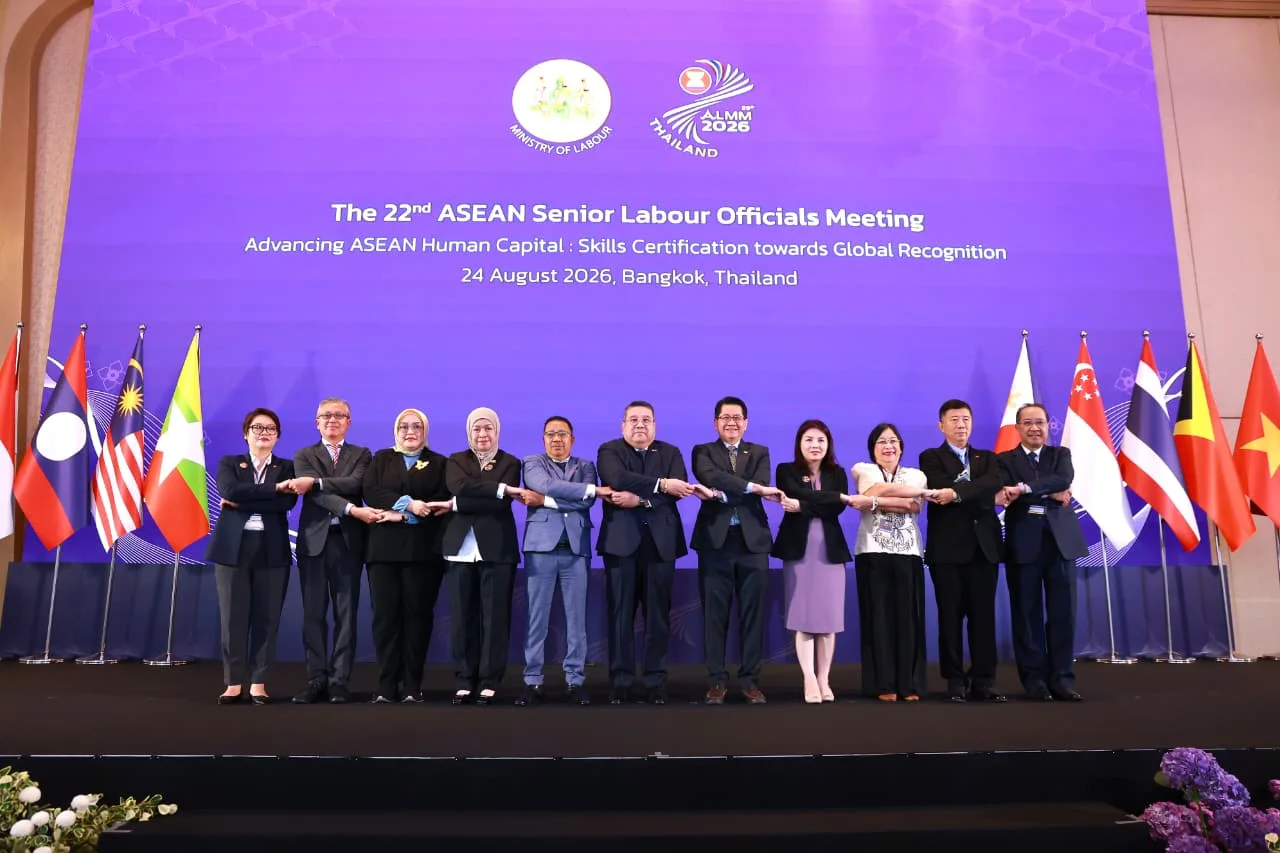
RRI.CO.ID, Bangkok – The Indonesian government, through the Ministry of Manpower, presented concrete steps to respond to changes in the labor market at an ASEAN forum in Bangkok, Thailand. The presentation was delivered at the Senior Labor Officials Meeting (SLOM), which took place from August 23 to 27, 2026.
The SLOM meeting was held in conjunction with the 29th ASEAN Labor Ministers’ Meeting (ALMM). Director General of Industrial Relations and Social Security at the Ministry of Manpower, Indah Anggoro Putri, stated that these steps are part of Indonesia’s commitment to implementing the ASEAN Declaration on Promoting Competitiveness, Resilience, and Agility of Workers for the Future of Work.
“Indonesia remains committed to translating the Declaration’s objectives into practical and mutually reinforcing measures to ensure that no worker is left behind in the changing labor market,” Indah said in Bangkok on Monday, August 24, 2026.
One such measure involves strengthening workers' skills. The National Apprenticeship Program aims to reach 150,000 participants, building on its first phase, which served 100,000 recent college graduates and achieved a 30 percent employment rate. Additionally, the National Vocational Training Program (PVN) aims to reach 300,000 participants.
Indonesia is modernizing its integrated labor market information system to better align vocational training with industry needs. In the field of occupational safety and health (OSH), Indonesia is adopting digital technology and the Internet of Things (IoT) for labor oversight and online OSH compliance services.
Regarding social protection, Indonesia is strengthening the safety net for workers by expanding the coverage of the Job Loss Insurance (JKP) program, which offers cash benefits, skill training, and job placement support. These efforts also include operating the Layoff Task Force (PHK) and providing social security contribution incentives for labor-intensive and informal sectors.
To promote inclusivity, Indonesia supports equitable employment opportunities for people with disabilities, women, youth, and older workers. Industrial relations are strengthened through more than 12,830 bipartite labor relations committees at the company level, alongside tripartite labor relations committees across 34 provinces and 398 regencies or cities, adhering to the principles of ILO Convention No. 144.
At the regional level, Indonesia plays an active role. For instance, it is leading Phase 3 of the ASEAN Guiding Principles (AGP) to harmonize competency certification systems across five ASEAN member states, focusing initially on the construction and electrical sectors.
Additionally, Indonesia is preparing a “Knowledge Sharing on Unemployment Insurance” project involving eight ASEAN member states and actively participating in studies on regional labor productivity.
“Through these measures, Indonesia reaffirms that regional competitiveness must always go hand in hand with resilience, inclusivity, social protection, and the fulfillment of workers’ basic rights,” Indah concluded.
News Recomendation
Memuat berita terbaru.....