



Government to Cut Breast Cancer Mortality Rates by 2.5 Percent
- 27 Feb 2026 15:15 WIB
- Voice of Indonesia
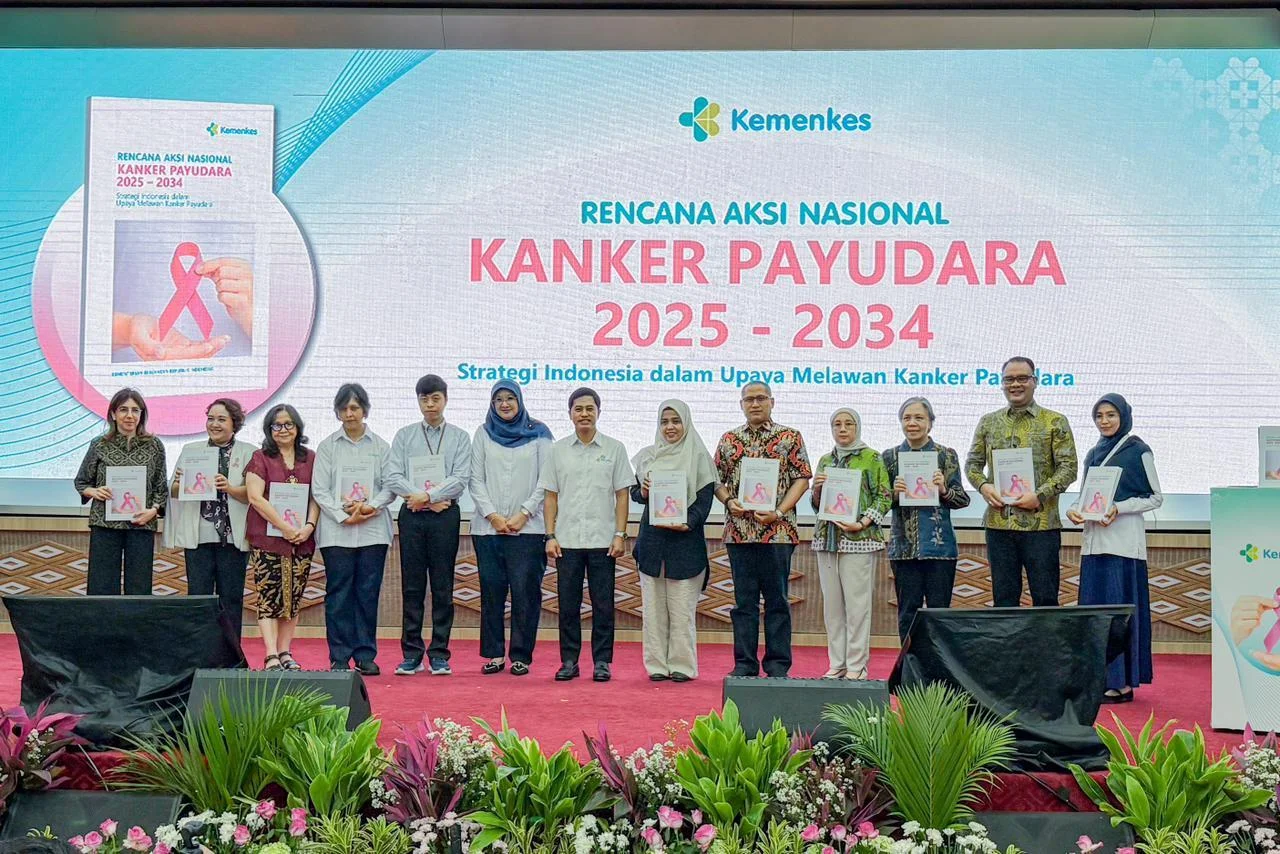
RRI.CO.ID, Jakarta - The Indonesian Ministry of Health has disseminated the National Action Plan (RAN) for Breast Cancer 2025–2034. This step is the government's strategy to achieve the World Health Organization (WHO) standard target of reducing breast cancer mortality by 2.5 percent annually.
This effort was strengthened through the Public Private Community Partnership (PPCP) forum held at the Ministry of Health Office in Jakarta on Thursday, February 2026, as reported on the ministry official website. During the discussion, Deputy Minister of Health Dante Saksono Harbuwono said that there is a disparity in breast cancer mortality rates between developed and developing countries due to access to services.
"Breast cancer mortality has decreased in high-income countries due to improved awareness of early detection and access to treatment. Conversely, in low-and middle-income countries, mortality remains high due to challenges in accessing healthcare services," said Dante.
Dante continued, saying that the WHO has set a target for every country to reduce breast cancer mortality by 2.5 percent per year, including Indonesia. To that end, the Ministry of Health has developed the 2025–2034 National Action Plan for Breast Cancer as a shared guide for faster and more targeted action.
"I hope this forum will not stop at discussion, but will continue with concrete collaborative action, whether in the form of programs, pilot projects, or funding support. Our main goal is to cure and palliate," Dante said.
The Director of Prevention and Control of Non-Communicable Diseases (NCDs), Siti Nadia Tarmizi, explained the urgency of improving the early detection system. Ministry of Health data shows a significant gap in patient care.
"Of the 14 million target women, only 4.1 million have been screened. Of that number, 20,000 people were diagnosed with abnormalities, but only 6,000 continued treatment, and only half of them managed to reach a hospital," Nadia said.
Nadia emphasized that the main challenges currently are public hesitancy to seek medical attention and system synchronization to prevent patients from being "lost" midway. Therefore, the National Action Plan for Breast Cancer is designed based on the three pillars of the WHO Global Breast Cancer Initiative.
Early Detection: 60 percent of patients are diagnosed at an early stage (stage 1 or 2); Rapid Diagnosis: Diagnosis is confirmed within 60 days of the first symptoms appearing; and Complete Treatment: More than 80 percent of patients receive complete treatment modalities (a combination of surgery, radiation, chemotherapy, etc.).
The National Action Plan for Breast Cancer 2025–2034 itself encompasses five main strategies: health promotion, increasing early detection, expanding access to quality services, strengthening cancer registries, and coordinating multi-stakeholder partnerships.
This half-day discussion forum involved cross-sectoral stakeholders, bringing together government, professional organizations, the private sector, and survivor communities to address the disparity in access to cancer healthcare services in Indonesia. Indonesia.
Through the PPCP forum, the government is opening the door wide for inclusive partnerships to achieve the target of a 70 percent 5-year survival rate for breast cancer patients in Indonesia. ***
News Recomendation
Memuat berita terbaru.....