



How Anak Krakatau's Morphology Has Changed Dramatically Since the 2018 Collapse
- 22 Sep 2026 16:43 WIB
- Voice of Indonesia
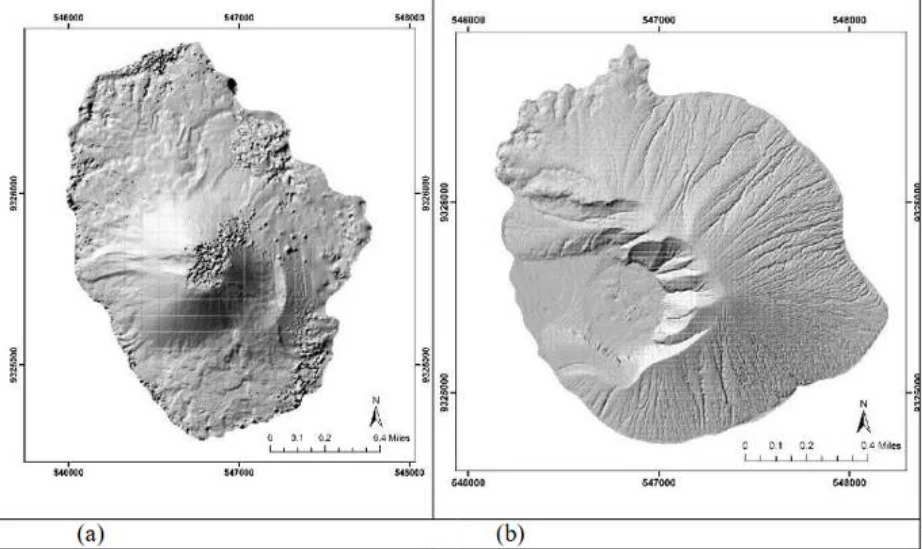
RRI.CO.ID, Jakarta - Anak Krakatau has undergone a highly significant change in morphology since its major collapse in 2018. Its cone shape, once relatively tall, became lower and more open before gradually rebuilding its body through 2026. This change is clearly visible in comparisons of the volcano's condition in 2013, 2019, 2020, and 2021, as analyzed by Indonesia's National Research and Innovation Agency (BRIN).
The comparison of morphology before and after the 2018 collapse shows a major transformation in the volcano's shape. The cone, which had previously been relatively tall, changed into a lower and more open form, before gradually being rebuilt through subsequent eruptive activity.
Since 2019, Anak Krakatau has entered a phase referred to as reconstruction and regrowth. Its volcanic activity has developed in stages, beginning with eruptions still influenced by interaction with water, then progressing to Strombolian eruptions, lava fountains, and lava flows that have built a new cone inside the post collapse crater.
Material produced by this activity has gradually accumulated to form new structures. One clear sign of this process can be seen in lava formation recorded in 2020, which built up on top of material from eruptive activity that occurred after the collapse.
This rebuilding phase is part of the natural cycle volcanoes undergo following a collapse. The pattern of activity progresses from eruptions still affected by water interaction, toward Strombolian activity, lava fountains, and lava flows, which gradually construct a new cone within the crater left by the collapse.
BRIN's research also found that Anak Krakatau's growth has not occurred symmetrically. This is because the volcano stands on the rim of an underwater caldera with differing slope angles on each side, with the southwestern sector developing on a steeper caldera slope while the northeastern sector rests on a relatively shallower seafloor.
| Baca juga: The Amazing Homing Pigeon |
This difference has given the two sectors distinct levels of stability, a condition made more pronounced by the accumulation of denser lava on top of lighter tuff deposits since around 1960, which has gradually increased the load on the volcano's body and contributed to slope instability, particularly on the southwestern side.
These findings indicate that understanding volcanic behavior cannot rely on observing a single eruption alone. The magma system, constituent materials, the shape of the volcanic edifice, eruption style, and environmental conditions are all interconnected and can change over time, meaning a volcano's behavior is never truly fixed.
Taken as a whole, Anak Krakatau's long history, from its first emergence from the sea, its growth to hundreds of meters in height, its major collapse in 2018, to its ongoing reconstruction of a new cone through 2026, stands as an important record for understanding the volcano's evolution as a continuous and ever changing process.
News Recomendation
Memuat berita terbaru.....