



Gov: Anak Krakatau Continues to Rebuild After Its Collapse and Growth Still Ongoing
- 22 Sep 2026 16:41 WIB
- Voice of Indonesia
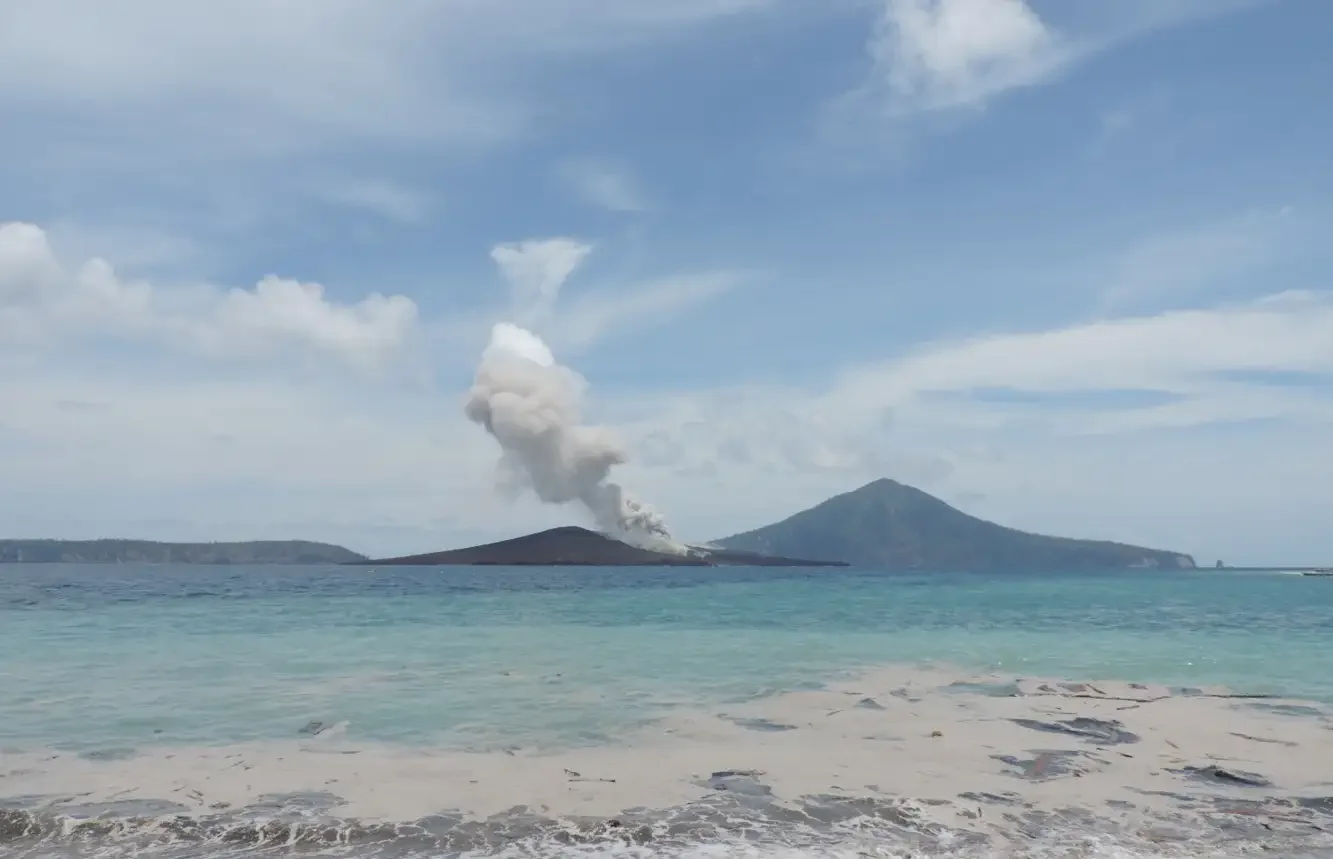
RRI.CO.ID, Jakarta - Anak Krakatau is going through a new chapter in its geological story after a large portion of the volcano collapsed into the sea. Joint research by Indonesia's National Research and Innovation Agency (BRIN), the University of Birmingham, the Bandung Institute of Technology (ITB), Penn State University, the British Geological Survey, the University of Oxford, and the Center for Volcanology and Geological Hazard Mitigation (PVMBG) has found that the process of rebuilding the volcano's body is still continuing.
Researchers explain that the history of Anak Krakatau shows that a volcano is a dynamic system that keeps changing over time. The volcano's eruptive history shows a pattern of growth, eruption, collapse, and rebuilding. After its most recent collapse, its shape and eruption style changed drastically, followed by a phase of renewed growth through eruptions and the formation of new lava.
The story of Anak Krakatau began when it emerged as part of a rebuilding phase following the collapse of the original Krakatau volcano after a massive historic eruption. In its early period, the eruption center was still located beneath or very close to the sea surface in the Sunda Strait.
The interaction between hot magma and seawater produced Surtseyan eruptions marked by steam explosions, ash, and volcanic material. Deposits that gradually accumulated from these eruptions eventually formed Anak Krakatau's landmass, which emerged permanently above sea level.
Growth continued over the following decades. In its earlier stage, volcanic activity was dominated by phreatomagmatic eruptions caused by the interaction of magma and water. Repeated eruptions, with ejected material and ash columns, gradually enlarged the body of Anak Krakatau.
As the crater became increasingly isolated from the sea, the eruption style shifted to become more dominantly Strombolian and Vulcanian, along with effusive activity, producing incandescent material, volcanic bombs, ash, and lava flows. Decades of accumulated eruptive products allowed the cone of Anak Krakatau to grow to a height of around 330 meters, before it eventually collapsed.
A major change occurred when the southwestern sector of Anak Krakatau collapsed into the sea, releasing an estimated volume of 0.116 cubic kilometers of material. This event removed most of the volcano's body that had been above sea level, reducing its peak height from around 330 meters to 120 meters, and triggering a tsunami in the Sunda Strait.
The collapse altered not only the physical shape of Anak Krakatau but also its eruptive system. The sudden loss of much of the volcano's body reduced pressure on the magma conduit, while seawater entered the newly opened crater. This condition caused volcanic activity to shift rapidly from Strombolian to more explosive Surtseyan eruptions, reshaping the crater's morphology, a process researchers continue to monitor closely.
News Recomendation
Memuat berita terbaru.....