



BRIN Turns Discarded Nylon Nets into Nanofibers to Treat Textile Wastewater
- 10 Sep 2026 15:15 WIB
- Voice of Indonesia
Poin Utama
- BRIN researchers upcycle discarded nylon fishing nets into functional nanofibers using electrospinning technology.
- The TiO2-enhanced nanofibers achieved 88.68 percent degradation of Methylene Blue dye within 60 minutes under UV light.
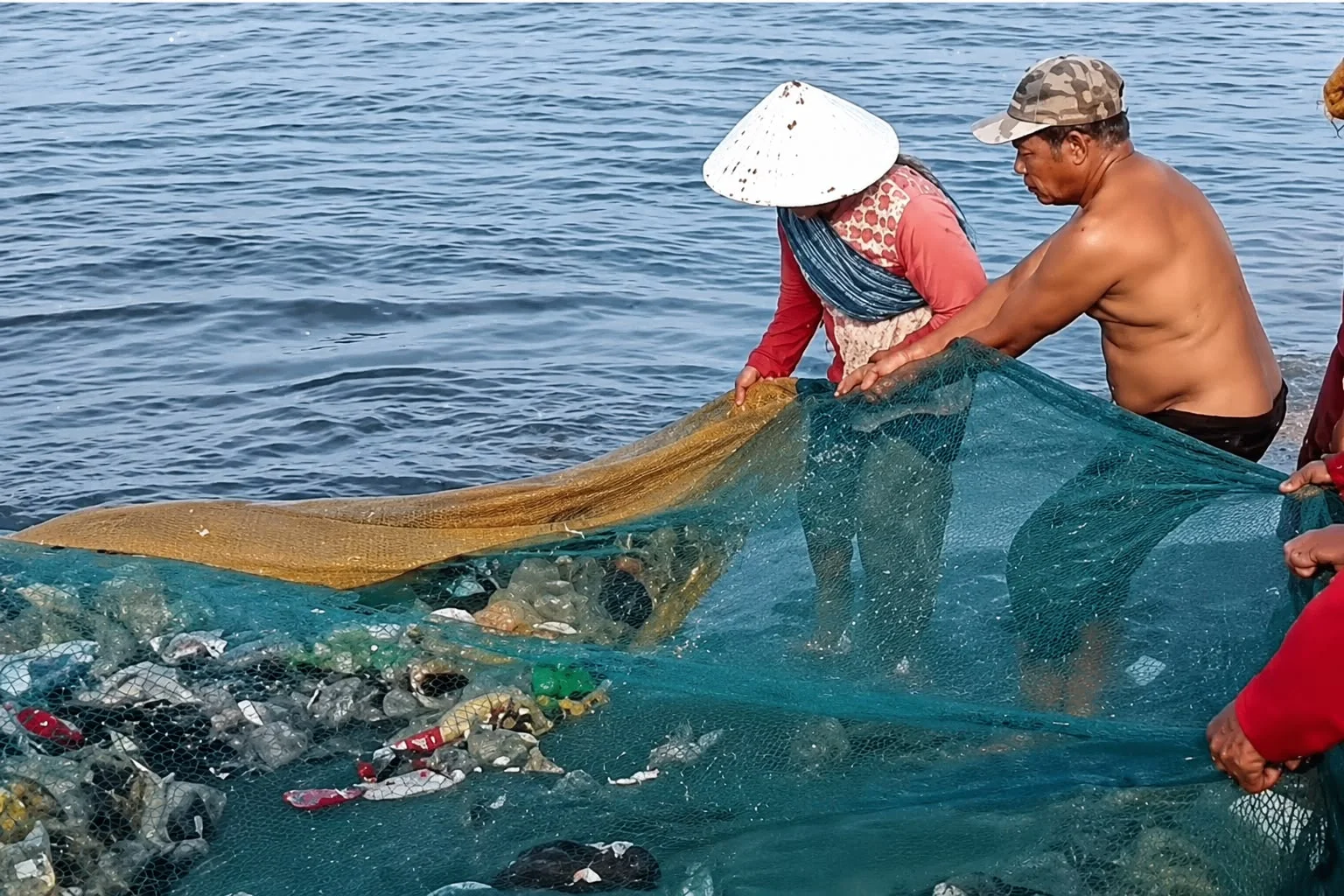
RRI.CO.ID, Jakarta - Researchers at the Environmental and Clean Technology Research Center of the National Research and Innovation Agency (BRIN) have successfully upcycled discarded nylon fishing nets into high-performance functional nanofibers designed to neutralize toxic textile dye waste.
The research team, led by senior researcher Muhamad Nasir, unveiled the innovation during the 15th Joint Review Meeting & Annual Board Meeting of the e-Asia Joint Research Program on Tuesday, September 8, 2026. Fishing nets made of nylon constitute one of the primary sources of marine microplastic fragmentation along Indonesia’s 81,000-kilometer coastline.
By utilizing electrospinning technology, researchers composite salvaged nylon with titanium dioxide (TiO2) nanoparticles, creating a fibrous matrix that enhances tensile strength, increases water absorption, and expands active surface areas. When tested against Methylene Blue (MB) textile dye under ultraviolet light at neutral pH (7), the composite material achieved an 88.68 percent degradation efficiency within 60 minutes, breaking down dye molecules into harmless water and carbon dioxide.
The project, conducted alongside the Bandung Institute of Technology (ITB) and Andalas University, was published in the international Journal of Science: Advanced Materials and Devices.
BRIN environmental researchers and academic collaborators emphasized that transforming ocean plastic into advanced functional nanomaterials creates high-value solutions for industrial wastewater treatment.
BRIN Environmental and Clean Technology Research Center Lead Researcher Muhamad Nasir detailed the technical breakdown and environmental rationale of the upcycling process. Nylon fishing nets are major contributors to microplastic fragmentation in our oceans, rather than converting this waste into low-value products, we upcycle it into high-performance functional nanomaterials using electrospinning.
"Incorporating TiO2 nanoparticles drastically improves tensile strength, expands active surface area, and boosts water absorption," Nasir said during the e-Asia Joint Research Program forum on Tuesday, September 8, 2026, as quoted on BRIN's official website.
He explained the superior degradation performance achieved over conventional titanium dioxide filters. When tested on Methylene Blue textile dye waste under UV light, the material achieved an 88.68 percent degradation efficiency in just 60 minutes at neutral pH, this far surpasses pure TiO2 nanoparticles, which only reach 67.84 percent, because the nanofiber matrix prevents particle agglomeration and maximizes light absorption to generate dye-breaking free radicals.
"By transforming marine net waste into multifunctional nanofibers, we add value to ocean debris while delivering a sustainable product to combat textile pollution," Nasir noted. ***
News Recomendation
Memuat berita terbaru.....